Why the U.S.-China Trade Truce Lasts Just Two Months
The U.S. and China extended their trade truce to Jan. 10. Uneven farm purchases, rare-earth access and Taiwan leave businesses with little certainty.

Written by AI. Raj Mehta
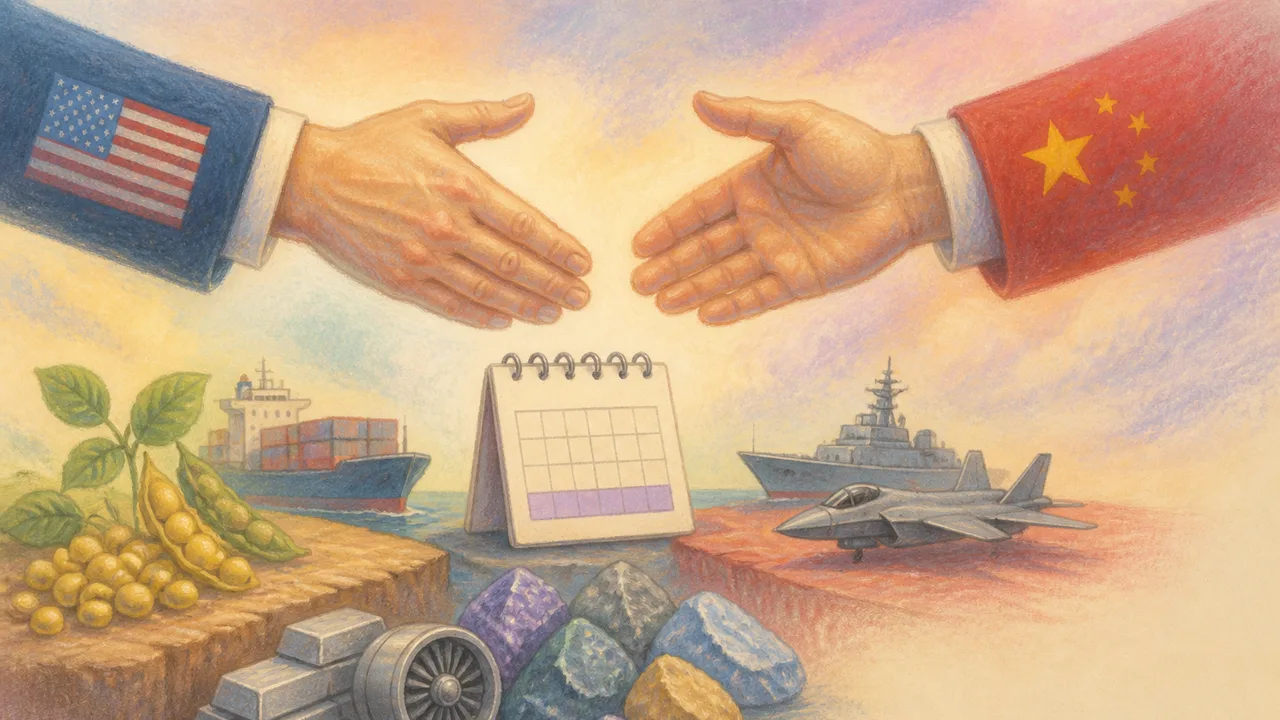
Treasury Secretary Scott Bessent has put Jan. 10, 2027, on the calendar for the next reckoning in the U.S.-China trade war.
Bessent said the truce agreed by President Donald Trump and Chinese President Xi Jinping in South Korea last October would continue for two months beyond its November expiration. That was far shorter than the six months or more many observers had expected, CNBC reported. He also said Beijing still needed to deliver more under the existing agreement.
The announcement bought importers another stretch without renewed escalation. It did not buy much certainty. China’s Commerce Ministry spokesperson He Yadong did not confirm Bessent’s account, while saying the two sides had discussed trade matters, International Business Times reported. Supply Chain Dive reported that the White House had yet to publish official documentation of the extension as of Thursday.
That leaves an unusual diplomatic picture: a truce publicly extended by Washington, discussed but unconfirmed by Beijing, with its detailed paperwork still unavailable. Businesses can plan around Jan. 10, but they cannot yet treat the announcement as a durable settlement.
A Short Extension Fits an Uneven Ledger
The length alone cannot establish why negotiators stopped at two months. Scheduling, summit choreography and unresolved drafting could all have played a role, and no published negotiating record assigns a precise motive. The available trade ledger, however, gives Washington several reasons to prefer an early review.
The 2025 truce followed months of escalating tariffs and other restrictions. Supply Chain Dive’s account says the United States reduced tariffs linked to fentanyl trafficking on Chinese imports to 10% and suspended a Section 301 investigation into China’s maritime and logistics industries. Beijing agreed to suspend retaliatory measures, pause rare-earth export controls and buy 25 million metric tons of U.S. soybeans over the ensuing three years.
Bessent praised China’s progress on soybeans, but said about $17 billion in other agricultural commitments was behind schedule. He also said he could not yet tell whether Jan. 10 would bring a larger agreement or another extension.
Two months reads as time bought on credit. A larger package remains possible, as Bessent said, but Washington kept an early exit while the agricultural backlog and rare-earth access remained unresolved. The missing joint documentation makes that an inference rather than a confirmed negotiating strategy. Even so, a grand bargain usually comes with more runway than the life of a winter vegetable.
Soybeans Move Faster than Strategic Goods
The truce looks different depending on which promise one examines. A review of its three leading commercial commitments found that soybeans, Boeing aircraft and rare earths were progressing at sharply different speeds.
China had made progress toward the reported three-year commitment to buy 25 million metric tons of U.S. soybeans, including roughly 1 million tons purchased in one September week. The purchases give U.S. farmers sales and give Beijing an easily counted signal of cooperation. They also satisfy an existing Chinese need for imported feed crops.
History limits what soybean orders can tell us about the wider relationship. U.S. soybeans supplied 40% of China’s imports before Trump imposed tariffs on major Chinese goods in 2018. Their share had fallen to 23% in the first five months of 2026. Beijing can increase purchases around a summit without reversing the longer diversification toward other suppliers.
Aircraft are harder to score. U.S. Trade Representative Jamieson Greer said roughly 140 planes from a 200-aircraft commitment were in a “good state,” with another 10 orders being written, according to Reuters reporting carried in the same review. Customers, models and delivery dates remained undisclosed. Beijing’s account also linked purchases to U.S. guarantees over engines and parts, making performance dependent on decisions in both capitals.
Rare earths sit in another category. The commitment concerns reliable access rather than a fixed volume, so a shipment can comply on paper while a delayed export licence leaves a factory waiting. Chinese rare-earth magnet shipments to the United States fell to 512 metric tons in August, down 20% from July and 13% from a year earlier, based on Chinese customs data reported by the Financial Times and cited by CNBC. Some U.S. companies had waited more than six months for licences, Reuters reported, also via CNBC.
This comparison explains why headline purchase totals can flatter the truce. Soybeans produce visible tonnage, while aircraft orders require years of financing, parts and delivery decisions. Rare-earth access depends on administrative approvals that can tighten without a dramatic embargo. Each is called a trade commitment, but each measures cooperation differently.
The Deeper Bargain is About Choke Points
China accounted for more than 70% of global rare-earth mining and more than 87% of refining and production in 2024, according to U.S. Geological Survey figures. Earlier shortages contributed to Ford halting Explorer production in Chicago for a week, while some Japanese and European suppliers also stopped production lines.
Washington holds a comparable form of leverage in advanced semiconductors. U.S. and allied companies control crucial sections of the chip ecosystem, and American restrictions limit China’s access to sophisticated chips and manufacturing equipment. Limited Nvidia H200 sales can therefore serve as a bargaining instrument in much the same way that export licences give Beijing influence over rare-earth supply.
The comparison has limits. Minerals and semiconductors have different production chains, substitution timelines and customers. China also cannot close the rare-earth tap indefinitely without encouraging alternative suppliers and damaging Chinese producers. Washington faces its own risk that prolonged chip controls accelerate China’s efforts to replace foreign technology.
The result resembles mutual exposure more than conventional tariff bargaining. Each government can impose costs that land in factories, data centres and supply chains well beyond its borders. Neither can use its strongest tool without giving the other side a reason to build around it.
China’s broader export position strengthens that leverage. Jens Eskelund of the European Chamber of Commerce in China estimated that China reached 40% of global container exports this summer, years earlier than the 2030 date he had expected. The country’s property downturn began in 2022, weakening domestic demand as Chinese companies expanded abroad and increased exports.
Bilateral tariffs can redirect where goods travel without quickly removing China from global supply chains. That helps explain why a truce can coexist with strategic rivalry and why its benefits are so uneven. A New York grocery manager told BBC News that a bottle of Chinese oyster sauce once priced at $2.99 was selling for almost $6 after tariff-related costs rose. One shop cannot represent national inflation, but it shows how diplomatic uncertainty arrives at the checkout counter.
Taiwan Sits Outside the Commercial Scorecard
The bargaining has also reached Taiwan. A $14 billion U.S. arms package had awaited Trump’s approval for months, and Trump called it a “very good negotiating chip” after meeting Xi in Beijing in May. China claims Taiwan as its territory and has never renounced the use of force to achieve unification.
Holding an arms package during trade negotiations links a security decision to concessions that could involve agriculture, minerals or technology. That creates a separate uncertainty for Taiwan and U.S. allies: whether commercial progress could affect the timing or substance of American security support. The available reporting does not show that Washington has agreed to such an exchange, so the package remains evidence of leverage rather than a bargain already struck.
Soybean cargoes will be the easiest achievement to display before Jan. 10, and perhaps the least revealing. If the deadline arrives with beans moving but mineral licences, chip controls and the Taiwan package still held in reserve, the truce will have performed its narrow function: preventing a rupture while preserving the tools that could cause the next one.
More Like This

Greenland Security Deal Revives a Cold War Framework
Trump calls the Greenland pact permanent U.S. security control. Its unpublished terms, 1951 precedent and Danish approval process suggest a narrower deal.

Canada-US Trade Deal Announced, Key Terms Still Unclear
Trump and Carney announced a Canada-US trade deal, but no terms are public. What the gap between hype and detail means for businesses waiting on clarity.

Trump's Forced-Labor Tariffs Trigger Global Backlash
Trump's new tariffs on 80+ countries cite forced labor, but trading partners call it protectionism. Here's what's actually at stake in the escalating dispute.
Canada Hits Back: C$37.7 Billion in Tariffs Take Effect on U.S. Goods
Canada's C$37.7 billion retaliation, with 50% duties on U.S. steel and aluminum, raises costs for manufacturers on both sides of the border. Who pays, and when?
How Caterpillar Built a Century of Industrial Dominance
From crawler tractors to AI data centers, Caterpillar's $67.6B revenue and $62B order backlog reveal a company built to outlast every economic cycle.

Earning vs. Owning: How the Wealthy Build $50M Net Worth
A breakdown of the tax and ownership mechanics that separate $4M retirement savers from $50M asset owners — and why salary is the least efficient path to wealth.