Why Plastic Car Bumpers Are Safer Than Steel Ones
Modern plastic bumpers aren't cheap substitutes for steel—they're engineered systems designed to absorb crash energy and protect both passengers and pedestrians.

Written by AI. Mike Sullivan
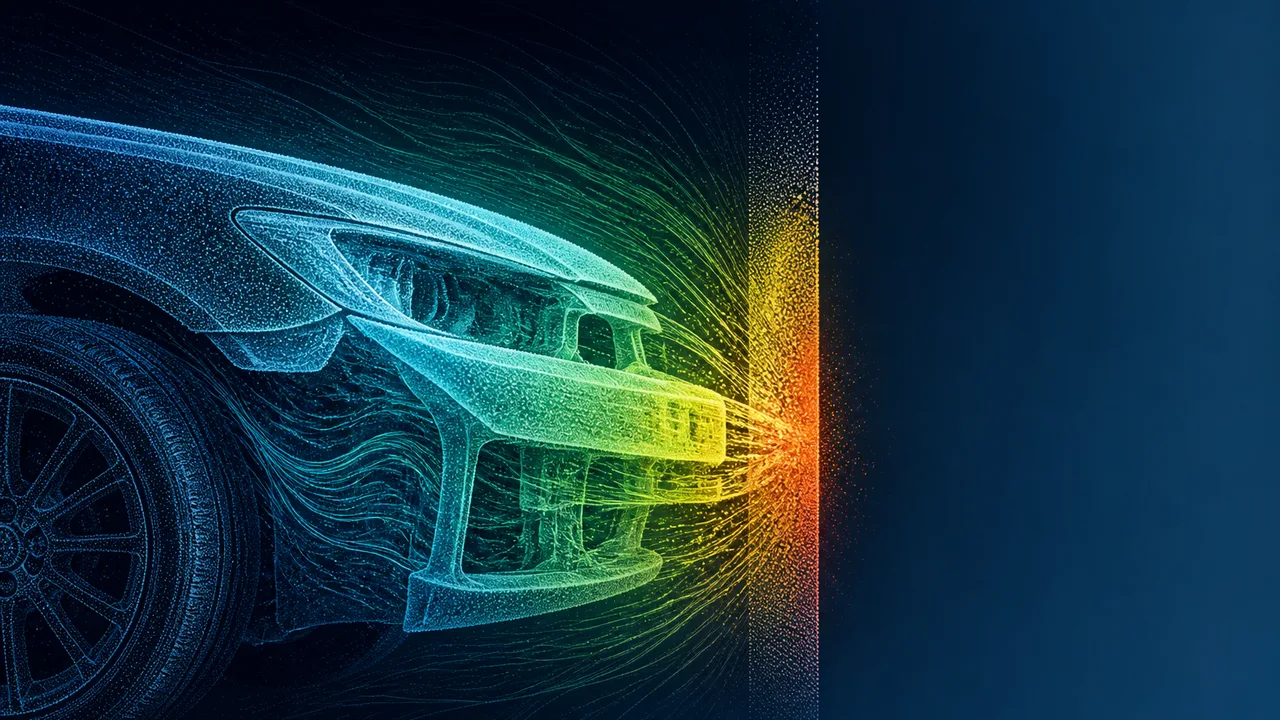
Photo: AI. Dexter Bloomfield
There's a specific kind of parking lot fury that every driver recognizes. You come back to your car, find a crack spiderwebbing across the front bumper cover from what was probably a 4 mph kiss from a shopping cart, and your brain immediately starts doing the math on a repair bill that will feel morally offensive. Meanwhile, your memory conjures the chrome-plated steel barge that your father drove in 1974, a bumper that looked like it could shrug off a demolition derby and emerge needing nothing more than a wipe-down.
The comparison feels damning. And manufacturers know it feels damning. Which is why the engineering story behind modern plastic bumpers is one that the industry has mostly failed to tell clearly—and one that the YouTube channel Secrets of Everyday Things takes a creditable run at in a recent eleven-minute breakdown.
The short version: your intuition about which bumper is tougher is correct. Your intuition about which bumper is safer is almost certainly wrong.
What's Actually Behind That Cover
The first thing the video gets right is correcting a widespread misconception about what a modern bumper actually is. The piece of polypropylene you can reach out and touch in a parking lot is called the bumper cover. It is, by design, the least structurally important part of the assembly. Behind it sits a layer of energy-absorbing foam, and behind that, a reinforcement beam made of high-strength steel, aluminum, or composite material.
The video reaches for a helmet analogy to explain this, and it's a good one: "The hard plastic shell on the outside holds the shape and guards against scratches, but the thing that actually saves your head is the soft liner inside. The part that quietly compresses and drains away the force of a blow. A car bumper works in exactly the same way."
So when you're standing in that parking lot looking at a cracked bumper cover, you're looking at the sacrificial outer layer—the piece that was, per the video, "born to take scratches rather than to take a hit." The actual load-bearing structure is invisible from the outside. This is not accidental. It is the point.
The Physics of Getting Hit
Here's where things get counterintuitive, and where the video earns its keep. Most people's instinct about crash safety tracks with everyday experience: harder things protect better. A brick wall beats a hedge. A vault door beats a curtain. Surely a steel bumper beats a plastic one.
Except a bumper isn't a shield. Its job isn't to prevent deformation—it's to manage the energy of impact before that energy reaches the passenger compartment. These are completely different engineering goals, and confusing them is what produces the "they're cutting corners" reaction.
The physics here are real and not especially subtle. A rigid bumper transfers crash force nearly instantaneously and almost entirely into the vehicle frame—and then into the occupant. A system designed to deform in a controlled way, working in concert with the crumple zones built into the car's frame, stretches the duration of the impact and distributes the force across a longer distance. The difference in what reaches a human body is significant.
The video puts it plainly: "That untouchable chrome slab of the old days looked mighty, but that very rigidity made it the messenger that delivered the full force of the blow straight into your spine and your chest."
The knee-bend analogy works here too. Jump off a wall and land with locked knees, the impact travels straight up your skeleton. Bend your knees and absorb the landing, and the same fall becomes manageable. The old steel bumper was locked knees. The modern system bends.
The Cost Question, Answered Honestly
Secrets of Everyday Things does something I didn't expect: it directly acknowledges the profit motive and refuses to pretend it doesn't exist. When the video raises the obvious objection—that maybe "safety" is just cover for cheaper manufacturing—it gives a straight answer: yes, injection-molded plastic is cheaper and faster to produce than stamped steel, and that does benefit automakers.
But then it makes the more interesting point. If cost were the only driver, you'd expect luxury manufacturers—Porsche, Mercedes, BMW, vehicles where cost-cutting is not exactly the brand promise—to do something different. They don't. Every car in the market, regardless of price point, uses this same basic bumper architecture. That's a meaningful data point. When a choice is universal across a market that spans econoboxes and six-figure sports sedans, the explanation "automakers are being cheap" starts to look incomplete.
That said, the video is not an automotive industry PR piece. The profit motive and the safety rationale coexist here, as they do everywhere in manufacturing. Polypropylene injection molding produces less waste than steel stamping, costs less per unit, and allows for geometric complexity that stamped steel simply cannot match. Sensor mounts, radar housings, cooling slots, and camera recesses can all emerge from a single mold. The fact that this also happens to save lives doesn't make it cynical. The fact that it also saves money doesn't make it altruistic. It's both, and pretending otherwise in either direction would be its own kind of dishonesty.
The Pedestrian Angle
One dimension of this story that tends to get overlooked in the "plastic vs. steel" debate is what happens to people who aren't in the car. Modern crash testing regimes—Euro NCAP being the most rigorous example—don't only evaluate what happens to vehicle occupants. They evaluate what a car's front end does to a pedestrian body upon impact.
A rigid steel bar at hip-and-leg height, hitting a person at low to moderate speed, transfers force differently than a structure designed to yield. The video notes that "the very softness that so many people criticize as weakness is on another side quietly protecting people who are not even sitting in the car." This isn't a peripheral concern—pedestrian safety testing is a meaningful factor in how European and increasingly American regulators rate vehicles. The shape and compliance of the front bumper structure is specifically engineered with this in mind.
It's also the argument that most cleanly separates "safety" from "cost" as a design motivation, since there's no financial upside to pedestrian protection. It's purely regulatory and ethical.
Why the Repair Bills Are So High
This is probably where most readers' actual frustration lives, and it's worth being direct about what's happening. The cracked plastic cover after a minor impact costs relatively little to replace. What drives the estimate into the thousands is everything behind it.
Behind a modern bumper cover sits parking sensors, radar arrays for adaptive cruise control, blind spot monitoring hardware, backup cameras, and the wiring that connects all of it to a central system. A tap that leaves a surface scratch may have knocked a sensor out of alignment by a few millimeters. That sensor needs replacement. The safety system needs recalibration. The cover needs repainting. Sometimes the foam and reinforcement structure need inspection or repair as well.
As the video puts it: "You are not paying for the plastic. You are paying for the electronic brain that the modern car keeps tucked right behind its face."
This is accurate, but it surfaces a genuine tension that the video doesn't fully explore. The consolidation of safety-critical electronics into the bumper zone creates a situation where low-speed parking lot incidents—the kind of thing a 1968 Buick Riviera would have shrugged off—now trigger cascading repair requirements. The safety benefits of having radar and sensor arrays integrated into the front end are real. So is the repair cost consequence. Both of those things are true simultaneously, and drivers stuck with a $3,500 estimate for what looked like a fender-bender are not wrong to find that arrangement frustrating, even if the engineering logic behind it is sound.
The Material Comparison
The video rounds out its case by eliminating the obvious alternatives. Carbon fiber is light and modern-sounding, but it shatters rather than deforms under the low-speed impacts common in daily driving, and repair requires specialized processes that rarely restore it to pre-damage condition. Rubber is theoretically compliant but too heavy for the application and prone to catastrophic failure under real crash forces. The polypropylene-foam-reinforcement beam combination isn't a compromise—it's the result of several decades of iteration toward a specific balance of weight, cost, elasticity, and protection performance.
That framing is fair. There's no material that does everything better than the current solution. The engineering choices behind modern bumpers are not the path of least resistance. They reflect tested answers to genuinely hard constraints.
What gets lost in the chrome-bumper nostalgia—and this is the thing worth sitting with—is that the old steel bumper's invincibility was a feature for the bumper, not for the person behind it. The car survived the crash looking great. The occupant absorbed the physics. We've spent fifty years gradually reversing that priority, and the scratched, cracked plastic cover in the parking lot is part of that reversal.
Whether the repair bill that comes with it is a reasonable trade is a fair question. The answer is probably: yes, at the moment of actual impact, and no, at the moment you're handing over your credit card for a parking lot tap. Both of those things can be true at the same time.
More Like This

How Cruise Ships Stay Upright in Rough Seas
Cruise ships look impossibly top-heavy. The engineering that keeps them upright is layered, counterintuitive, and more fragile than the brochure suggests.

Do You Really Need an $80 HDMI Cable? Maybe Not
Tech reviewer Adam tests a premium HDMI 2.1 cable. We examine what you're actually paying for and whether most users need it.

When Agents Generate Their Own UI: The Three Flavors Explained
CopilotKit's Tyler Slaton maps the spectrum of generative UI—from pixel-perfect control to agents writing raw HTML. Each approach makes different tradeoffs.

Can Unreal Engine 5 Run on a $500 MacBook? Sort Of.
Testing Unreal Engine 5.7 on the MacBook Neo reveals what happens when professional software meets budget hardware—and why friction matters.
How CAN Bus Quietly Networks Every Modern Car
CAN bus has networked vehicles since 1986 with just two wires and no central controller. Here's how its elegant design actually works—and where it breaks down.
The Collector Car Market Runs on Paperwork, Not Cars
From a $71K Porsche to a bonded warehouse one-off, the collector car market rewards documents over machinery — and one archive controls it all.

Local AI vs. Cloud: Why the Holy War Misses the Point
Running AI locally isn't a purity test—it's a systems design problem. Here's what one builder's hardware journey reveals about the real tradeoffs.

TypeScript 7 Rewrites Its Compiler in Go for 10x Speed
TypeScript 7's RC rewrites the compiler in Go, delivering roughly 10x faster type checking. Here's what actually changed and what it means for your build.