Why Buying a Round in Germany Can Complicate the Bill
Buying a round in Germany can create expectations your companions may not share. Learn why individual bills can work better and how to ask before ordering drinks.

Written by AI. Kael Maddox
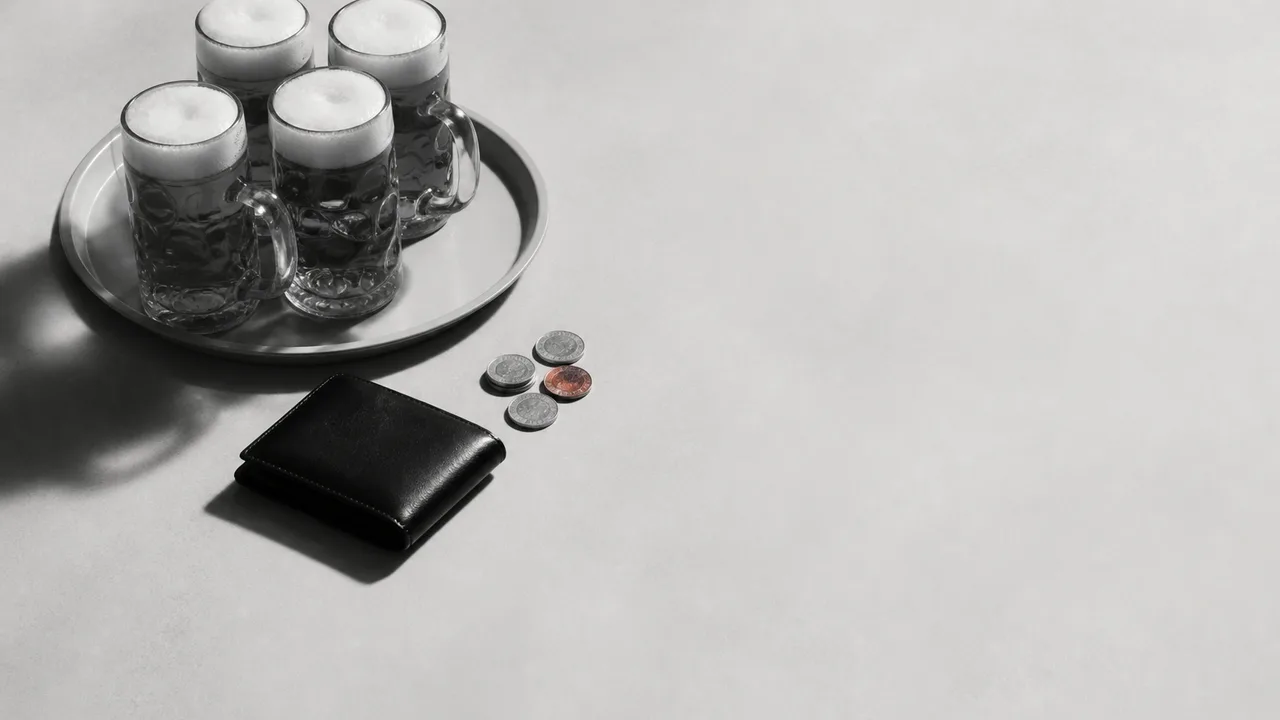
In Germany, buying everyone at the table a drink can leave the buyer waiting for a return round that nobody else expected to buy. The gesture may be welcome; the obligation attached to it may exist only in the buyer’s head. That’s a small misunderstanding with an unusually efficient delivery system: it arrives just as everyone is trying to relax.
The question has fresh attention because buying rounds is less routine in Germany than it is in some other drinking cultures. Paying for your own drinks, rather than splitting a table’s bill evenly or rotating who pays for everyone, can be a perfectly ordinary way to spend an evening together. These are descriptions of possible expectations, not a rule for every German, bar or beer garden.
The traveler’s problem starts before anyone reaches for a wallet. A round can mean two things: “I’d like to treat you” or “I’ll pay now, and you can pay later.” Both can sound friendly. Only the second creates a running account between friends, one that nobody has actually agreed to keep.
What a Round Asks of the Table
Consider a group of four. One person offers to buy the first drinks, another arrives after that order, and a third wants to leave early. A round system can still work if everyone wants it. It also requires the group to decide, often without saying so, whether the late arrival owes a turn, whether the early departure should buy one before leaving, and whether different drink choices count as an even exchange.
Paying individually removes most of that arithmetic. Each person decides what to order and pays for it. No one has to stay for another drink to square a tab, and no one has to accept a drink they wouldn’t have chosen. For travelers used to rounds, the arrangement can look painstaking. For people who prefer to keep track of their own orders, it can make the evening easier.
A round has its own appeal. It cuts down on repeated offers, puts generosity on the table and lets someone say thank you without making a speech. In a close group that already knows its rhythm, nobody needs to calculate whether every turn matches the last. The friction comes when a visitor assumes that rhythm exists with people they’ve just met.
An older account of British and German beer drinking describes British visitors opening an evening by buying for everyone, then expecting the Germans at the table to reciprocate. In that account, the guests appreciate the drinks but don’t think to buy a return round. It captures the awkwardness of a gift offered with an unspoken condition: the recipient may hear the offer and miss the condition entirely.
That condition deserves scrutiny from the buyer, too. If I offer to pay, I can mean it as a gift. If I expect repayment in drinks, I’m proposing a shared plan. Calling both offers “a round” saves a few words at the start and can cost considerably more conversation at the end.
The Bill is Also a Social Signal
Travelers often read payment habits as evidence of warmth. Someone who buys for the table appears generous; someone who pays only for themselves may appear guarded. That reading gives a bar tab a job it cannot reliably do. Individual payment can let people join without taking on a financial commitment they didn’t choose. A free drink can be a generous gesture with no strings. The awkwardness arises when the two people assign it different meanings.
It’s easy to see why the misunderstanding sticks. A person who expected a return drink may say nothing at the table, then later describe the group as stingy. Their companions may remember a pleasant evening and a visitor who insisted on treating everyone. Each account fits what its teller believed was happening. Neither requires anyone to have been rude.
There’s another reason to leave space for individual choice: a group rarely orders as one body. Someone may be having a single drink while others plan to stay for hours. Someone may want something cheaper, or nothing alcoholic at all. An even split or a rotating round can pull those people into paying for an evening they aren’t having. Individual orders keep the decision close to the person making it.
That doesn’t make exact accounting a moral achievement. If a friend wants to buy a drink, accepting can be easy. If a host wants to cover the table, thanking them can be easy. Social skill lies in noticing what was offered before converting it into a debt or insisting that everyone follow one payment method.
Ask Before the First Order
The useful question is short: “Are we each paying for our own, or are we doing rounds?” Ask the group before ordering for everyone, when nobody has yet committed money or imagined a return favor. If you want to treat them, say so: “This one’s on me.” If you want to start a rotation, ask whether they’d like to take turns. They’re different invitations, and the table can accept one without accepting the other.
When you’re paying separately, tell the server which drinks are yours when it’s time to settle up and follow the venue’s way of handling the bill. Don’t assume the staff will organize a complex split for a group that has never explained it. If companions are handling payment another way, a quick question will usually tell you more than a travel maxim about what Germans do.
For a solo traveler joining a group, this approach also takes pressure off the first five minutes. You can order for yourself, listen to how the others handle payment and join in without trying to buy acceptance at the table. If someone offers you a drink, you can thank them and ask, if needed, whether the group is taking turns. That may feel blunt to someone who prefers to leave money unspoken. It is briefer than discovering an imagined obligation after the second beer.
The setting changes the practical calculation. A small, settled group might enjoy rotating rounds. A larger table where people come and go has more chances for the turns to become uneven. Different orders complicate things further. None of those scenarios tells you what the people at your table believe; they tell you what to ask them.
Germany doesn’t require visitors to stop being generous. It asks for a useful pause before generosity comes with a bill for somebody else. If you buy the first round, decide whether you’re offering a drink or opening a tab of favors. Then give the table a chance to know which one it is.
More Like This

JetBlue BlueFirst: What the A320 Cabin Shift Means
JetBlue's new BlueFirst cabin adds 12 first class seats to its A320 fleet. Here's who gains, who quietly loses, and what it signals about the airline's direction.

Hotel AI Visibility: Why Google Rank No Longer Guarantees Discovery
Hotels that rank well on Google are disappearing from AI chatbot results. Here's what's driving that gap and what properties need to rethink about their content.

Flight Attendants Share Honest Tips for Air Travel
Flight attendants reveal what they actually do on planes, from skipping the coffee to packing smarter. Here's what their habits tell frequent flyers.

Light Rail Automation Borrows Tech from Cars and Satellites
Cities are automating light rail using car sensors and satellite positioning. Here's what that shift means for urban transit, safety, labor, and city design.

How AI Is Reshaping Hotel Visibility and Revenue
AI is deciding which hotels travelers consider before they ever open a booking site. Here's what the data shows and what hospitality leaders are doing about it.

IHG Launches AI Conversational Hotel Search
IHG's new AI conversational search lets travelers book across 7,000+ hotels in plain language. Here's what it means—and what it still can't promise solo travelers.