Who Actually Breaks Into AI/ML—And Why It's Not Who You Think
Marina Wyss says credentials don't determine who breaks into AI/ML—mindset does. Here's what her argument gets right, and what it leaves out.

Written by AI. Samira Barnes

Photo: AI. Phaedra Lin
Access to high-wage technical work has never been evenly distributed, and AI and machine learning roles—some of the most lucrative in the current labor market—are no exception. What's interesting about the current moment is how the gatekeeping operates. It's not purely credential-based in the traditional sense. It's something messier, and more contested.
Marina Wyss, who identifies herself as a Senior Applied Scientist at Twitch/Amazon and works as a career coach for people transitioning into AI and ML roles, published a video on this question—in a video whose publication date Buzzrag could not independently verify, though YouTube metadata indicates it was uploaded within the past several days. Over roughly seven minutes, she makes a specific and substantive argument: the people who successfully break into AI and ML are not distinguished primarily by their credentials, their degrees, or their prior job titles. They're distinguished by how they think about failure, agency, and opportunity.
That argument is worth sitting with, because it cuts against the dominant narrative in both directions.
The Credential Myth, and What Replaces It
The standard account of why people can't break into technical fields goes something like this: hiring managers want CS degrees and prior industry experience, non-traditional candidates can't clear the resume screen, and the system is structurally rigged against outsiders. There's real truth in this. Skills-based hiring—the idea that demonstrated competency should matter more than credential proxies—has been a stated goal of workforce policy advocates for years, and the gap between that aspiration and actual hiring practice is real and widely recognized in workforce research, even if the evidence base on how consistently it plays out across industries is still developing.
But Wyss's argument doesn't actually challenge the structural critique. She acknowledges the market is harder for juniors than it was, that junior candidates are competing against laid-off big-tech engineers, and that "the goalposts on what you need to know keep moving." She's not telling people the system is fair. She's telling them something more specific: that given the system as it actually exists, certain behaviors and orientations dramatically improve your odds, and others reliably predict failure.
The distinguishing behavior she identifies isn't grinding more LeetCode or adding another project to a portfolio. It's what she calls an "internal locus of control"—the psychological orientation toward believing that your actions shape your outcomes, rather than that outcomes are determined by external forces you can't influence. In her framing, the people who make it "know the market is hard, but they refuse to let any of that become a reason to stop them because none of that is in their hands, but the effort they put in is."
That's a psychological construct with actual research behind it—Julian Rotter introduced the locus of control framework in 1954, and it has been extensively studied in educational and occupational contexts since. Wyss is applying it to a specific labor market transition, which is a reasonable application, even if she doesn't frame it in those terms.
The Coaching-Call Pattern
Over more than 200 coaching calls, Wyss says she has watched the same conversation repeat. Someone tells her they'll start applying once their portfolio has one more project. They'll attend the AI meetup once they feel more credible. And months pass.
"Most of them have been saying it for six months or a year," she observes. "They build another project and they still don't feel ready. The feeling they're waiting for doesn't arrive because it was never going to."
Meanwhile, the people who do break in are doing something that looks, on the surface, almost reckless: "applying to jobs they're not qualified for," showing up to events where they know no one, cold-messaging people whose work they admire. The discomfort is the same. The response to discomfort is different.
This is where Wyss's argument is at its sharpest. The preparation-as-procrastination pattern is real and well-documented in psychology under the less flattering label of avoidance. What she's describing—the person who keeps building credentials instead of testing them in the market—is someone managing anxiety through productive-looking behavior that never requires actual exposure to rejection. It's a reasonable thing to do. It also, by her account, reliably doesn't work.
The harder version of this claim is that the behavior is downstream of a mindset, not the other way around. "That's called having an internal locus of control," she explains, "which is the belief that one has power over their actions, life, and outcomes." The implication is that coaching people to apply earlier, network more aggressively, and treat rejection as data rather than verdict is really coaching them toward a different psychological stance—one that can be developed but can't simply be prescribed.
What the Mindset Argument Doesn't Resolve
The structural question doesn't disappear when you accept Wyss's individual-level argument. It sharpens.
If the people who make it into AI/ML are the ones who apply despite being underqualified, network despite discomfort, and treat rejection as signal rather than verdict—then what we're really describing is a filter that selects for risk tolerance, social capital, and the kind of psychological resilience that is itself unequally distributed. People who are supporting families, working multiple jobs, managing health issues, or simply didn't grow up in environments where cold-emailing executives seemed like a reasonable thing to do, face a different baseline cost for all of these behaviors.
Wyss gestures at this without quite addressing it. Her examples of people who "don't eliminate themselves" include the 45-year-old who applies anyway, the person without a CS degree who lets the employer decide if that's disqualifying. These are people with real structural headwinds who choose to proceed regardless. But the choice to proceed regardless is itself shaped by factors that have nothing to do with mindset—access to financial runway, the presence or absence of a network that's already adjacent to tech, familiarity with the informal norms of professional self-promotion.
None of this invalidates Wyss's core observation. It's entirely possible that mindset is genuinely predictive within the population of people who are already in a position to attempt this transition. But it means that mindset-focused advice, applied at scale, risks becoming the AI-career equivalent of "just negotiate your salary"—technically correct, structurally incomplete.
The Part That's Actually Useful
Where I find Wyss's argument most useful is in the specific claim about failure. "Being successful in challenging fields means treating failure as data," she says. "A bad interview doesn't mean you're inadequate, but it can teach you exactly where your weak points are for next time."
This is not a novel idea, but it's also not as widely practiced as it should be. The willingness to fail early and in public—to get the feedback that only comes from actually being in the room—is a learnable skill, and Wyss argues, drawing on her coaching observations, that it can be developed over the course of a transition even by people who started as "the most risk-averse perfectionist, self-doubting versions of themselves." The mindset, she argues, isn't a prerequisite. It's a product.
That reframe matters for how people approach the transition. If you believe psychological resilience is a fixed trait you either have or don't, then Wyss's argument reads as sorting people into winners and losers by personality. If you believe it's trainable—and the evidence broadly supports that it is—then the argument becomes a practical one about what environments and supports make that development possible.
Her answer, not surprisingly, is community. The technical skills you can learn from documentation and courses. The mindset, she argues, requires other people: "someone who can reflect it back to you when your own brain is sabotaging you."
Whether a paid community platform is the right infrastructure for that is a separate question, and one readers can evaluate for themselves. The underlying point—that individual psychological development happens in relational context—isn't really controversial.
What's unresolved is the larger question Wyss's argument raises without quite asking: if access to high-wage AI and ML roles is increasingly a function of psychological orientation and network-building savvy rather than formal credential, have we actually made the system more meritocratic, or have we just changed which kind of capital gets you in?
More Like This
Tech Career Decisions: What to Know Before 2026
Marina Wyss breaks down seven tech roles—from software engineering to applied science—through a decision tree based on personality, not just skills.
Design.md Files Expose a Gap in AI Regulation Standards
How a GitHub repository of design system files reveals the absence of standardization frameworks for AI-generated interfaces—and why that matters.
AI Career Coach Scales Advice From Sessions to Community
Marina Wyss launches AI/ML Career Launchpad after 200+ coaching sessions revealed common obstacles facing aspiring AI professionals.

Kimi K2.6 Is Free on NVIDIA NIM—Read the Fine Print
Kimi K2.6 is now free via NVIDIA's NIM API. But who controls AI model distribution when NVIDIA becomes the default inference layer?
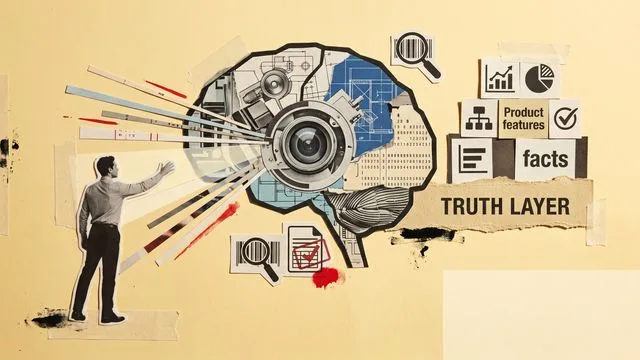
The Prove-It Economy Cuts Both Ways
AI agents are reshaping how brands get found — but the prove-it economy has a privacy shadow most marketers haven't noticed yet.
Why Aspiring AI Engineers Are Wasting Years of Study
Marina Wyss argues most AI engineering education paths are broken. Here's what actually matters—and what's keeping talented people stuck in tutorial hell.

AI Chip Smuggling and the US-China Tech Divide
FT's Eleanor Olcott investigates the black market for Nvidia AI chips reaching China despite US export controls — and what it reveals about the tech race.

Promptware: When AI Agents Become Attack Vectors
Prompt injection attacks on AI agents follow a structured kill chain — and existing legal frameworks have almost nothing to say about who's liable when it works.