AI Career Coach Scales Advice From Sessions to Community
Marina Wyss launches AI/ML Career Launchpad after 200+ coaching sessions revealed common obstacles facing aspiring AI professionals.

Written by AI. Bob Reynolds
Marina Wyss has a problem most consultants would envy: more demand than she can handle. Since 2022, she's conducted over 200 one-on-one coaching sessions helping people break into artificial intelligence, machine learning, and data science roles. The waiting list kept growing. The calendar stayed full.
So she did what any good engineer would do—she looked for patterns in the data.
What she found was repetition. Different backgrounds, different experience levels, same questions. People didn't know what to focus on. They couldn't distinguish good courses from mediocre ones. They struggled to build portfolio projects that hiring managers would actually notice. The refrain was consistent: "Where do I even start?"
That observation led to the AI/ML Career Launchpad, which Wyss announced this week. It's her attempt to productize what she's learned from those 200-plus sessions—to scale individual coaching into a structured learning community.
The Structure
The offering has two tiers, which maps to a familiar pattern in online education. The Core tier provides self-paced learning organized around three career tracks: AI engineer, machine learning engineer, and data scientist focused on machine learning. Members get role overviews, skills checklists, curated course recommendations, project scoping documents, and resume templates tailored to each path.
Beyond the resources sits a peer community and weekly asynchronous Q&A sessions where Wyss answers member questions in writing. It's the standard model for scaling expertise—replace synchronous time with asynchronous content, replace individual attention with community support.
The Guided tier adds back some of that direct access: monthly live group coaching calls, monthly workshops on specific topics, and guest speakers. Sign up for the annual plan and you get a 30-minute one-on-one call with Wyss—though she notes the spots are "super limited."
Interestingly, she's not abandoning individual coaching entirely. Instead, she's raising the bar. What used to be informal chats become "strategic advisory sessions" limited to four spots per month, by application only. These include pre-work, a custom action plan, and two weeks of email follow-up. As Wyss explains: "This is for people with a specific highstake situation who want a fully personalized strategy. If you're still figuring things out, that's exactly what the community is for."
It's a clear segmentation—community for the exploratory phase, premium coaching for critical decisions.
What's Actually New Here
Online learning communities are hardly novel. Cohort-based courses, paid communities, group coaching programs—they've proliferated over the past five years as creators search for recurring revenue models beyond advertising and one-time course sales.
What Wyss is offering looks conventional: curated resources, structured paths, peer support, tiered pricing. The distinguishing factor, if there is one, sits in the specificity. She's not teaching "tech careers" broadly or "data science" generally. She's focused on three specific roles within AI and machine learning, drawing from seven years working across those roles herself and patterns from 200 coaching conversations.
Whether that specificity translates to meaningfully better outcomes remains an open question. The challenge with productizing expertise is that individual coaching works precisely because it's individual—the coach can adapt to what this person needs right now. Communities work when members find value in each other, not just in the creator. The test isn't whether Wyss knows her subject matter—she clearly does—but whether the structure she's built captures what made those one-on-one sessions valuable.
The Economics of Scaling
Wyss didn't disclose pricing in her announcement, directing people to the description links instead. She did mention "founding member prices" that will "likely go up as the community grows," with early members locking in their rate—a standard launch tactic.
The economics here are straightforward. Individual coaching has a hard ceiling: there are only so many hours in a week. A community model trades individual attention for volume. If Wyss can attract enough members at a sustainable price point, she can earn more while working less. Members, in theory, get access to expertise they couldn't afford at one-on-one rates.
The question is whether the value persists. With individual coaching, you pay for Wyss's time and attention. With the community, you're paying for her systems and intermittent engagement. That's not necessarily worse—sometimes people need frameworks more than attention—but it's different.
Who This Serves
The AI/ML Career Launchpad appears designed for people in a specific situation: they've decided to pursue AI or machine learning roles, but they're lost in the noise. Too many courses. Too many conflicting recommendations. Too much information, not enough direction.
Wyss's pitch is essentially: "I've seen this movie 200 times. Let me skip you past the common mistakes."
Whether that's valuable depends on where you are. If you're genuinely exploring—not sure AI is the right path, uncertain which role fits you—a community might feel like overkill. If you're already deep in the field with specific technical questions, you might need something more advanced than curated course lists.
The sweet spot is probably the career changer or recent graduate who knows the destination but not the route. For them, Wyss is offering a map drawn from other people's journeys.
April 9th
Wyss is hosting a welcome call on April 9th for all new members—"the only time that both core and guided members get on the same live call." It's positioned as a chance for Core members to experience what live sessions feel like, a preview of the Guided tier.
It's also, of course, a conversion opportunity. Get people together, let them see the value, hope some upgrade. That's not cynicism—it's just how these models work. The welcome call serves the members and serves the business.
The interesting part will be what happens after the launch rush fades. Online communities live or die based on sustained engagement. Resources get stale. Discord channels fall silent. The creator moves on to the next thing. Whether the AI/ML Career Launchpad avoids that fate depends less on its launch strategy and more on whether Wyss can build something that renews itself—where members help each other, where the value compounds over time, where it becomes something beyond just "Marina's coaching, but cheaper."
She's got the expertise and the pattern recognition from 200 conversations. Now she's betting she can encode that into a structure that works without her constant presence. It's a bet most successful consultants eventually make.
More Like This
Anthropic's Three Tools That Work While You Sleep
Anthropic's scheduled tasks, Dispatch, and Computer Use create the first practical always-on AI agent infrastructure. Here's what actually matters.
Dokploy Promises Vercel Features at VPS Prices
A new tool claims to deliver platform-as-a-service convenience on cheap VPS infrastructure. Better Stack demonstrates what works and what doesn't.
Why Aspiring AI Engineers Are Wasting Years of Study
Marina Wyss argues most AI engineering education paths are broken. Here's what actually matters—and what's keeping talented people stuck in tutorial hell.
The AI Engineering Reading List That Actually Makes Sense
Marina Wyss recommends seven books to go from beginner to AI engineer—but the real story is what she leaves out about math and theory.
AI Models Now Run in Your Browser. That Shouldn't Work.
Transformers.js v4 brings 20-billion parameter AI models to web browsers. The technical achievement is remarkable. The implications are just beginning.
The AI Engineer Roadmap Nobody's Talking About
A deep dive into what it actually takes to become an AI engineer in 2026—from Python fundamentals to deploying LLMs. ZazenCodes maps the terrain.
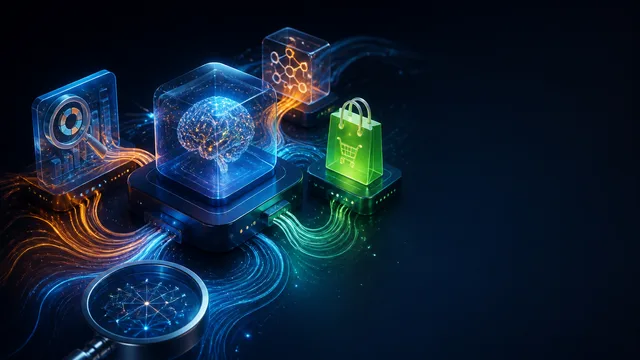
Claude Code and AI-Driven SEO for Shopify Stores
A live walkthrough of using Claude Code, SEMrush MCP, and Shopify to build AI-optimized pages raises real questions about where SEO is heading.

Garry Tan's Blueprint for the AI-Native Company
Y Combinator's Garry Tan argues that how you organize AI matters more than which AI you use. Here's what that means in practice.