Kimi K2.6 Is Free on NVIDIA NIM—Read the Fine Print
Kimi K2.6 is now free via NVIDIA's NIM API. But who controls AI model distribution when NVIDIA becomes the default inference layer?

Written by AI. Samira Barnes
Photo: AI. Tomoko Hayashi
A Chinese AI lab's flagship model is now being distributed through American GPU infrastructure, presented as free developer tooling. That sentence contains at least three policy stories. Most coverage is treating it as one: a tutorial.
The model is Kimi K2.6, built by Moonshot AI, a Beijing-founded company that has been one of the more technically ambitious players in the competitive landscape of Chinese frontier AI development. The infrastructure is NVIDIA's NIM endpoint platform, which has quietly become the default on-ramp for developers who want to test open and open-weight models without standing up their own servers. The framing is developer convenience. But the structure being built here is something else.
Start with what the model actually is, because it earns the attention. Kimi K2.6 is a mixture-of-experts architecture with a claimed total of one trillion parameters. MoE models are deliberately misunderstood in press coverage—the trillion-parameter figure is the eye-catching one, but the more operationally meaningful number is how many parameters activate per inference token, which the AICodeKing breakdown cites as approximately 32 billion. Buzzrag has not independently verified this active parameter figure against Moonshot AI's official model card, and active parameter counts for MoE models vary by implementation. The distinction matters because it determines actual compute cost at inference time, which in turn determines what "free" actually costs NVIDIA to provide.
What is not in dispute: the 256,000-token context window, which is the spec Moonshot has published for the K2.6 release, though developers should note that context window specifications for preview or NIM-hosted versions sometimes differ from base model specs and should verify against current NVIDIA Build documentation before relying on that ceiling for production planning. For the task Kimi K2.6 is explicitly designed for—multi-step agentic coding across a full repository—256k context is functionally meaningful. As the video's creator explains: "context is not just a nice extra—context is the whole thing. The model needs to read files, understand previous tool calls, keep track of the plan, remember why it changed something, and still not get lost halfway through the task."
That description of what agentic coding actually requires is one of the cleaner explanations I've read. Most benchmark comparisons elide it entirely, which is why SWE-bench scores tell you almost nothing about whether a model will hold coherence across a 40-file refactor. Moonshot's stated design priorities for K2.6—long-horizon task completion, instruction following under constraint, self-correction—are precisely the capabilities that collapse in models optimized for single-turn response quality.
The multimodal claim warrants a flag: the video describes Kimi K2.6 as supporting "text, images, and video input," but video understanding is a distinct capability from image understanding and is frequently conflated in model announcements. Moonshot's documentation should be the reference point here, not the model card summary. Treat video input as unverified until confirmed against Moonshot's official release notes.
The infrastructure question nobody is asking in the tutorial videos
NVIDIA's NIM platform has been adding models at a pace that would, if sustained, make it the dominant neutral distribution layer for independent AI model access. The catalog now includes models from Chinese labs (Kimi, GLM, MiniMax), European researchers, and American startups alike. The OpenAI-compatible API endpoint means developers don't need to rewrite integrations. The free tier means the switching cost to try a new model is essentially zero. That combination produces a particular kind of platform lock-in—not through exclusivity, but through habituation.
When a developer builds their Kilo Code or RooCode workflow around integrate.api.nvidia.com/v1 as the base URL—the endpoint configuration the video walks through—they are building around NVIDIA's infrastructure choices, NVIDIA's pricing decisions, and NVIDIA's continued willingness to support any given model. The video is appropriately honest about this: "Free means free under NVIDIA's current developer or trial access terms. I do not mean this is guaranteed to be an infinite production API forever with no limits, no changes, and no restrictions."
That caveat is accurate and worth amplifying. What it describes is the standard platform lifecycle: establish the default through subsidized access, then price once the workflow dependency is established. NVIDIA has every rational incentive to do this—it converts its GPU hardware dominance into recurring software and API revenue. The developers integrating now will face that pricing when it arrives, having already built around the endpoint. This is not unique to NVIDIA; it is the playbook that every successful platform has run since the browser wars. What makes it worth naming here is that NVIDIA is running it across the entire independent AI model distribution layer simultaneously.
Moonshot AI and the provenance question
Moonshot AI was founded in 2023 by former researchers from institutions including Tsinghua University. The company has raised significant capital and operates in a regulatory environment that, for Chinese AI companies, involves compliance with Chinese law on data, content, and—under certain circumstances—government access. None of that is unique to Moonshot; it applies to Chinese-founded technology companies generally.
In the current U.S. regulatory environment, where the Biden-era AI executive order's successor frameworks are still being contested, where Congress has held hearings on AI model provenance and supply chain security, and where the Commerce Department has been working through export control regimes that touch AI model weights, the distribution of a Chinese lab's flagship model through American developer infrastructure is not a story that exists outside the policy frame. It exists inside it.
That does not mean Kimi K2.6 is a security threat. It means that U.S. developers integrating it into workflows—particularly in enterprise, government-adjacent, or security-sensitive contexts—are operating in a space where the regulatory picture is still being drawn. The RESTRICT Act failed. The data broker rules are incomplete. The framework for evaluating AI model provenance risk does not yet exist in statutory form. Developers who integrate first and read the policy landscape later are not doing anything wrong; they are doing what developers always do. But the policy environment will catch up, and the terms of that catch-up are being negotiated right now, in part by which models have already achieved deep workflow integration by the time Congress gets around to asking questions.
NVIDIA, for its part, has its own complicated position in the U.S.-China technology relationship—it has faced export restrictions on its most advanced chips while simultaneously building out a model distribution platform that hosts Chinese lab outputs. The company is navigating that contradiction, not resolving it.
What the model is actually good for, and what you need to test
None of the above structural analysis is a reason to avoid testing Kimi K2.6. The AICodeKing walkthrough is technically sound: set up an OpenAI-compatible provider profile in your coding tool of choice, point it at the NIM base URL, use moonshot/kimi-k2.6 as the model ID, verify the connection with a simple prompt before throwing a complex task at it. These endpoint configurations should be confirmed against current NVIDIA Build documentation before use, as NIM paths can change during preview periods.
The genuinely useful testing protocol the video recommends is to push the model on the tasks where open models typically degrade: cross-file coherence, constraint-following across multiple tool calls, self-correction after a failed edit. Those are the failure modes that benchmarks don't surface and playgrounds don't reveal. The thinking mode toggle—thinking: true in Moonshot's own API, potentially exposed as a chat template parameter in the NIM environment depending on your client—is worth experimenting with for complex tasks, though implementation varies across tools like Kilo Code, RooCode, and Cline.
Tool-calling behavior varies enough across clients that a model that feels unreliable in one integration may perform substantially better in another. That's a client architecture issue as much as a model quality issue, and it's the right lens for evaluating inconsistent results.
The model is worth testing. The infrastructure delivering it is worth understanding. Those are not contradictory positions—they're the same position, held at different scales.
The question developers should be sitting with is not whether Kimi K2.6 handles their codebase. It's whether they want NVIDIA to be the entity that decides, in eighteen months, what that access costs—and whether the model they've built their workflow around will still be available when that conversation happens.
More Like This
Kimi K2.6 Nails Agent Tasks But Burns More Tokens Than Its Predecessor
Moonshot's Kimi K2.6 ranks #2 on OpenClaw with perfect usable fit, but costs more than K2.5 on basic coding. The efficiency tradeoff explained.
Design.md Files Expose a Gap in AI Regulation Standards
How a GitHub repository of design system files reveals the absence of standardization frameworks for AI-generated interfaces—and why that matters.
Karpathy Skills Repo: Discipline Over Features for AI Code
Andrej Karpathy's lightweight GitHub repo tackles AI coding agents' behavioral problems with four principles that prioritize reliability over power.
Exploring Craft Agents: Open-Source Innovation Meets AI
Discover Craft Agents, an open-source GUI for AI agents: user-friendly, feature-rich, with regulatory implications.
Kimi K2.5: Open-Weight AI with Swarm Power
Explore Kimi K2.5's agentic AI and visual intelligence, a potential game-changer from Moonshot AI in open-weight models.
Kimi K2.5 vs Claude: Can a $28 AI Match a $280 Model?
Developer tests whether Kimi K2.5 can handle complex backend changes as well as Claude Opus 4.5—at one-tenth the price. The results surprised him.
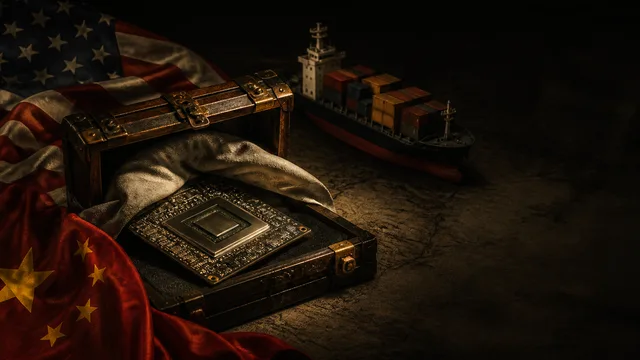
AI Chip Smuggling and the US-China Tech Divide
FT's Eleanor Olcott investigates the black market for Nvidia AI chips reaching China despite US export controls — and what it reveals about the tech race.

AI Loop Engineering: Separating Hype from Practice
Loop engineering is the latest term developers are chasing. A new video argues the fundamentals — prompt, context, harness — still matter more than the label.