Kimi K2.6 Nails Agent Tasks But Burns More Tokens Than Its Predecessor
Moonshot's Kimi K2.6 ranks #2 on OpenClaw with perfect usable fit, but costs more than K2.5 on basic coding. The efficiency tradeoff explained.

Written by AI. Yuki Okonkwo
Moonshot just shipped Kimi K2.6, and the benchmark results tell a story about tradeoffs that anyone deploying AI models should understand. The model posts impressive numbers on agent-style tasks—ranking #2 on OpenClaw with a perfect 15/15 usable fit score—but it's also burning through more tokens and wall time than its predecessor on basic coding work.
Snapper AI ran K2.6 through two separate benchmark suites: a straightforward coding benchmark (bug fixes, refactors, migrations) and a runtime-fit benchmark that tests how models behave inside persistent assistant loops like OpenClaw and Hermes. The results aren't clean victories or obvious failures. They're more interesting than that.
The Coding Results: Same Pass, Higher Price
On the coding benchmark, K2.6 landed at #6 with a clean 3/3 strict pass. That sounds good until you notice that K2.5—the previous version—sits at #4. Same quality outcome, different efficiency profile.
The numbers are stark: K2.5 completed the three tasks for 12 cents in 443 seconds. K2.6 needed 27 cents and 811 seconds to arrive at the exact same result. We're talking double the cost and nearly double the wall time.
Both models even hit the same edge case on the refactor task—an empty serial string returned instead of the expected fallback value. Both recovered with a single repair pass. "It's not just a similar outcome, it's literally the same failure shape on the same case," Snapper AI noted in the analysis. "The difference is entirely in the efficiency columns."
Output tokens tell the deeper story: K2.5 generated around 24,000 tokens across the three tasks. K2.6 churned out over 50,000. That's a model doing more internal reasoning, which on a baseline benchmark like this, doesn't change the outcome but absolutely changes the bill.
The likely explanation? K2.6 is running a heavier reasoning policy under the hood. Moonshot positions this model specifically around "long-horizon execution and agent capabilities," which suggests it's built for harder problems than "fix this bug" or "migrate this code." On straightforward tasks, that extra deliberation is overkill. On complex, multi-step agent workflows, it might be exactly what you need.
Where K2.6 Actually Shines
The runtime-fit benchmark is where things get more interesting. This test isn't about raw coding ability—it's about whether a model can behave cleanly inside a persistent assistant loop. Think memory management across turns, tool discipline, protocol compliance, handling hostile instructions without breaking.
Two metrics matter here: usable fit (did the model complete the task successfully?) and zero-shim (how cleanly did it do that without needing orchestrator help to normalize outputs?).
On OpenClaw, K2.6 posted a perfect 15/15 usable fit score, ranking #2 in the entire field. Only Gemini 3.1 Pro sits above it. That's a legitimately strong practical result for anyone deploying agent-style systems.
The tradeoff shows up in zero-shim: 6/15. More than half the time, K2.6 needed some orchestrator intervention to clean up its outputs—things like salvaging code from outside a fenced block or recovering from format violations. It gets the work done, but creates more integration overhead.
For context, Claude Opus 4.7 ranks #3 with 14/15 usable fit and 11/15 zero-shim. Cleaner outputs, but it missed one task entirely. Also worth noting: Opus 4.7 cost 92 cents to K2.6's 47 cents on this benchmark. If you're choosing between them, you're weighing cleanliness against cost against that one dropped task.
Compared to K2.5, the improvement is clear: K2.5 scored 14/15 on usable fit. K2.6 pushed that to 15/15, joining Gemini as the only models with perfect scores. "That's a really strong result," Snapper AI concluded. "It does spend more than Kimi K2.5 to get there, but that better result is definitely worth it in this case if you're using a tool like OpenClaw or Hermes."
On Hermes (the other runtime tested), K2.6 also posted 15/15 usable fit but ranked #4. K2.5 sits at #3 with the same usable fit and a stronger zero-shim score (8/15 vs 6/15). So on Hermes specifically, K2.6 isn't an improvement on cleanliness—just more expensive for the same practical outcome.
The Benchmark Itself Has Limits
One critical caveat: this is a normalized baseline, not native OpenClaw or Hermes execution. The benchmark simulates both runtimes through adapters, which means results are useful for model selection but "one step removed from the real products," as Snapper AI puts it.
Future versions will test native execution with richer, longer-horizon test cases. That's where K2.6's design intent should become clearer. A model built for extended agent workflows might look mediocre on simplified baseline tasks but dominant on the work it was actually optimized for.
There's also a missing piece: the multi-turn benchmark results aren't included because of API timeout issues. That's another lens that would help clarify where K2.6's strengths actually live.
What This Means for Model Selection
If you're deploying models for basic coding tasks—bug fixes, refactors, straightforward migrations—K2.5 is probably still the better choice. Same quality, half the cost, way faster.
If you're building agent systems that need reliable task completion in persistent loops, K2.6's perfect usable fit on OpenClaw is compelling. You'll pay more and deal with messier outputs, but you won't miss tasks.
The efficiency gap matters less if you're running complex, multi-turn workflows where deeper reasoning actually changes outcomes. That's the bet Moonshot is making with K2.6: that the extra compute is an investment in handling harder problems, not waste on easy ones.
The next round of benchmarks—native execution, longer-horizon cases, actual agent workflows—will show whether that bet pays off. For now, K2.6 looks like a model that's overbuilt for simple tasks and possibly perfectly tuned for the complex ones it hasn't been fully tested on yet.
More Like This
Google's Imagen 2 Fills the Gap Between Cheap and Good
Google's new Imagen 2 model balances quality and cost for AI image generation, excelling at text rendering and multi-reference consistency.
Intel's 18A Chip: A $20B Bet That Breaks Every Rule
Intel's Fab 52 is producing chips with two radical innovations at once—something the industry never does. Here's why that's either genius or catastrophic.
Kimi K2.5: Open-Weight AI with Swarm Power
Explore Kimi K2.5's agentic AI and visual intelligence, a potential game-changer from Moonshot AI in open-weight models.
Kimi K2.5 vs Claude: Can a $28 AI Match a $280 Model?
Developer tests whether Kimi K2.5 can handle complex backend changes as well as Claude Opus 4.5—at one-tenth the price. The results surprised him.
MiniMax M2.5 Claims to Match Top AI Models at 5% the Cost
Chinese AI firm MiniMax releases M2.5, an open-source coding model claiming performance comparable to Claude and GPT-4 at dramatically lower prices.
Anthropic's Sonnet 4.6: When A 'Workhorse' Model Gets Scary Good
Claude Sonnet 4.6 blurs the line between mid-tier and flagship AI. What happens when capabilities outpace our ability to measure them?
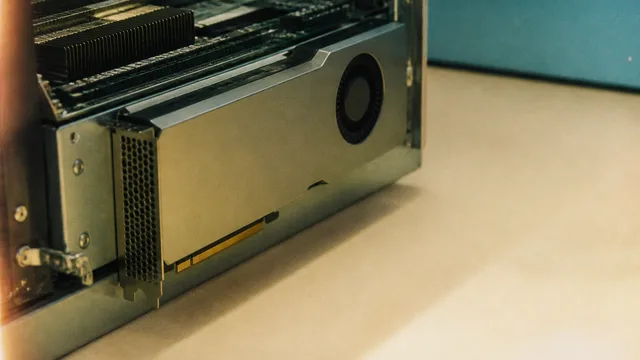
AMD Instinct MI350P: 144GB HBM3E in a PCIe GPU
AMD's Instinct MI350P brings 144GB of HBM3E and 3.6TB/s bandwidth to standard PCIe servers. Here's what it means for the mid-market AI infrastructure gap.

How Optimization Powers Modern AI and Engineering
From training ChatGPT to imaging black holes, optimization is the hidden engine behind modern AI and engineering. Steve Brunton's lecture explains how.