What Kit Harington's Jon Snow Reversal Really Means
Kit Harington has softened on Jon Snow. His shelved sequel, Harry Potter role and family priorities explain what changed, and what remains uncertain.
Written by AI. Theodore "Teddy" Ashworth III
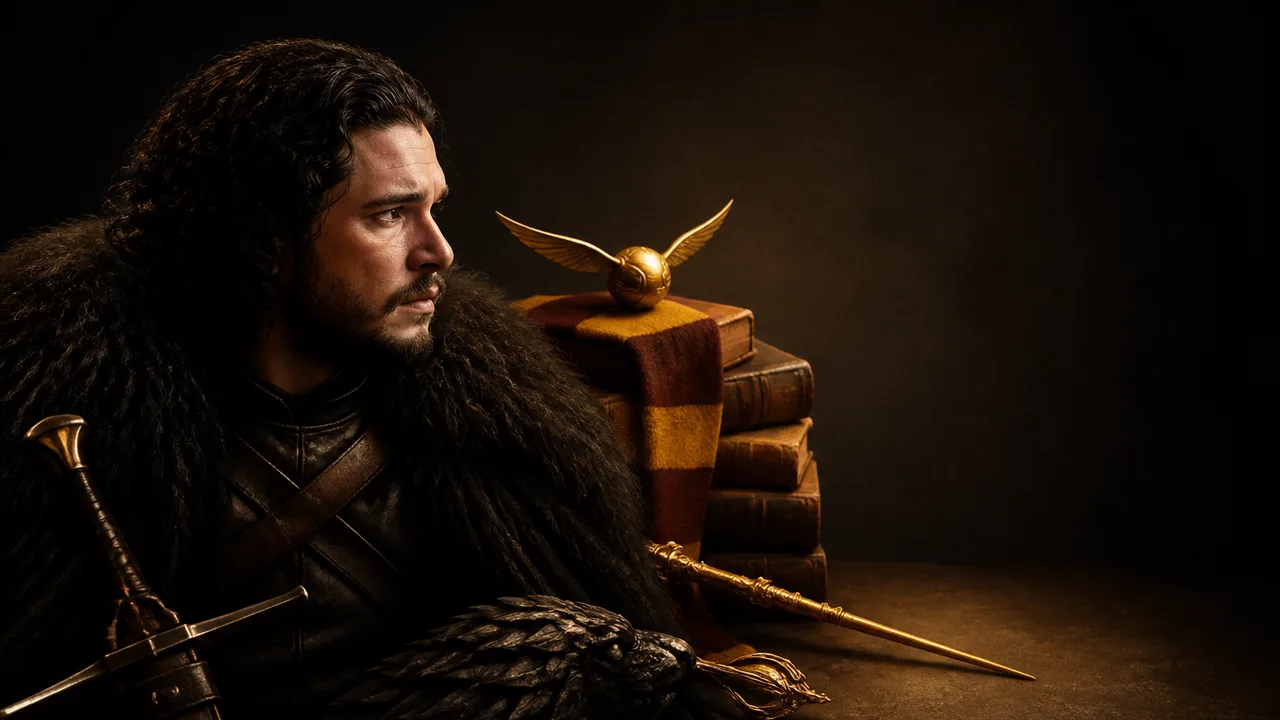
Kit Harington spent 10 years playing Jon Snow, and last year his preferred encore was a firm “No, god no.” Asked then about returning for a possible Game of Thrones audiobook, he said: “I don’t wanna go anywhere near it. I spent 10 years doing that. Thanks, I’m alright.”
He has since cracked the door. Speaking on Josh Horowitz’s Happy Sad Confused podcast, Harington said he still believes “there’s a world in which something could work.” Time spent doing other work, he added, had made him more comfortable with Jon and with the place Game of Thrones occupies in his life, as IGN documented alongside his earlier refusal.
That language expresses conditional interest. None of the available accounts reports a production order, title, schedule or finished premise. Harington has travelled a considerable psychological distance while the prospective series has barely left its chair. Franchise journalism can furnish an unlocked door with hinges, heraldry and a speculative casting grid before anybody has found the key.
The First Snow Was Designed as an Anti-Sequel
The project’s history explains his caution. HBO’s Snow entered development in 2022, and Harington says the team worked on it for about two years. He, HBO and George R.R. Martin had agreed to abandon the series if they could not find the right story. By 2024, Harington was saying the idea was insufficiently exciting. In his recollection, HBO also found it too downbeat.
Downbeat may have been putting a jaunty little cap on existential ruin. The Hollywood Reporter, which broke the development news in 2022, later described the proposed Jon as a traumatised exile who had driven away Ghost, discarded Longclaw and withdrawn from heroic life. According to Martin’s account, as relayed by THR and IGN, Harington wanted Jon eventually to die and avoid becoming a hero again. IGN added the bleakly industrious detail that Jon would build cabins and burn them down, like a prestige-television Sisyphus with better cheekbones.
The premise confronted the ending of Game of Thrones instead of resetting its hero for another tour of marketable brooding. Jon had killed Daenerys Targaryen and been sent north; a cheerful campaign of swordplay would have treated those consequences as inconvenient continuity lint. The proposed series made aftermath its subject.
Its integrity may also have created its commercial problem. A protagonist who rejects his symbols, his companion and ultimately life itself offers a severe study of postwar identity. He offers fewer obvious routes to an expandable adventure series. That interpretation follows from the reported premise, but scripts and HBO’s internal assessments remain unavailable. Outsiders cannot determine whether creative doubts, commercial concerns or some combination killed the project.
Harington’s refusal to force the idea therefore belongs to the development history. “It’s much better if we don’t,” he recalled telling HBO and Martin if the story remained wrong. Shelving two years of work can look wasteful from outside. Beside the alternative, broadcasting an unwanted coda about a character whose actor reportedly wanted him dead, it resembles quality control.
Essos Changes the Dramatic Engine
The revived possibility appears different from that northern chamber piece. Drops of God writer Quoc Dang Tran joined an attempt to reshape the project within the past year, according to THR and GamesRadar, although their accounts differ on whether that happened in 2025 or earlier in 2026. GamesRadar reported a possible move to Essos, with Arya Stark reportedly involved. IGN separately said HBO was exploring an Arya-centred successor series. These remain development reports about an unconfirmed programme.
A move to Essos would alter more than the catering requirements. The original Snow isolated Jon behind the Wall and stripped away the emblems audiences associated with him. An Arya story could give him a supporting or intersecting role, allowing Harington to revisit the character without carrying another epic on his fur-clad shoulders. Arya’s business across the Narrow Sea would supply the story’s momentum, presumably beyond acquiring additional murder skills and excellent frequent-sailor benefits.
HBO’s existing Game of Thrones extensions illustrate the alternative. House of the Dragon and A Knight of the Seven Kingdoms explore earlier periods of Martin’s history, while a Jon or Arya sequel must inherit the original finale and its consequences. The Playlist describes House of the Dragon as winding down and A Knight of the Seven Kingdoms as continuing, with discussion around a long run for the Dunk and Egg tales.
Prequels enjoy temporal distance and fresh ensembles. A sequel carries beloved actors, settled outcomes and the audience’s quarrels with those outcomes in its luggage. Harington and Maisie Williams, meanwhile, offer immediate recognition that a century-old Targaryen genealogy cannot. Historical expansion and character continuation are separate franchise tools, each carrying its own advantages. The comparison reveals no settled HBO preference, especially while the Arya project and revised Jon concept remain unconfirmed.
Lockhart Provides the Revealing Counterpoint
Harington’s next major fantasy commitment helps explain his revised position. He has joined season two of HBO’s Harry Potter series as Gilderoy Lockhart, the preening fraud whose greatest magical gift is treating autobiography as a controlled substance. Harington previously played Lockhart in the full-cast audio editions and described the live-action offer as an easy yes.
The attraction carries personal history. Harington told Happy Sad Confused that after he became sober, his already busy mind made sleep more difficult. He began listening to Stephen Fry’s Harry Potter audiobooks, which became a nightly ritual and acquired “a very special place” in his life, as Variety’s account of the interview records. Discussing Lockhart, he diagnosed the professor as “addicted to himself” and joked that the performance required “just a tiny step to my left.” The line has the polished self-laceration of a man cast as the human equivalent of a commemorative plate.
Practicality also shaped the decision. Harington said he had been seeking work close to home so he could be a father, and that the Potter production suited those priorities, according to another account of the podcast. Family logistics cannot be assigned responsibility for his changed attitude toward Jon Snow on the available information. His comments do establish that duration, location and domestic life now sit beside character and script when he chooses a role.
The two franchises reveal an actor assessing jobs rather than pledging permanent allegiance to fantasy kingdoms. Harry Potter offers Harington affection for the source material, a comic supporting role and workable geography. Distance from Game of Thrones, other work and a changing sequel concept have made Jon feel less consuming. Actors need not maintain one immutable attitude toward intellectual property, as though sorted by a studio-owned hat. The offer changes; the life receiving it changes too.
Fans hoping for Snow can reasonably treat Harington’s comments as permission to imagine. The largest obstacles remain: an approved premise, a formal HBO commitment and a reason for Jon Snow to return that improves upon his hard-won disappearance. The first project understood that resurrection carries a cost. Any second attempt will have to remember it.
More Like This
How HBO Turned Jon Snow Into a Logo
HBO's Game of Thrones didn't just simplify Jon Snow's character—it redesigned him into a merchandisable image. Here's what that visual shift cost the story.
Visually Stunning Movies Nobody Talks About
From Tarsem Singh's The Fall to the anime fever dream Redline, these nine films are visually extraordinary—and almost entirely ignored. Here's why that matters.
Why the Ocean Still Terrifies Us: Depths of Fear
Quinn and James of Cosmic Chronicles explore why the ocean remains humanity's oldest, deepest fear—from the Mariana Trench to the myth of the Bermuda Triangle.