Verlinde vs. Jacobson: Does Gravity Emerge From Nothing?
Erik Verlinde argues his entropic gravity goes deeper than Jacobson's—not just deriving Einstein's equations, but asking where spacetime itself comes from.

Written by AI. Mei Zhang
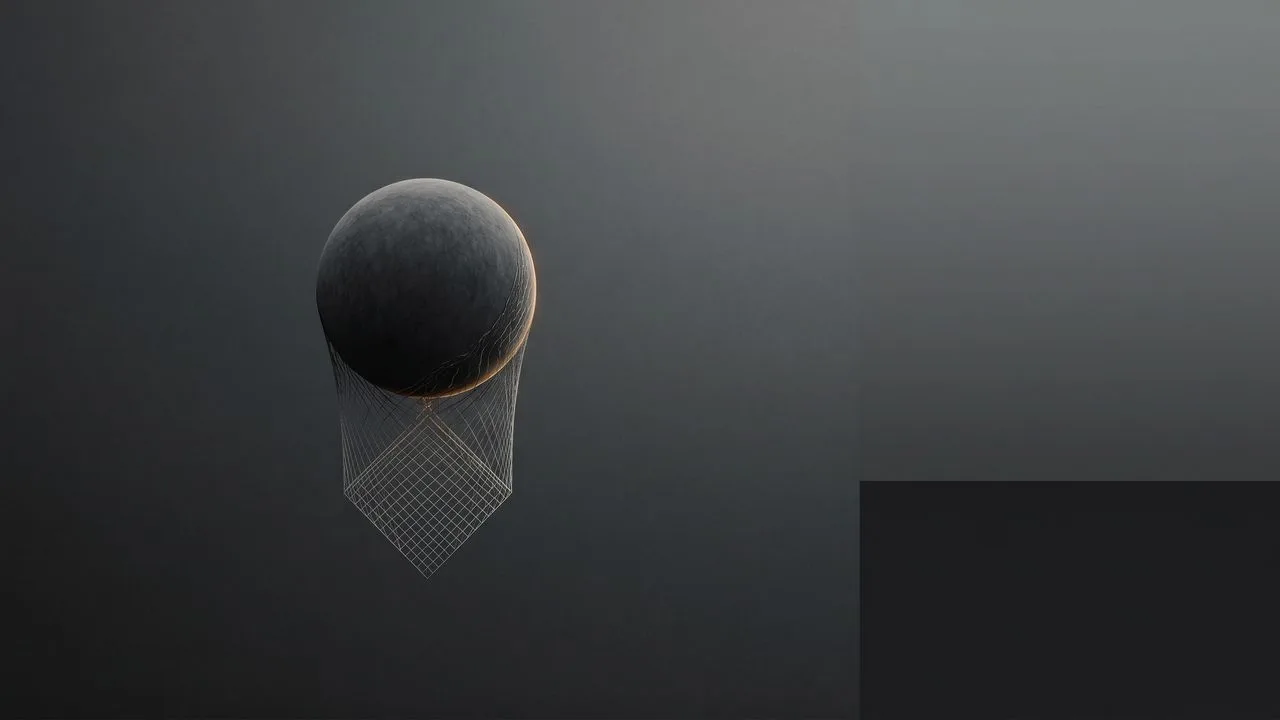
Photo: AI. Tomoko Hayashi
The moment that stuck with me from Erik Verlinde's conversation with Curt Jaimungal wasn't the big theoretical claim—it was the way Verlinde paused before describing Ted Jacobson's work. Generous, careful, almost protective. Jacobson certainly was the first to realize... And then, just as carefully, the pivot: but I think there's something circular about the reasoning.
That's a very particular kind of intellectual disagreement. Not dismissal. More like: you built a beautiful staircase, but I'm not sure we needed stairs—maybe we needed to question the building.
So what's actually being contested here? Let's work through it, because the gap between these two approaches is genuinely strange and worth sitting with.
The Jacobson setup
In 1995, Ted Jacobson published a paper that sent a quiet shockwave through theoretical physics. He showed that if you assume entanglement entropy—a measure of quantum information shared across a surface—scales with the area of a horizon, and then apply thermodynamic reasoning, Einstein's equations of general relativity fall out.
That's remarkable. Gravity, the geometry of spacetime curvature, tumbling out of thermodynamics. The headline version: gravity might not be a fundamental force so much as a thermodynamic consequence.
Hawking and Bekenstein had already noticed that black holes behave eerily like thermodynamic systems—they have temperature, they have entropy proportional to their horizon area. Jacobson essentially asked: what if that's not an analogy? What if it's the mechanism?
Verlinde credits this fully. He's not trying to erase Jacobson's result. He's trying to locate where it sits on a deeper map.
Where Verlinde thinks the map starts earlier
Verlinde's critique of Jacobson, as he laid it out in the interview, is about what you're allowed to assume at the start. Jacobson begins with spacetime already in place—there's an area, there's a horizon surface, there's geometry. Then he uses thermodynamics to derive the equations governing that geometry.
Verlinde's objection: "Assuming spacetime also is assuming its geometry. You cannot derive its geometry from something there."
In other words, if spacetime is truly emergent—if it bubbles up from something more fundamental—then you can't start with geometric quantities like area and claim you've derived spacetime from scratch. You've assumed the answer in your premises.
This leads Verlinde to a different starting question. Before you can derive how gravity behaves, you have to explain what space and time are. And before that, you have to explain inertia—why objects resist acceleration at all. That's Newton's first law: objects in motion stay in motion unless acted upon. Verlinde argues, in his interpretive frame, that this is more fundamental than the third-law-equivalent content that emerges from Jacobson's derivation of Einstein's equations. He derived F=ma—the second law—which in his view is the earlier logical step. Getting Newton's gravitational force law (or its relativistic generalization) is downstream from first explaining why mass resists being pushed.
That's the claim, anyway. Whether the "hierarchy" of Newton's laws maps cleanly onto a hierarchy of theoretical depth is Verlinde's argument, not a settled consensus in the field.
The entanglement entropy assumption: how load-bearing is it?
Here's the tension that doesn't fully resolve in the interview, and probably shouldn't be papered over.
Both Jacobson's approach and the Ryu-Takayanagi formula (a key tool in modern quantum gravity, developed in the mid-2000s) rely on the assumption that entanglement entropy scales with area. Verlinde acknowledges this is shared ground. But he also flags it as an assumption—and a potentially fragile one.
"If we assume that entanglement goes like the area we can derive the equations, but this is an assumption. And you may wonder whether that assumption is always true."
The worry is specifically about our universe. Most of the mathematical machinery for entropic gravity and holography has been developed in anti-de Sitter space (AdS)—a negatively curved spacetime that looks nothing like where we actually live. Our universe appears to have positive cosmological constant, meaning dark energy is real and the universe's expansion is accelerating. The Lambda-CDM model—our current best-fit cosmological framework—estimates roughly 68% dark energy and 27% dark matter based on fits to CMB data and large-scale structure. Worth noting: those percentages are themselves outputs of the theoretical framework Verlinde is questioning, which is either a satisfying puzzle or a mildly vertiginous one depending on your mood.
Verlinde's position is that when you redo the derivation of Einstein's equations in a universe with dark energy, the area-entropy relationship may not hold in the same clean way—and deviations might appear. That's where he thinks dark energy and dark matter might stop being mysterious add-ons and start being predictable consequences of a corrected gravitational theory.
That's a large bet. It might be right. The field hasn't settled it.
The AdS/CFT boundary problem
One of the more interesting exchanges in the interview involved the Ryu-Takayanagi formula specifically. When Jaimungal pressed Verlinde on whether entanglement entropy can really give you emergent space—noting that the formula already assumes a boundary geometry to derive the bulk—Verlinde said something worth quoting at length:
"You're right that the area that we define there is not totally emergent in the sense that it already has some definition on the boundary. This is one of the reasons why I think AdS/CFT is not the final story of how we're going to understand spacetime."
The boundary-to-bulk move in AdS/CFT is powerful—it's given us precise calculations of entanglement entropy, black hole information, and more. But Verlinde's point is that you're sneaking in geometry at the boundary and then claiming the bulk geometry is derived. Our universe doesn't have a boundary in the relevant sense. So any final theory of quantum gravity can't lean on that scaffolding forever.
He's not alone in this concern. It's a live debate in the field. But it does complicate any triumphalist reading of holography as a solved problem.
The complexity turn
One thread Verlinde dropped almost in passing—and then picked up again—is computational complexity. When asked whether entanglement entropy is well-defined in collapsing or non-equilibrium configurations, he confirmed it can be, citing work by Rangamani, Hamilton, and others on dynamical situations. But the more interesting answer was what came after: "There's more than just entanglement that's going to be important in this microscopic description."
Watching Verlinde navigate this part of the interview, you could see him almost visibly weighing how far to go. He named complexity like someone flagging a road they've driven partway down but not completed: carefully, without overselling the destination. Susskind has been working in this direction since roughly 2014 onward—the complexity-as-volume conjecture followed by the complexity-as-action conjecture around 2015-2016—arguing that the interior volume of a wormhole keeps growing long after entanglement has stabilized, which suggests complexity is capturing something entanglement misses. Verlinde gestured toward this territory without claiming it was mapped.
The credit trail here is also genuinely tangled. The idea that entanglement connects spacetime regions—that EPR (entangled particles) and ER (Einstein-Rosen bridges, or wormholes) are the same thing—was popularized by Maldacena and Susskind's 2013 "ER=EPR" paper. But Verlinde mentioned in the interview that he and a colleague had independently arrived at a version of this idea in email exchanges around 2012, without publishing. He credited the original insight to Van Raamsdonk, and was careful to note that Maldacena's earlier work on entangled CFTs already contained seeds of the same observation. The history of ideas in this corner of physics is genuinely collaborative and contested—not a clean line of individual discoveries.
What's actually at stake
Verlinde's program, if it works, would mean gravity isn't just described by thermodynamics—it is thermodynamics, all the way down to the emergence of space and time themselves. Jacobson showed you can get Einstein's equations from thermodynamic reasoning. Verlinde wants to show you can get the whole structure—spacetime, inertia, mass, gravity—without assuming any of it in advance.
That's either the most ambitious unification project in physics right now, or it's still decades from being testable enough to evaluate. Verlinde himself said as much: "We're still well years and maybe even decades away from having this better understanding."
The honest read of the interview is that Verlinde has identified a real gap in Jacobson's reasoning—the circularity of assuming spacetime to derive spacetime—and built an approach that tries to go one level deeper. Whether that level is deep enough, and whether the deviations from Einstein's equations he predicts in dark-energy universes will actually show up in data, remains open.
But the question he's centering—what are space and time, before they're geometry?—is the right one to be asking. Even if the answer is still coming.
More Like This
Rethinking Cosmic Acceleration: A Local Illusion?
Exploring the debate on whether the universe's acceleration is a local phenomenon, challenging the concept of dark energy.
The Limits of a Unified Theory of Everything
Exploring why a theory of everything might never encompass life's complexities.
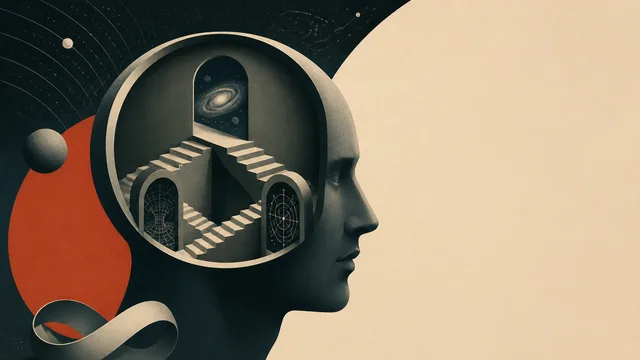
What "Fundamental" Actually Means in Science
Curt Jaimungal's latest video unpacks "the nature of reality" across physics, philosophy, and math — and the distinctions hit differently when you cover CRISPR for a living.
Black Hole Paradox: Are Reference Frames the Key?
Exploring how reference frames might resolve the black hole information paradox.
Exploring Cosmic Time Delays and Dark Energy
Time delay cosmography may unveil dark energy mysteries, resolving Hubble tension with new cosmic insights.
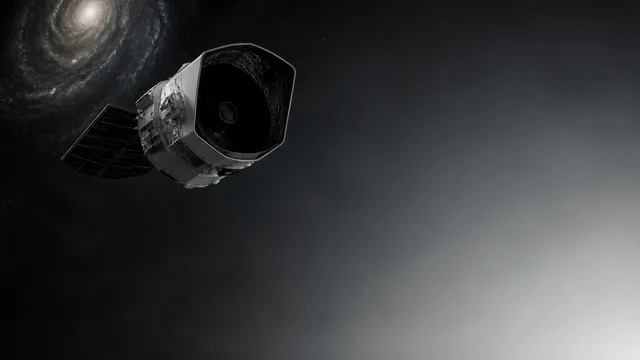
NASA's Roman Space Telescope Launches Into Deep Space
NASA's Roman Space Telescope launched August 30, 2026 on a Falcon Heavy. Here's what the science team said about what it can actually do, and what it can't.

Ancient Egyptian Princesses Were Trained Weapon Users
New skeletal analysis of five Middle Kingdom mummies reveals ancient Egyptian princesses used bows and daggers — and a bias that buried that fact for decades.
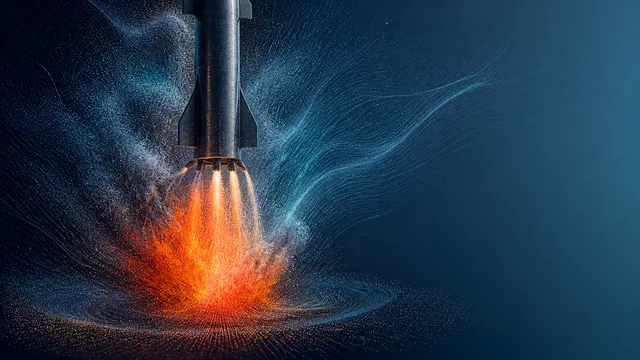
SpaceX Starship Flight 13 Aborts at Launch
SpaceX's Starship Flight 13 aborted at the last second when engines failed to ignite. What the scrub reveals about iterative testing, redundancy, and real stakes.