The Limits of a Unified Theory of Everything
Exploring why a theory of everything might never encompass life's complexities.

Written by AI. Mei Zhang
When you hear 'Theory of Everything,' you might picture a grand, all-encompassing framework tying together the universe's complexities like a cosmic bow. But what if that bow can't quite wrap around everything, especially when it comes to the chaotic dance of life itself? 🤔
In a recent episode of Curt Jaimungal's YouTube series, the concept of a 'Theory of Everything' is put under the microscope, and the findings suggest that the biosphere might just be too wild to tame with a single theory.
The Ever-Changing Biological Tapestry
Biological evolution isn't like your high school math problems where everything eventually adds up neatly. Instead, evolution is a bit like a never-ending buffet—new dishes (or possibilities) are constantly being added that were never part of the original menu. This open-ended nature means new biological functions can emerge that couldn't have been predicted from existing ones.
Take the swim bladder, for example. Originally stemming from the lungs of lungfish, the swim bladder evolved by what Darwin might call 'pre-adaptation.' This term refers to how parts originally evolved for one purpose find new uses—like our tongues, initially for eating, now crucial for speaking.
Stuart Kauffman, in the video, suggests that this unpredictability is a fundamental aspect of life's evolution. "New possibilities come to exist all the time in the evolving biosphere, and that’s outside of the purview of physics," he explains. In other words, the biosphere isn't just a series of dominoes waiting to fall; it's constantly adding new pieces.
Beyond Physics
The video emphasizes that while physics provides the building blocks of life, it doesn't dictate how those blocks will assemble into living organisms. Imagine trying to predict the entire storyline of a novel from the alphabet alone—physics gives us the letters, but biology writes the narrative.
Kauffman argues, "There is a domain of entailing laws—physics, quantum mechanics, general relativity. There is a domain of no entailing laws, and we have known that." This dual-domain view suggests that while physical laws are consistent and predictable, biological functions are dynamic and often surprising.
Complexity Theory Meets Philosophy
This isn't just a science debate; it's a philosophical one, too. Traditional views, like those of Plato and Newton, assume all possibilities already exist in a sort of cosmic blueprint. But Kauffman challenges this, proposing that life invents new possibilities as it evolves, making a static 'Theory of Everything' an elusive goal.
This idea parallels technological evolution, where innovations often stem from immediate possibilities. Think about how the crossbow evolved from the bow; the step to innovation was small but significant, driven by adjacent possibilities.
Open Questions and Future Directions
So, if life's possibilities are constantly evolving, what does this mean for our understanding of evolution and science? Can we ever truly predict the next big leap in biology or technology?
As Kauffman eloquently puts it, life "creates new adjacent possibilities." This suggests that rather than searching for a singular theory, we might need to embrace the chaos and unpredictability of life as fundamental to understanding it.
In the end, the conversation leaves us pondering: If a unified theory can't encompass life's creativity, should we redefine what 'understanding' means in the context of the universe?
More Like This
Three Biology Breakthroughs That Rewrote Evolution's Rules
New research reveals intelligence evolved twice independently, fathers pass traits through sperm RNA, and evolution happens in bursts—not gradual change.
Magnetic Mayhem: 400 Car Batteries Unleashed
Explore the electrifying effects of extreme currents as a nuclear engineer reacts to a wild experiment with 400 car batteries.
Exploring the Limits of Physicalism: Insights from Philosophy
Timothy Williamson challenges physicalism, proposing non-physical entities like mathematical objects exist beyond physics.
Life Emerged From Code Merging, Not Just Mutation
Researcher demonstrates self-replicating programs emerge from random code through symbiogenesis—challenging how we think evolution works.
How a Single Hack Nearly Crippled the Internet
A 2021 hack nearly exposed millions of servers, highlighting the risks in open-source software's reliance on individual contributors.
Why Parsecs Puzzled Neil deGrasse Tyson
Neil deGrasse Tyson unpacks why the parsec is an awkward unit in science, even embarrassing for an astrophysicist.
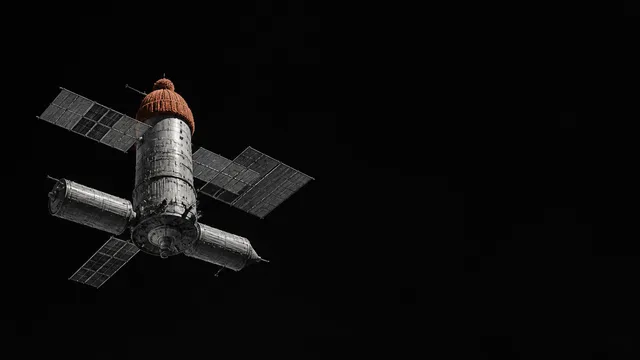
Space Stations Beyond the ISS: A Forgotten History
From a Cold War spy base to a Soviet ice rescue to China's chicken-wing oven in orbit — the real history of space stations is wilder than you think.
Curiosity at Sol 4948: Reading Mars Like a Genome
Curiosity Rover hit Sol 4948 in Gale Crater. What its mineralogy tells us about Mars' chemical autobiography—and why that question is getting urgent.