Magnetic Mayhem: 400 Car Batteries Unleashed
Explore the electrifying effects of extreme currents as a nuclear engineer reacts to a wild experiment with 400 car batteries.

Written by AI. Mei Zhang
Ever wondered what would happen if you combined 400 car batteries and a CRT TV in a mad scientist's dream experiment? Well, the folks over at T. Folse Nuclear did just that, and the results are a cocktail of physics, electricity, and a dash of chaos.
In a recent video, a nuclear engineer reacts to Styropyro's electrifying experiment, where 400 car batteries are wired together to create intense magnetic fields. The engineer dives into the physics behind these dramatic demonstrations, drawing parallels between tabletop experiments and challenges faced in nuclear fusion reactors.
The CRT TV's Unfortunate Encounter
For those who grew up with CRT TVs, you might recall the psychedelic effects of bringing a magnet close to the screen. This experiment took that childhood curiosity to a whole new level. When exposed to the intense magnetic fields generated by the battery bank, the TV's electron beam was deflected off-screen, leading to a temporary shutdown. This isn't just a party trick; it's Maxwell's equations at work, illustrating the power of magnetic fields to disrupt electronics.
"The magnetic field was so intense that it just turned off," the engineer notes, highlighting how sensitive electronics are to electromagnetic interference. This isn't just a problem for TVs; it's a critical consideration in nuclear power plants where electromagnetic interference can compromise safety systems.
Fusion Reactor Challenges: Kink Instability
The experiment also sheds light on a phenomenon known as kink instability, a major hurdle in achieving nuclear fusion. Imagine a current path as a perfectly straight line, with magnetic forces balancing each other. Introduce a bend, and those forces become unbalanced, pushing outwards and creating a runaway effect. This kink instability can cause significant issues in fusion reactors, where plasma currents flow without the mechanical constraints of solid conductors.
The engineer explains, "In fusion, you have millions of amps, extremely high-temperature plasma...there is no solid structure to suppress the instability." This tabletop experiment magnifies these forces in a way that's visually captivating but also scientifically significant.
Unexpected Phenomena and Magnetic Sculptures
Throughout the video, the engineer observes some surprising outcomes. At one point, metal bolts were sucked into the magnetic "black hole" and welded together, forming an accidental sculpture. "What? That's so weird. I've never had that happen," exclaims the engineer, underlining the unpredictability of extreme currents.
These phenomena aren't just for show. They provide insights into the behavior of materials under extreme electromagnetic forces, knowledge crucial for designing safer and more efficient energy systems.
The Art and Science of Extreme Currents
What makes this experiment more than just a series of explosive visuals is the scientific exploration of fundamental forces. The engineer’s reactions and explanations serve as a bridge between spectacle and science, showing how seemingly chaotic experiments can offer valuable lessons for real-world applications.
As technology advances and our energy needs grow, understanding and harnessing these powerful forces becomes increasingly important. Whether it's refining the safety measures in nuclear reactors or pushing the boundaries of what's possible in fusion energy, experiments like these are more than just electrifying—they're enlightening.
The question remains: as we delve deeper into the world of extreme currents and magnetic fields, what other surprises lie in store? As the engineer would likely agree, the next experiment might just be one battery away from a groundbreaking discovery.
More Like This
Engineering an LED Supernova: A Nuclear Approach
A nuclear engineer evaluates a DIY LED project, highlighting heat management, design intricacies, and nuclear parallels.

Dunkin' Donuts' Math Contest: A Sweet Challenge
Explore Dunkin' Donuts' math contest, featuring the Fibonacci sequence and Pigeonhole Principle, blending marketing with mathematics.

How a Single Hack Nearly Crippled the Internet
A 2021 hack nearly exposed millions of servers, highlighting the risks in open-source software's reliance on individual contributors.
First Real-Time Supernova Observation Challenges Theories
Astronomers capture supernova SN 2024ggi in real-time, unveiling unexpected explosion shapes and challenging existing theories.

Why Parsecs Puzzled Neil deGrasse Tyson
Neil deGrasse Tyson unpacks why the parsec is an awkward unit in science, even embarrassing for an astrophysicist.

The Phase of Matter That Shouldn't Exist
A nuclear engineer explains supercritical fluids—the state of matter where the line between liquid and gas just disappears.
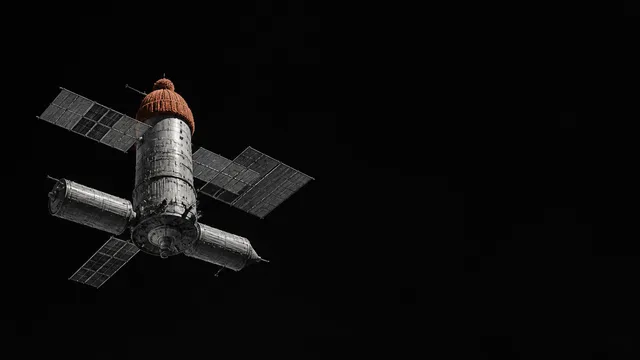
Space Stations Beyond the ISS: A Forgotten History
From a Cold War spy base to a Soviet ice rescue to China's chicken-wing oven in orbit — the real history of space stations is wilder than you think.
Curiosity at Sol 4948: Reading Mars Like a Genome
Curiosity Rover hit Sol 4948 in Gale Crater. What its mineralogy tells us about Mars' chemical autobiography—and why that question is getting urgent.