Vanderbilt Restores Wi-Fi as Cyberattack Limits Systems
Vanderbilt restored campus Wi-Fi after a cyberattack, but most systems stayed restricted. What the response reveals about recovery, claims and campus work.

Written by AI. Rachel "Rach" Kovacs
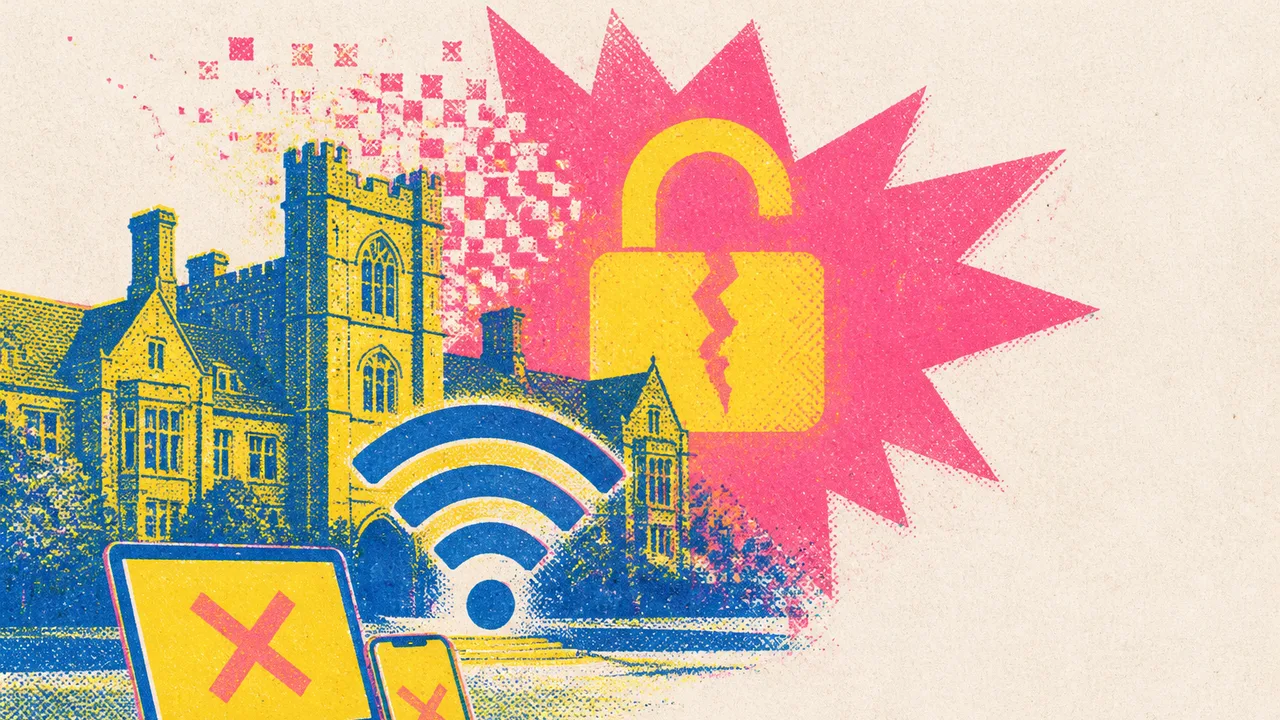
Vanderbilt University restored campus Wi-Fi on Monday evening, but access to most university systems remained restricted after a cyberattack. Students were told to attend classes on Tuesday; staff were told to report to work. That combination is a more useful picture of the incident than a single status light marked “online”: people can return to campus routines while the tools they use for those routines remain unavailable.
The university said Monday that it was responding to an active cybersecurity incident that might affect university devices, systems and cloud-based services. It initially instructed students and staff to shut down university devices and disconnect from campus Wi-Fi. By evening, Wi-Fi access had returned while most systems remained restricted. Vanderbilt also told students to contact instructors about flexibility on coursework deadlines. Its athletics ticketing system was unavailable, preventing students from claiming tickets for Saturday’s football game against Alabama.
That sequence gives readers two separate measures of recovery. Wi-Fi lets a device connect to the campus network. University systems and cloud services are where people may need to retrieve files, submit work or carry out administrative tasks. Restoring the connection addresses one problem; keeping other services restricted leaves another. The continuing restrictions do not reveal which systems an attacker reached. They do tell students and staff why a working wireless connection is a poor substitute for a clear service-by-service update.
What the Attackers Claim, and What the Campus Knows
The group calling itself BYOD claimed responsibility on Monday. On its leak site, it alleged that Vanderbilt’s databases were locked and that it possessed research data and records containing Social Security numbers and other personal information. Those are extortion claims. Vanderbilt has not confirmed the group’s involvement, whether devices or databases were encrypted, whether data was stolen, or how anyone entered its systems.
The visible threats still disrupted campus life. Computers reportedly played an audio message attributed to BYOD, and students using university-issued devices reported ransom notes and pop-ups appearing on their desktops. A threat displayed on a computer can demand attention without proving that every claim inside it is true. For anyone deciding what personal action to take, the difference is concrete: a claim about stolen Social Security numbers is a reason to watch for an institutional update, while an unexpected prompt on a university device calls for the immediate device guidance Vanderbilt has already issued.
That guidance covered more than a strange message on a screen. Vanderbilt identified unexpected authentication requests, unfamiliar applications, and missing or changed files or cloud-storage permissions as warning signs. It told people who noticed suspicious activity not to investigate or troubleshoot it themselves, but to shut down the device and contact the IT service desk. That is a practical division of labor: a student or employee can report what happened without trying to diagnose an incident from a potentially affected machine.
The university warned that devices, systems and cloud services might be affected, then told people to shut down university devices and disconnect from campus Wi-Fi. That combination explains the breadth of its precaution; it does not identify a compromised personal laptop, a particular cloud account or an attacker’s route through the network. Even the group’s name, BYOD, should not be mistaken for a finding that a bring-your-own-device policy caused the incident.
One person said files had been rewritten into a “.byod” format, while another said research stored on university systems was inaccessible. The second person said they turned to personal backups. The athletics ticketing outage is a more public example of the same operational problem: even if classes remain on the schedule, a campus service can still be out of reach.
A Recent University Case, with Different Stakes
BYOD also claimed responsibility last month for an attack on the University of New Mexico Health Sciences Center. That incident caused system outages and disrupted patient care and academic activities. The comparison helps locate the stakes of a university outage in the work a service supports. At UNM, the reported disruption reached care delivery. At Vanderbilt, the reported effects so far include restricted systems, inaccessible research for one person and unavailable ticketing. The cases offer no basis for assuming a shared entry point, equal severity or the same recovery timetable.
They do illustrate why “the campus is open” cannot answer every operational question. A university can keep activities scheduled while individual systems are unavailable, as Vanderbilt’s Tuesday instructions and ticketing outage show. In a health sciences setting, an outage can intersect with patient care as well as teaching. The sensible comparison is between the functions interrupted, rather than between the attackers’ descriptions of what they say they took.
For Vanderbilt, the next useful milestones are narrower than a declaration that everything is fine. Which services can students and staff use? Which remain restricted? What should someone do if a device produces one of the warning signs the university listed? The institution has already supplied an answer to that last question. Its investigation will determine whether the theft and encryption allegations require further action, including advice for people whose information may have been affected.
Until then, campus Wi-Fi and campus recovery remain different entries on the same checklist. Vanderbilt has checked one of them back on. The status of the others will determine how quickly people can do the work they came to campus to do.
More Like This

France's Fridge Attacks Expose a Cold-Chain Weak Point
France blames an Iranian unit for fridge attacks that spoiled food. A separate blood-storage incident shows how alarms and staff intervention can limit losses.

Capcom ID Breach Exposes Millions of Customer Email Records
Capcom says 11,774,247 CAPCOM ID email records were accessed. Its 2020 ransomware case helps separate the latest account exposure from a corporate network attack.
Unpacking 2026's First Major Security Bug
Explore the critical HPE1 view bug, a 10.0 CVSS vulnerability disrupting corporate management.
Pentagon Personnel Breach Exposed Millions of Records
A reported Pentagon personnel breach exposed millions of records. Its long timeline and unencrypted Social Security numbers raise questions about risk and response.

OpenAI's Astra, AGI Claims, and a Security Red Flag
Sam Altman says OpenAI will have AGI by December. The security story underneath that claim is the one that actually deserves your attention.

Needle 2 Is a 45M Parameter Model Built for Edge Devices
Needle 2 runs on 28MB of RAM as a 14MB binary. Here's what it actually does, what it can't do, and why that distinction matters.