How UTA Is Rebuilding the Creator Economy Deal
UTA's Ali Berman and Raina Penchansky explain how they build creator businesses—from brand deals to physical products and navigating AI threats.
Written by AI. Damon Wright
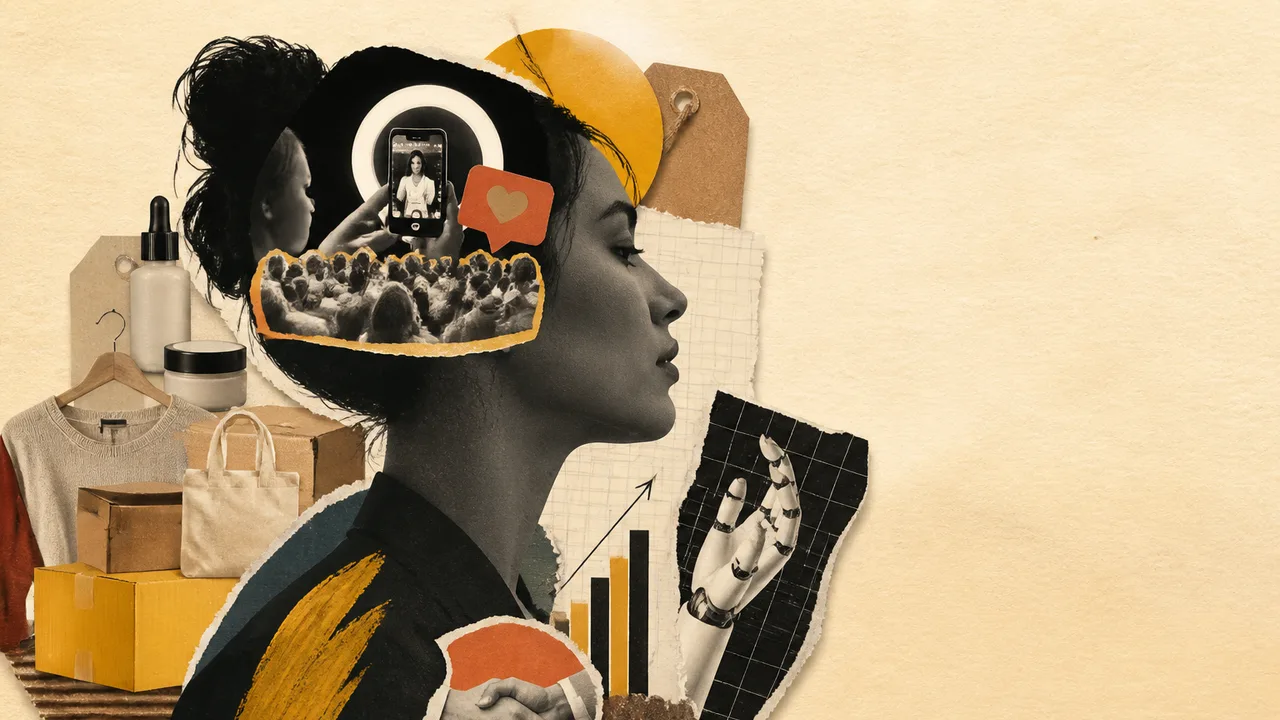
Photo: AI. Wren Sugimoto
There's a line from this conversation that accidentally became the funniest moment in the episode—and also the most clarifying one. Raina Penchansky, mid-thought, says "we're moving at the speed of content," then catches herself, laughs, and says she's never said that before. Nilay Patel immediately clocks it as a tagline in the making. They're workshopping it live.
That moment tells you a lot about what UTA's Creators Division actually is: an organization so deep inside the ecosystem that its language is becoming the language of the ecosystem. Berman and Penchansky, co-heads of UTA's Creators Division alongside Oren Rosenbaum, sat down with Patel at Cannes Lions for a Decoder episode that is, on its surface, a conversation about the business of representing creators. Underneath it, though, there's a more interesting set of questions—about money, infrastructure, platform dependence, the ethics of a fully commercialized media environment, and whether the agencies now running creator careers have figured something out, or are just the most recent layer of extraction.
The Agency Isn't What It Was
The standard mental model of a talent agency—Ari Gold screaming into a phone, taking 10% of a check—doesn't map well onto what Berman and Penchansky describe. UTA has been in this space for 20 years, predating the word "influencer" and starting in the blogger era when, as Penchansky puts it, she was working with women in fashion who'd ask her what to charge a brand for a post. She co-founded Digital Brand Architects before Instagram launched. Berman came up on the traditional literary side before gravitating toward direct-to-consumer creators building their own communities. UTA acquired DBA in 2019.
What they describe now looks less like talent brokering and more like a distributed infrastructure layer for independent media businesses. Berman frames it explicitly: "Our clients are the modern day media businesses." They don't have rooms full of accountants—but some have in-house accounting now, because their businesses require it. The division runs a brand partnerships team, a product development team, and a data operation. They're in clients' DMs reacting to content in real time and running quarterly strategy sessions.
This is a genuinely different business model than the old Hollywood agency. The question worth sitting with is who it's different for.
The 10% Problem
The standard agency commission on brand deals is 10%. Berman and Penchansky confirm this, with the caveat that it's fluid—"sometimes more, sometimes less"—depending on deal structure and UTA's role. For the straightforward brand deal, the math is clean enough. Creator gets paid, agency takes a cut.
But the more interesting cases are the ones where creators are launching actual product companies. Alix Earle and Poppy have equity deals. Patrick Starrr's One Size Beauty line—which Penchansky describes as selling a setting spray every eight seconds at Sephora—required a different kind of involvement entirely. UTA says they sit on the cap table in these situations. They're not just making introductions; they're in packaging meetings, distribution conversations, marketing strategy.
"It is not just an introduction," Penchansky says flatly. "We are involved in packaging, distribution, marketing, all of the things that are fundamental to launching the brands."
This is where the commission structure conversation gets genuinely murky, and Berman acknowledges it: the deals are complicated, capital comes from multiple directions, and the terms are negotiated case by case. What's missing from this conversation—and it's a real gap—is any systematic accounting of what creators walk away with relative to what the agency captures in these equity structures. The general vibe is "we add value, we get compensated for value added," which is a reasonable principle but not a transparent framework.
Compare this to CAA's recent move to launch a fund to buy creator businesses outright. That's a different bet—agency as acquirer, not service provider. UTA seems to be positioning itself differently: help the creator build and own it, sit on the cap table rather than buy the table. Whether that serves creators better depends on what the cap table terms actually look like, which neither Berman nor Penchansky was going to disclose in a podcast interview.
The Influencer Cliff Is Real
The most useful concept in this conversation comes from outside UTA entirely. Social media thinker Carmen Vicente coined the term "influencer cliff"—the moment when a creator pivots from content to direct product sales and the audience revolts. The implicit contract between creator and audience is: I give you free content, you give me attention. Sponsorships are tolerated because they fund the free content. But asking the audience to transact directly is a different ask, and it breaks a lot of people.
The Patrick Starrr story is the best evidence Penchansky offers for what it looks like when it works. Starrr launched One Size Beauty not with foundation or eyeshadow—the obvious beauty launch play—but with makeup remover wipes. The logic: he got rejected from a MAC counter job as a teenager for wearing too much makeup. Makeup remover was his story. His audience knew exactly why that was the first product, without needing it explained.
"When you come at it from the point of view of being so profoundly passionate about that thing, and you know exactly what that point of view is and how it intersects with your audience," Penchansky says, "then you're going to find success."
That's the thesis in miniature. Content-market fit before product-market fit. The product has to live inside the narrative the creator has already built—not beside it, and definitely not in conflict with it.
The follow-on question, which Patel pushes at but never quite pins down, is whether UTA's role in these product launches creates pressure toward commercialization that undermines the very authenticity that makes the creators valuable in the first place. If your agency is staffed with a product development team and sitting on cap tables, they have a financial interest in you launching something. That's worth naming.
The Platform Problem Isn't Solved
Berman and Penchansky are explicitly platform-agnostic in their philosophy. Multi-platform presence, Substack, newsletters, IRL experiences—diversification as the only durable strategy when any single platform can change its algorithm or disappear overnight. The funnel is wide, they say, but the spout is narrow: more ways to build an audience than ever, but fewer people actually breaking through to real scale.
What they don't have—and can't have—is leverage over the platforms themselves. Patel makes this point directly: UTA can't bring YouTube's CEO Neal Mohan to the table to negotiate better rates. The Paul brothers sell bottled water because physical product businesses generate enterprise value that a TikTok channel doesn't. Creators are going analog because the digital economics are, structurally, platform-captured.
Both Berman and Penchansky are more sanguine than Patel about the AI threat to creators. Their argument: community is built on human connection, AI-generated content can't replicate it, audiences will eventually tune out the slop. Penchansky invokes the Knicks moment—a sports story that generated offline community through online conversation—as evidence that human-created content still drives the moments that matter.
Patel's counterpoint is sharper: the pressure to post constantly (four TikToks a day is not unusual for emerging creators) will naturally push creators toward AI tools to relieve that pressure, and the line from "AI-assisted" to "AI-generated" to "fully synthetic creator" is shorter than anyone wants to admit. Adam Mosseri has said out loud that Instagram feeds may become fully individualized, with AI-generated content tailored per person. Mark Zuckerberg has said Meta will AI-generate ads for clients entirely. Neither Berman nor Penchansky disagreed that this was coming—they just expressed faith that human creators would survive it.
That faith might be well-placed. But when Patel asks directly whether UTA has any mechanism to stop platforms from using synthetic versions of their clients' likenesses, the honest answer is: not really. They can work legal channels. They have platform relationships. But there's no systematic solution.
What Kind of Economy Is This
The conversation's most uncomfortable moment comes when Patel asks Berman whether it's good that Gen Alpha is growing up in an environment where the default relationship to media is consume-and-purchase. Berman demurs—"I'm not here to be the arbiter of what's ethical"—and Penchansky pivots to the egalitarianism argument: more people have voices now than ever before, and that's genuinely true and worth something.
But Patel's point doesn't go away. A generation that doesn't know the difference between content and advertising, between editorial and sponsored, between authenticity and performance—that's not neutral terrain. Penchansky's 11-year-old daughter doesn't have the reference point of pre-algorithm Vogue. She just knows what she knows.
The people in this conversation are, structurally, beneficiaries of the system they're describing. That doesn't make their analysis wrong. It does mean the question of whether creators-as-marketers is a feature or a bug lands differently depending on where you're sitting.
Whether or not there's a counterculture rebellion coming—and historically there usually is—the business of getting creators from content to enterprise value is, right now, running through agencies that are simultaneously advisors, infrastructure providers, and equity holders. That's a lot of roles for one relationship.
More Like This

Heavy Fuel Oil Powers Global Shipping at a Steep Cost
Heavy fuel oil powers nearly 80% of global shipping. It's cheap, toxic, and nearly impossible to replace. Here's what it actually is and what's at stake.
Mark Rober's $60M Free Science Curriculum Bet
Mark Rober is spending $60M to give free STEM curriculum to every teacher in America. The education bet is the headline. The business story underneath it is what caught my eye.
Higgsfield's AI Cloned a Creator's Voice. Who's Liable?
Higgsfield's AI reproduced an Australian creator's voice without consent. What does that mean for right-of-publicity law, the EU AI Act, and platform liability?

How APL Turned an NBA Ban Into a Brand Identity
APL's NJ Falk breaks down the six storytelling threads behind one of e-commerce's most unlikely brand-building moves—starting with an NBA ban.
ChatGPT Ads Are Here—and the Playbook Looks Familiar
OpenAI is testing ads in ChatGPT. The current version looks fine. But if you've seen how Google and Facebook evolved, you know where this could go.

AI Voice Cloning and the Accountability Gap
Voice cloning already passes in casual listening. The harder question isn't whether AI was used—it's who's accountable for what gets said with it.

Marina Wyss Went From $60K to $600K in 8 Years
Marina Wyss details the pay cuts, pivots, and 100+ job rejections that took her from $60K to $600K in AI—and what her creator business actually reveals.
Destiny 2 Ends: A Community Bungie Built and Switched Off
Bungie ends Destiny 2 content updates in June. Three creators reflect on careers, community, and what happens when a corporation owns your third place.