Upwind Raises $400 Million as AI Agent Security Grows
Upwind's $400 million round puts AI-agent security in focus. Buyers must test whether runtime defenses stop risky cloud actions beyond existing security controls.

Written by AI. Samira Barnes

Upwind has raised $400 million at a reported $3.8 billion valuation, placing a large bet on security for cloud systems that increasingly give AI agents permission to act. The company says its revenue grew fourfold in 2026, though the comparison period and the share attributable to AI-related products have not been specified. Those figures describe a fast-growing business. They cannot tell a buyer whether an agent with the wrong permissions will be stopped before it changes a production system.
That is the question underneath the financing announcement. A chatbot that generates an unsafe answer may mislead a person. An agent connected to cloud resources can potentially retrieve data, call services or initiate changes using credentials an organization has given it. The relevant security boundary shifts from what the software says to what it can do, which identity it uses and who can interrupt it.
Upwind is pitching into that shift with a runtime-first security strategy. In plain English, runtime security examines activity while software operates, rather than relying solely on a review of how it was configured beforehand. That approach has an appeal for agents: their actions can depend on changing inputs and workflows. It also puts pressure on vendors to show how quickly they can identify a dangerous action and whether they can block it without disrupting legitimate work.
What an Agent Adds to Cloud Risk
Cloud security teams already manage service accounts, credentials, access policies and workloads that communicate without a human clicking through every step. AI agents can sit on top of that machinery. If an agent has permission to query a database and update a deployment, a compromised credential or an instruction that sends it off course can reach beyond a bad answer in a chat window.
Consider a hypothetical agent tasked with investigating a service outage. It may need to read logs, inspect configuration and propose a repair. Giving it broad write access could make the repair faster. The same access could let an error, a malicious instruction embedded in material it reads, or misuse of its credentials alter a live service. The organization has to decide whether the agent may make the change, must request approval or can only recommend one. A security product can monitor that decision; it cannot make the underlying access policy disappear.
The strongest case for agent-focused defenses is that familiar controls may miss the sequence. An access policy can allow an individual API call while the larger chain of calls is suspicious. An agent might read information from one system, use it to choose an action in another and repeat the process at a pace that strains manual review. A tool that links actions to the agent, its identity and the resources involved could give defenders context that an isolated alert lacks.
The counterweight is equally practical. Cloud platforms already offer identity controls, logs and ways to restrict privileges. Security teams also buy products that inspect cloud workloads and activity. Upwind’s pitch will be strongest where it can identify and interrupt dangerous agent behavior that those controls leave exposed. Buyers should ask for a demonstration against a known workflow, including one where an authorized agent takes an unauthorized sequence of actions. A new label for an old alert would add cost without changing the outcome.
The Valuation and the Operating Question
The $400 million financing is a Series C round, and Upwind’s valuation has more than doubled. That combination gives the company resources to build and sell its platform while raising expectations about how much of the market it can capture. The terms of the financing have not been detailed publicly, so the headline valuation should not be treated as a complete account of what each investor receives.
Upwind also walked away from a Datadog acquisition offer, TechCrunch reported. That choice puts a strategic question beside the financial one: whether cloud customers want agent defenses as part of a broad monitoring and security stack, or will buy a separate platform built around the problem. An independent company can concentrate on its own product priorities. Customers, meanwhile, must decide whether another security console helps analysts act faster or gives them one more place to reconcile alerts.
The fourfold revenue claim indicates commercial momentum, but a buyer evaluating agent security needs a narrower measure: which deployments are covered, what an alert catches and what happens after detection. Revenue can grow because customers buy broader cloud protection as well as because they adopt agent-specific features. Procurement teams should distinguish those reasons when judging a product against the risk they have been asked to reduce.
What a Buyer Should Put in the Test
Start with identity. An organization should be able to identify which agent invoked a tool, which credentials it used and what access those credentials conferred. If several agents share an account, even a precise record of API calls may struggle to explain which workflow initiated them. Assigning narrower permissions can reduce the damage an agent can cause before a detector ever fires.
Next comes the enforcement point. Can the security system merely notify an analyst, or can it prevent an action before a database is exposed or a deployment changes? If it can block activity, what triggers the block, and can an operator reverse a mistaken decision? Those questions concern latency and false positives as much as detection. An alert delivered after a rapid chain of actions may still aid an investigation, but it serves a different purpose from prevention.
Then test the boundary between an instruction and an authorization. Agents may encounter text from documents, tickets or web pages while carrying out an approved task. Text in those locations can influence an agent’s next step, but it should not acquire the authority of a system administrator simply by appearing in material the agent reads. A useful test asks whether a product can expose the route from that outside input to a sensitive tool call, and whether existing permission settings would have prevented the call anyway.
Finally, require a comparison with the controls already deployed. The relevant result is not the number of alerts a demonstration produces. It is whether defenders learn about a risky action sooner, understand it better or stop it more reliably than they could using their current cloud logs, identity policies and security tools. Integration affects that result: an alert without enough context to reach the right operator may simply move the queue.
None of this requires treating every autonomous workflow as an imminent breach. Some agents will have read-only access or operate behind approval gates. Others will carry privileges that make speed an operational advantage and a security liability at the same time. Companies choosing between those designs set the conditions under which a vendor’s defenses can succeed.
Upwind’s round shows how much capital is willing to follow the agent-security problem. The purchasing decision is smaller and harder: give an agent a task, a constrained identity and a tempting wrong turn, then see whether the proposed defense changes what happens next.
More Like This
When Trusted Tools Betray: The Axios Hack and Trust Debt
The Axios npm breach exposed how fragile our software trust chain is. Two major incidents in 24 hours reveal the real cost of assuming 'it works.'
OpenAI's Workspace Agents: The Governance Question No One Asked
OpenAI's new Workspace Agents automate team workflows—but the real product isn't the AI. It's the permission model enterprises can actually live with.

AI Agents and Your Database: Who's Responsible?
Google's MCP Toolbox addresses AI agent data vulnerabilities—but with no regulatory framework for agentic AI, the real question is who's liable when it fails.

Tailscale's Aperture Moves AI Agent Security to the Network Layer
Tailscale's Remy Guercio argues that sandboxing conflates execution isolation with access control—and that the network itself can solve the harder problem.
Nvidia's Agent Safety Platform Adds a Hardware Watchdog
Nvidia's new agent safety platform pairs a software sandbox with a separate hardware watchdog. Here's what those boundaries can control and what remains unproven.
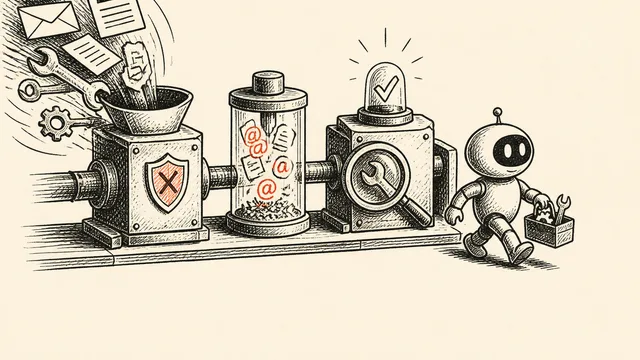
How Middleware Governs LangChain’s Managed AI Agents
LangChain middleware can redact PII, log tool calls and enforce agent policies, but those privacy controls can also break legitimate workflows in production.

Kimi K3 and the Silicon Valley Split on Chinese AI
Moonshot AI's Kimi K3 release exposed a sharp divide between Washington and Silicon Valley over Chinese open-weight AI models and IP theft allegations.

AI Chip Smuggling and the US-China Tech Divide
FT's Eleanor Olcott investigates the black market for Nvidia AI chips reaching China despite US export controls — and what it reveals about the tech race.