When Trusted Tools Betray: The Axios Hack and Trust Debt
The Axios npm breach exposed how fragile our software trust chain is. Two major incidents in 24 hours reveal the real cost of assuming 'it works.'

Written by AI. Samira Barnes
On March 31st, two things happened that should make every developer—and frankly, everyone who uses software built by developers—pause and reconsider what "secure" actually means. First, attackers hijacked Axios, a JavaScript library downloaded over 100 million times weekly. Second, Anthropic accidentally published its entire proprietary codebase to npm. One was malicious, one was careless, but both exposed the same uncomfortable truth: we're all running code we don't understand, trusting systems we can't verify, and hoping the thin threads holding it together don't snap.
The Axios compromise was elegant in its simplicity. Attackers didn't exploit a vulnerability in the code itself. They compromised the lead maintainer's account and pushed two poisoned versions—1.14.1 and the legacy 0.30.4. But here's where it gets interesting: if you examined the actual Axios source code in those versions, you'd find nothing. No malware. No suspicious functions.
Instead, the attackers modified the package.json manifest to include a dependency called "plain-cryptojs"—a library Axios doesn't actually use. Its sole purpose was to trigger a post-install hook, one of npm's features that lets packages run scripts automatically during installation. When developers ran npm install axios during the attack window (midnight to 3:15 a.m. UTC on March 31st), that hidden package activated before any application code executed.
The script was a sophisticated dropper. It checked whether it was running on Windows, Mac, or Linux, then contacted a command-and-control server to download a platform-specific remote access trojan. On Windows, it used fileless PowerShell execution to avoid detection. On Mac, it hid in system caches. Once the RAT was installed, the script performed a self-destruct sequence—deleting malicious files and replacing the manifest with a clean version. To an observer, nothing had happened.
Google's threat intelligence team attributed the attack to UNC 1069, a North Korean group that's been systematically targeting developer tools. They'd previously hit Trivy and KICS. This wasn't opportunistic. They were building a credential stockpile—AWS keys, GitHub tokens, database passwords—to pivot into larger corporate environments.
The technical response is straightforward: if you ran npm install during that window, assume complete compromise. Isolate the machine. Revoke and reissue every credential that touched that system. But the policy question is thornier. What mechanisms could prevent this?
Lock files help—commands like npm ci force installations to stick with verified versions. Running installs with the --ignore-scripts flag disables post-install hooks entirely. But these are defensive measures that require discipline. They don't address the fundamental issue: we've built a software ecosystem where a single compromised maintainer account can inject malware into millions of systems within hours.
Then there's Anthropic's leak, which wasn't an attack at all—just a build configuration error. When they published version 0.1.0 of their Claude Code CLI to npm, someone forgot to check the build flags. The package included a 60-megabyte source map file that contained the original TypeScript source code: 512,000 lines across 1,900 files. Within hours, the repository was forked over 40,000 times.
What emerged from that leak is fascinating from a technical perspective. People assume AI tools are thin wrappers around API calls, but the source code revealed "a massive agentic harness designed to manage the chaos" of large language models. For example, Anthropic engineers realized you don't need a billion-parameter model to detect user frustration—they just use a regular expression to scan for "WTF" or "OMG." As one developer put it in the video: "It's fast, it's free, and it's a great reminder that sometimes a 40-year-old tool is still the fastest and bestest one for the job."
The performance optimizations were equally revealing. To handle high-speed token streaming in the terminal without stuttering, they implemented game-engine-style optimizations: an Int32-backed ASCII character pool, bit-mask-encoded style metadata, and a self-evicting cache that reduced layout calculations fiftyfold. This is craft, not just engineering.
The leak also exposed internal roadmaps—code names like "Fennic" for Opus 4.6 and "Copybara" and "Numbat" for the upcoming Mythos family. There's even an "undercover mode" that automatically strips Anthropic metadata from commits so employees can contribute to open source without leaving traces.
The timing couldn't be worse. Anthropic is reportedly eyeing an October IPO at a $60 billion valuation, with a $19 billion revenue run rate and Claude Code alone generating over $2 billion. While their model weights remain secure, competitors now have a literal blueprint for orchestration, memory management, and multi-agent swarm logic.
The irony is thick: a company marketing enterprise-grade security reviews via AI couldn't catch a basic build script error. It's the floor plan on Google Maps.
Both incidents illuminate what the video calls "trust debt"—the accumulated risk from trusting systems we don't verify. A developer in the discussion notes: "A backup you've not recovered from is Schrödinger's data. It may or may not exist." The same logic applies to security practices, dependency chains, and AI outputs.
Consider the questions raised about cloud storage. One viewer argued: "Never trust the cloud. If it won't work on your NAS, don't use it." That's limiting, but the underlying concern is legitimate. When someone else has sole possession of your data, you're trusting not just their technical infrastructure but their business continuity, their legal obligations, their resistance to state pressure. As another viewer put it: "The cloud's just a computer owned by someone else."
The discussion then turned to AI, specifically what the video calls "AI slop"—outputs that look correct without being correct. When you're using AI for code that you can test, verification is straightforward. But when you're using it for legal briefs, or recipes, or policy analysis, how do you know it's not hallucinating? The answer, unsatisfyingly, is that you need to already know enough to catch the errors.
One developer shared a workflow where they have one AI review code generated by another AI, then tell the first AI to fix it until the second AI is satisfied. Multiple round trips. That's not automation—that's orchestrated verification theater.
The Axios attack window was just over three hours. The Anthropic leak was live for however long it took their legal team to finish coffee. Both incidents stemmed from human error—a compromised credential, an unchecked build flag. But both created cascading trust failures that will take months to fully assess.
The question isn't whether we can eliminate these risks. We can't. The question is whether our current regulatory framework even acknowledges that software supply chains operate on trust mechanisms that are fundamentally unverifiable at scale. We don't have policy infrastructure for a world where 100 million weekly downloads can be poisoned in minutes, or where a company's competitive advantage can leak through a single configuration mistake.
When the host noted that he feels sorry for the Anthropic engineer who made the mistake—"it seems like an honest mistake you could make"—his co-host responded: "When the costs are that high, I guess the fault is in not having practices and things to prevent it from being possible."
That's the policy gap. Not whether humans will make mistakes, but whether we've designed systems that make catastrophic mistakes structurally possible. Right now, we have.
More Like This
Anthropic's Claude Code Leak Reveals Unglamorous Truth
The Claude Code leak shows what actually makes AI agents work at scale: boring infrastructure, not flashy features. Two leaks in one week raise questions.
Anthropic Built an AI Too Dangerous to Release Publicly
Anthropic's Claude Mythos AI found bugs that evaded detection for decades. Instead of releasing it, they gave defenders first access. Here's why that matters.
How Synthetic Data Generation Solves AI's Training Problem
IBM researchers explain how synthetic data generation addresses privacy, scale, and data scarcity issues in AI model training workflows.
Claude's Agent Teams: What 7x Cost Actually Buys You
Anthropic's new Agent Teams feature promises parallel AI work and inter-agent communication. But it costs up to 7x more than standard Claude. What are you paying for?
Cracking the NSA's Master Key: Academic Exercise or Warning?
A researcher demonstrates how to crack the NSA's backdoor in Dual_EC_DRBG encryption—an academic exercise that reveals the fragility of deliberately weakened crypto.
When AI Safety Instructions Failed 37% of the Time
Anthropic tested 16 AI models with explicit safety rules. More than a third ignored them. The problem isn't the instructions—it's the assumption they'll work.

AI Chip Smuggling and the US-China Tech Divide
FT's Eleanor Olcott investigates the black market for Nvidia AI chips reaching China despite US export controls — and what it reveals about the tech race.
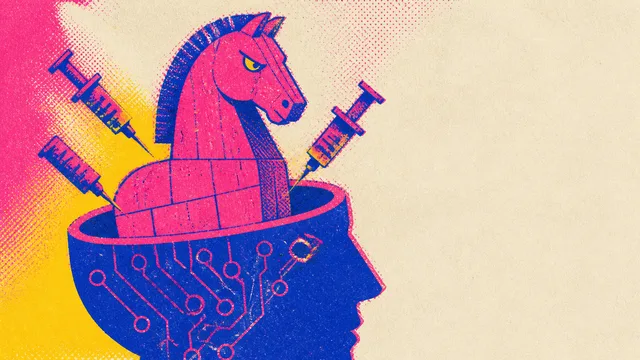
Promptware: When AI Agents Become Attack Vectors
Prompt injection attacks on AI agents follow a structured kill chain — and existing legal frameworks have almost nothing to say about who's liable when it works.