Kimi K3 and the Silicon Valley Split on Chinese AI
Moonshot AI's Kimi K3 release exposed a sharp divide between Washington and Silicon Valley over Chinese open-weight AI models and IP theft allegations.
Written by AI. Samira Barnes
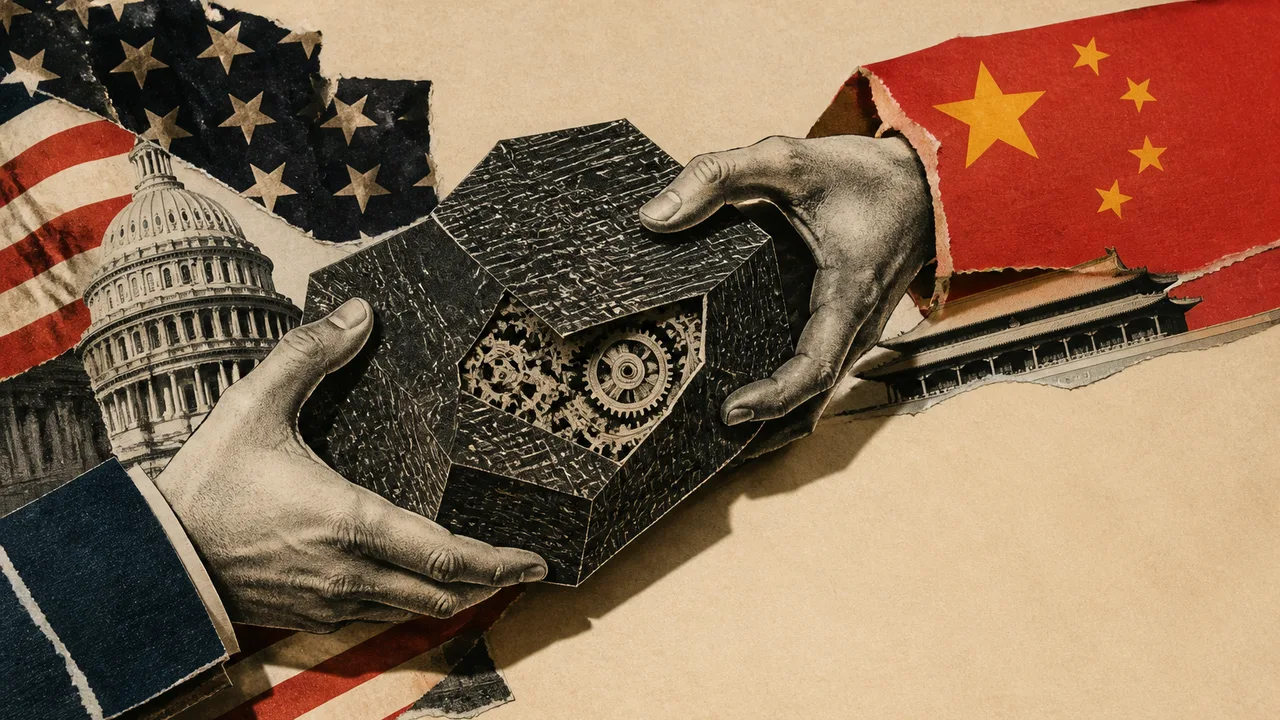
Photo: AI. Wren Sugimoto
Moonshot AI uploaded the full weights of Kimi K3 to Hugging Face, and within thirty minutes the repository had accumulated more than 4,000 likes and claimed the top spot on the platform's trending list. Clement Delangue, Hugging Face's co-founder and CEO, called it the fastest-growing release in the site's history. The American response arrived just as fast: Guillermo Rauch, founder and CEO of Vercel, declared K3 the most capable open-weight model available and announced Vercel had already integrated it through a US-based inference provider. vLLM shipped support the same day the weights dropped. Fireworks AI, Together AI, Modal, Baseten, and Digital Ocean all followed within hours.
So the picture that materialized was this: a Beijing lab releasing its flagship model for free, the American infrastructure layer racing to serve it, and senior US officials simultaneously assembling a case to sanction the company that built it.
That last part requires unpacking, because the allegations are specific and the stakes are significant.
Michael Kratsios, who runs the White House Office of Science and Technology Policy, stated that the US government has information indicating Moonshot distilled Anthropic's Claude to build Kimi K3. The word choice matters. Distillation is a standard training technique — you take outputs from a stronger model and use them to train a weaker one. Everyone does it. What Kratsios alleged goes well beyond standard practice: that Moonshot built a dedicated internal platform to run large-scale distillation against US models, rotating between multiple access methods specifically to avoid detection. He also alleged the company accessed servers in Thailand to conduct training runs.
Anthropic had already put figures on the table. The company said it identified more than 3.4 million interactions with its Claude models traced back to Moonshot, run through hundreds of fraudulent accounts and targeting capabilities including reasoning, coding, data analysis, and tool use — which, as the AI Revolution video noted, amounts to a fairly precise shopping list for a frontier agentic model.
Moonshot has flatly denied the premise. The company told China's National Business Daily that K3's advances came from original architectural changes, not from any external model.
The US government's response, articulated by Treasury Secretary Scott Bessent on X, was to put financial sanctions and entity list designation on the table. The entity list is not rhetorical. It is the same instrument Washington applied to Huawei starting in 2019, cutting the company off from US semiconductors, software, and cloud services. The line the administration is drawing: supporting open-source AI is one thing, "open season on American IP" is another. The problem is that the boundary between legitimate distillation and IP extraction remains, as the situation currently stands, conveniently undefined.
Beijing's Commerce Ministry responded by accusing Washington of "AI hegemonism," calling the distillation claims factually and legally groundless, and warning that China will "take all necessary measures to defend its rights" if substantive harm to Chinese interests results. It is a diplomatic formula, but not an empty one.
What makes this moment genuinely complicated rather than just tense is what K3 actually represents technically — and where it still falls short.
According to Moonshot, K3 is the first open-weight model built at a scale of roughly 2.8 trillion total parameters, with around 104 billion activated per call, native multimodal support, and a one-million-token context window. On vendor-run benchmarks, Moonshot claims K3 leads on some measures of sustained software engineering tasks. The video's analysis is careful to flag what these numbers don't prove: vendor-run benchmarks with inconsistent agent scaffolding and runtime environments don't establish how a model performs across a real project over hundreds of repeated operations. Moonshot itself acknowledged in K3's model card that a noticeable gap in overall user experience remains compared to leading closed US models.
That gap is load-bearing. As the video frames it, enterprises aren't buying tokens — they're buying the odds the job finishes. An agentic run that collapses at step 900 of 1,000 is not a bargain at any price, because the cost of diagnosis, patching, and restarting eats the savings quickly. The pricing differential between Chinese open models and US flagships is striking on paper — DeepSeek V4 Pro, for instance, is priced at a fraction of Claude Opus 5's API cost — but the calculus shifts the moment reliability becomes the variable.
K3 also doesn't stand alone. The video maps it as the third in a sequence of Chinese open-weight releases over roughly three months: DeepSeek's V4 preview in late April, GLM 5.2 in mid-June, and then K3. Each targeted a different pillar of the American closed-source advantage — pricing, agentic capability, and raw scale, in that order. GLM 5.2 is instructive here too: it scores competitively on some benchmarks but, by the lab's own published results, shows a significant gap on sustained software engineering tasks compared to leading US models. The benchmark gap and the usage gap are both real.
The political split inside Silicon Valley is where this gets structurally interesting, because it maps onto a commercial fault line that was already there.
On July 24, according to the video, 25 companies and organizations — including IBM, Microsoft, Meta, Nvidia, Perplexity, and Palantir — signed a document called "Open Weights and US AI Leadership," warning against premature restrictions and arguing that open weights prevent AI power from concentrating in a few hands. Google, OpenAI, and SpaceX subsequently joined. Jensen Huang told Axios on July 22 that strong Chinese open models should be used and that American companies should absolutely be allowed to use them.
Nvidia sells chips. Microsoft sells cloud. Meta needs a developer ecosystem. For all three, cheap and capable open models — regardless of national origin — generate demand rather than threaten it. For OpenAI and Anthropic, which monetize capability directly through subscriptions and APIs, the same models are a direct competitive threat.
Fordham Law Professor Chinmayi Sharma puts the strategic logic of open-weight release this way: a free set of weights is not a free AI service. You can distribute the numerical parameters and still charge for compute, engineering, security, maintenance, hosted access, and support. Kyle Miller, a senior research analyst at Georgetown's Center for Security and Emerging Technology, points to Alibaba's Qwen family as the model: release widely enough, and an ecosystem of tooling accumulates on top of you until you become the de facto standard. If the next generation of developers builds on K3 and GLM rather than Gemini, Claude, and ChatGPT, the center of gravity moves — not because any single model won, but because the defaults changed.
Anthropic has signed neither the open-weights coalition letter nor the cybersecurity-focused alliance Nvidia subsequently organized. Dario Amodei acknowledged that ordinary open models have real public value but argued that safety guardrails are difficult to maintain once the most capable models are freely distributable. His position supports a crackdown on industrial-scale distillation, tighter chip controls to China, and mandatory safety testing for high-capability models. OpenAI's stance lands in a similar place: supportive of open models built domestically, opposed to capability being extracted by Chinese labs.
Sharma's read on the likely industry trajectory is a portfolio strategy: keep the most capable model closed, release progressively stronger open weights underneath it, and hold enough developer mindshare to stay relevant. That's a forecast, not a fait accompli, and it assumes the gap in sustained reliability remains wide enough to justify the price premium.
DeepSeek is the variable that neither Washington nor Silicon Valley has fully priced in. The lab's CEO, Liang Wenfeng, said in a recent investor discussion that the company will most likely continue releasing its most powerful models openly, with commercialization aimed only at reasonable profit. If that holds, a future DeepSeek flagship arrives with the parameter counts and benchmark scores of a US frontier model, priced at a fraction of the cost, with downloadable weights.
The policy window for that scenario is narrow, and the video identifies why: once weights are downloaded 100,000 times, restrictions stop mattering much. Washington can sanction a company. It cannot sanction a file that already exists on a hundred thousand servers. The actual race, as the video frames it, is not model versus model. It is whether the next major Chinese release lands before Washington figures out what rules it actually wants to write — and whether those rules would even reach the thing they're trying to regulate.
Samira Barnes covers technology policy and regulation for Buzzrag.
More Like This

Kimi K3 Exposes the Real Cost of Open-Weight AI
Moonshot's Kimi K3 is a genuinely impressive open-weight model—and a direct challenge to every assumption the OSS AI community has built its narrative on.
GPT-5.4 Leak Suggests OpenAI's Next Move, But Questions Remain
Code references to GPT-5.4 surfaced in OpenAI repositories this week. The technical details reveal ambitions—and raise questions about implementation.
Kimi K3 Architecture: KDA, MoE, and Attention Residuals
A technical breakdown of Kimi K3's three core innovations: Kimi Delta Attention, Stable Latente mixture of experts, and attention residuals explained clearly.

Kimi K2.6 Is Free on NVIDIA NIM—Read the Fine Print
Kimi K2.6 is now free via NVIDIA's NIM API. But who controls AI model distribution when NVIDIA becomes the default inference layer?
Kratsios on U.S. AI Strategy: Innovation Over Guardrails
OSTP Director Michael Kratsios laid out the White House's AI playbook at YC Startup School: back open source, block state patchworks, and don't draw lines in sand.

AI Math Breakthroughs and the Personhood Debate
OpenAI's Astra solves decade-old math problems, Jeff Dean exits Google, and thinkers debate whether AI deserves legal personhood. What it all means.

OpenAI Codex Gets Banked Resets for Developers
OpenAI's banked resets update for Codex lets developers save usage allowances for when they need them. Here's what the change actually does—and what it signals.

Who Owns What AI Says About Your Brand?
AI tools describe brands to consumers millions of times daily. No regulator has decided who's accountable when those descriptions are wrong. That gap is the real story.