Ubisoft Quietly Drops Its Claim That Microtransactions Are Fun
Ubisoft removed its claim that monetization makes games 'more fun' from its annual report. What changed, what didn't, and what it means for the industry.

Written by AI. Lily Tsai
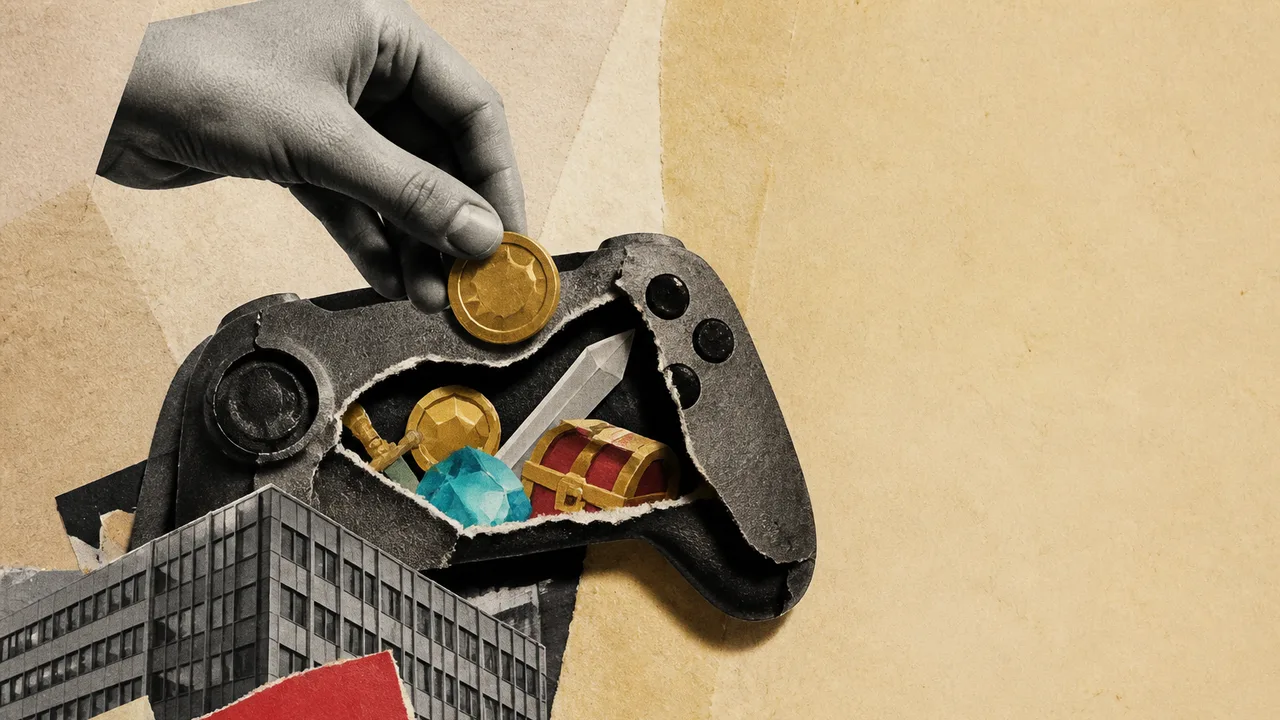
Somewhere between last year's annual report and this year's, someone at Ubisoft decided that claiming microtransactions make games "more fun" was no longer a sentence worth defending in writing. Kotaku's Stephen Totilo was the one who noticed the edit — cross-examining this year's investor document against the previous version and finding the audacious phrase simply gone. No announcement, no acknowledgment. Just a quiet deletion.
The specific language that disappeared, according to ixbt.games, had claimed that "our monetization offerings in premium games make the player experience more comfortable, allowing them to personalize their avatars or progress faster." The "more fun" framing was part of the broader assertion that these systems were net positives for the people playing.
What replaced it — or rather what stayed — is more careful. Inven Global notes that language about "the golden rule of premium game development" — that a game should be "fully enjoyed without additional spending" — has been retained, along with a commitment to respecting player experience and pursuing a sustainable long-term monetization policy. Tbreak's reporting is blunt about what this means structurally: "The first half, and the broader message that monetisation and engagement strategies are central to Ubisoft's business, remains fully intact."
So: the aspiration to be liked by players is still there. The infrastructure for extracting money from them is also still there. What got removed was the specific rhetorical claim that those two things were the same.
What the laughter actually sounded like
When the original language surfaced last year, it became a particular kind of gaming community thread — not the furious kind, but the incredulous kind. The ones where people are essentially asking each other "did they really write this down?" Subreddits like r/gaming and r/pcgaming weren't primarily angry; they were in that register closer to exhausted comedy, the same tone that shows up when someone screenshots a battle pass that costs more than the base game. The line that kept recurring in those spaces wasn't "this is outrageous" — it was "this is what they actually tell investors." The distinction matters. The mockery wasn't just about the policy; it was about the candor. Ubisoft had, in a formal legal document, written down something that most players experience as plainly untrue, and the specific complaint that kept resurfacing was some version of: if this is the official position, what does that say about the unofficial one? Nobody could really answer that. Nobody on Ubisoft's side tried.
GameFile tracked the removal alongside other notable changes in the new annual report, noting that the company also cut language about microtransactions enhancing the experience — moves consistent with a broader institutional recalibration, not a single panicked reaction.
Reading the edit honestly
Annual reports are legal documents. They go through multiple rounds of review by lawyers, communications teams, and executives before they land in front of investors. Nothing ends up in them by accident, and nothing gets removed from them without deliberate calculation. So the question isn't whether this removal is meaningful — it is. The question is what it's measuring.
One reading: Ubisoft is genuinely responding to player feedback, and the language change reflects a real internal reckoning about how aggressive monetization has damaged trust in their titles. The backlash following Assassin's Creed: Black Flag Resynced — referenced in the ixbt.games report — appears to have been a data point they couldn't ignore.
A harder reading: investor documents are fundamentally about managing legal and reputational risk. The "more fun" claim was defensible exactly nowhere — not empirically, not anecdotally, not even by the standards of games Ubisoft itself has shipped. Removing it costs nothing and reduces exposure. The business rationale, as tbreak makes plain, remains entirely intact. Monetization and engagement systems are still described as central to how Ubisoft operates. Investors are still being told these systems must stay commercially viable for the long term. The report still talks about honoring the player experience in the same breath as protecting revenue streams.
Both readings can be true simultaneously, which is usually how these things work. Companies don't make changes in annual reports out of principle alone — but that doesn't mean the change is purely cosmetic, either. The removal of that specific claim does functionally constrain how Ubisoft can talk about monetization going forward, at least in official communications. You can't walk something back into a future filing easily.
The floor this sets, and who's watching it
For players, the test isn't what the report says — it's whether the next Ubisoft release actually behaves differently. Which specific games have fewer progression gates now? Which upcoming titles ship without the kind of XP-throttling that had players reaching for their wallets not from enthusiasm but from irritation? Those are questions the document doesn't answer, and won't, and that's where the real accountability lives.
But there's another constituency watching this that doesn't always get named in these stories: small studios.
I covered a two-person team last year whose entire design thesis was built around what they called "zero friction premium" — a game that sold once, offered everything, and asked nothing else of the player. It was a considered stance, and partly a values one, but it was also a market bet: that players were hungry for experiences uncomplicated by monetization anxiety. What they told me, and what I keep turning over, is that player habits formed by years of AAA progression systems had changed what "feels normal" — even for a $15 indie. Players would hit the second act and instinctively look for the paywall that wasn't there. Some would distrust the absence of a shop. The AAA monetization floor doesn't just affect AAA games; it shapes expectations industry-wide.
That dynamic runs in reverse, too. If a publisher Ubisoft's size actually follows through and ships a major title that doesn't artificially gate progression, it legitimizes the design philosophy that small studios have been arguing for on a much smaller platform. One developer I've spoken with recently said they're watching Ubisoft's next release to see if the floor shifts — not because they expect Ubisoft to lead, but because when something that size moves, even slightly, it changes what players consider baseline.
That's the document that investors will read and lawyers will parse — but the version that matters most is the one players load up on launch day and either feel or don't feel the difference. Annual reports are how companies describe themselves to capital. Games are how they describe themselves to everyone else. Ubisoft just changed one sentence in the first kind. The second kind is still being written.
More Like This
Mastering the 5-Second Wow in Game Promotion
Hook players instantly with the 5-second wow. Discover strategies for game promotion.

Anthropic Engineers Have No Consensus on Claude Code
Ray Amjad attended a Claude Code event in Tokyo and found Anthropic engineers running wildly different workflows. What that non-consensus actually means for developers.

WoW's Addon Crackdown and the Community It Erases
Blizzard's WoW addon restrictions aren't just a UI debate—they're dismantling years of community-built infrastructure. Here's what's actually at stake.
AC Black Flag Resynced: Big Sales, Bigger Backlash
Assassin's Creed Black Flag Resynced sold 2 million copies in one day. It's also getting review-bombed on Steam. Both things are true, and that's the story.
Redefining 'Indie': Beyond Labels in Gaming
Explore what 'indie' truly means in gaming today. Is it a genre, a spirit, or something else entirely?
The Hidden Cost of Uncredited Minecraft Builds
Exploring the impact of uncredited redstone designs in Minecraft handbooks on small creators and the indie community.

Gaming Media Veterans Bet on Old-School Web Revival
Two games media veterans are launching a classic multi-format gaming website in 2026. Can lean, reader-supported journalism survive where ad-driven outlets collapsed?
Jubilee Joins Marvel Rivals Season 9 as a Strategist
Marvel Rivals adds Jubilee in Season 9 as a Strategist with firework-based healing—a bold design choice that reframes a fan-favorite for a role her fans never expected.