Traumatic Intelligence: Survival Skills, Not Superpowers
The viral "traumatic intelligence" concept isn't in any psychology manual—but what it's pointing at is real, documented, and far more complicated than a superpower.

Written by AI. Samir Patel

Photo: AI. Tomoko Hayashi
There's a particular kind of psychological concept that travels fast on social media: the kind that reframes something painful into something secretly powerful. "Traumatic intelligence" is the latest. The phrase suggests that people who've survived significant trauma develop a unique set of perceptual gifts—an almost preternatural ability to read people, detect danger, feel others' pain, and create meaning from suffering. Trauma doesn't just break you, the story goes. It rebuilds you into someone sharper.
It's a genuinely compelling idea. It's also not a real psychological term.
That tension—between the concept's emotional resonance and its clinical vacancy—is exactly what a recent Psych2Go video sets out to untangle, and it's a more careful piece of work than the viral videos it's responding to. The question worth sitting with isn't just is this real? but why does it feel so true to so many people, and what does that tell us?
The term is new. The phenomenon it's reaching for isn't.
Psych2Go is direct about the diagnostic status: "You won't find traumatic intelligence in any diagnostic manual." That's accurate. The DSM-5-TR, the American Psychiatric Association's current classification standard, documents what trauma does to people—intrusion, avoidance, negative alterations in mood and cognition, hyperarousal—but it doesn't frame any of those responses as a form of intelligence.
The closest validated concept is post-traumatic growth (PTG), a construct developed by psychologists Richard Tedeschi and Lawrence Calhoun in the 1990s. PTG describes the positive psychological changes that can emerge after a person has struggled with highly challenging life circumstances. It shows up as a greater appreciation for life, deeper relationships, a stronger sense of personal resilience, a shift in what matters, and new possibilities previously unconsidered. That's real. That's documented. And it's meaningfully different from the "superpower" framing that "traumatic intelligence" tends to carry.
The difference isn't just semantic. PTG research is clear that growth happens through the struggle with trauma, not because of the trauma itself, and it coexists with ongoing distress. It's not a silver lining. It's a complicated, hard-won renegotiation of one's relationship with the world.
Scars that function
So why does "traumatic intelligence" land so hard for so many people? Probably because the underlying experiences are real—even if the framing misrepresents them.
Take hypervigilance. In the viral conception, this is a sixth sense: an uncanny ability to read a room, sense when something's off, detect a threat before anyone else does. In clinical reality, as Psych2Go explains, "it's an over-aroused amygdala, your brain's threat detection center, that is stuck in 'on' mode." It's not a gift. It's a nervous system that can't stand down. It can produce accurate threat assessments sometimes—but it also produces chronic anxiety, panic attacks, and an inability to feel safe even when safety is objectively present. The amygdala doesn't distinguish between a genuine threat and a stimulus that merely resembles one.
Same with the heightened empathy that gets folded into "traumatic intelligence." Yes, many survivors develop a finely calibrated attunement to others' emotional states. But Psych2Go surfaces the clinical explanation: this often emerges from a hyperactivated fight-or-flight response where reading others became a survival necessity. You got very good at sensing when someone was about to be dangerous. That skill doesn't disappear when the danger does. And it carries costs—poor boundaries, emotional exhaustion, absorbing other people's distress as if it were your own. As the video puts it: "These aren't really gifts. They're scars that function."
That phrase is doing a lot of work, and it earns it. It holds both things at once: the functional reality of what these adaptations produce, and the suffering they represent.
The romanticization problem
Psych2Go uses Levi Ackerman from Attack on Titan as a case study, and it's a sharp choice. Levi is the character that "traumatic intelligence" mythology most wants to celebrate: his past is brutal, and it has made him devastatingly capable. His situational awareness, his ability to read a battlefield, his physical precision—all extraordinary. But the video asks the right question about him: "Is he intelligent because of this? Or is he a man permanently broken by his past, unable to rest, trust, or form normal connections?"
The answer, of course, is both—and that's the point. "He is a survivor, not a superhero." The fiction works precisely because it doesn't have to account for the actual psychological cost of living inside a threat-detection system that never turns off. Real people don't get to be main characters in their own hypervigilance. They get to be exhausted.
This is where the romanticization problem bites hardest. When "traumatic intelligence" gets framed as a superpower, it does a few things that aren't great. It can make trauma seem productive—something to be grateful for, even—which subtly undermines the legitimacy of wanting it treated or healed. It can pressure survivors to perform wisdom and perceptiveness as proof of growth. And it can obscure the ongoing cost of carrying these adaptations, which matters enormously for how we understand what people actually need.
Bessel van der Kolk's The Body Keeps the Score (Viking Press, 2014), verified by Porchlight Book Company, and Peter Levine's Waking the Tiger: Healing Trauma (North Atlantic Books, 1997), catalogued through Marmot Library Network, are two foundational texts in the trauma field that approach these questions with much more granularity. Neither frames the nervous system responses to trauma as intelligence or gifts. Both situate them as the body's attempt to survive—adaptations that made sense in context, and that often require significant work to metabolize.
What the reframe actually offers
The Psych2Go video doesn't argue that people should stop using the term "traumatic intelligence"—it leaves that to the viewer. What it advocates for is a reframe: seeing survivors as people who "developed incredible resilience," who "forged tools to survive a fire," rather than people who were made special by their suffering.
That distinction matters clinically and culturally. Resilience, as a concept, doesn't require the suffering to have been worth it. It doesn't ask survivors to be grateful. It acknowledges both the capacity and the cost.
There's an open question here that the conversation around "traumatic intelligence" keeps circling without quite landing on: who does the superpower narrative actually serve? For some survivors, it may genuinely help—reframing hypervigilance as attunement, or emotional sensitivity as depth, can be a step toward self-compassion rather than shame. For others, it may delay the work of actually addressing what trauma did to their nervous system, because that work requires admitting the damage first.
The psychological literature on PTG itself contains some of this tension. There are researchers who worry that PTG measures sometimes capture the belief that one has grown, rather than growth itself—that the narrative of strength can be a coping mechanism that coexists with unresolved distress. That's not a reason to dismiss PTG as a concept, but it is a reason to hold the "trauma made me stronger" story with some complexity.
If these questions feel live for you—if "traumatic intelligence" resonated not because it sounded cool but because it described something real in your experience—that recognition is worth taking seriously. Survivorship is real. So is what it costs. If you're carrying both and want support, the Crisis Text Line offers free, 24/7 text-based mental health support; according to their website at crisistextline.org, you can reach them by texting HOME to 741741.
The more interesting version of this conversation isn't are trauma survivors gifted? It's: what does it tell us about how we talk about trauma that "gifted" is so much easier to say than harmed, and still here?
More Like This
Understanding Emotion Regulation with Dr. Marc Brackett
Explore emotion regulation with Dr. Marc Brackett, focusing on practical strategies for emotional intelligence in personal and professional contexts.
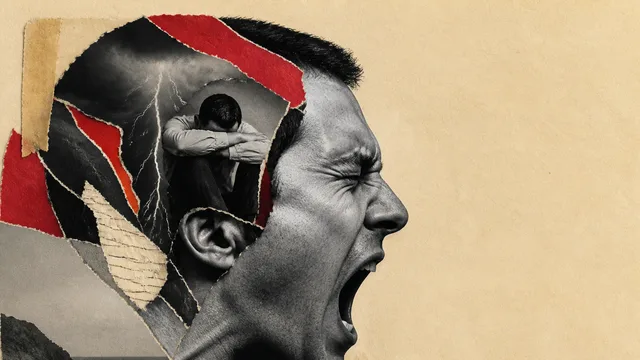
Adult Rage and Emotional Suppression: What We Hold In
Alain de Botton argues adults deserve the emotional honesty of a toddler's tantrum. The science on suppression is more complicated than that.

The Hidden Face of Anxiety and Depression
Anxiety and depression don't always look like breakdowns. Psych2Go explores the quieter, harder-to-name struggles—and what actually helps.

Why Being Complicated Might Be the Point
Yahia Ghaleb's TEDx talk argues we should stop flattening ourselves into simple labels. Here's what the psychology actually says about living in the gray.
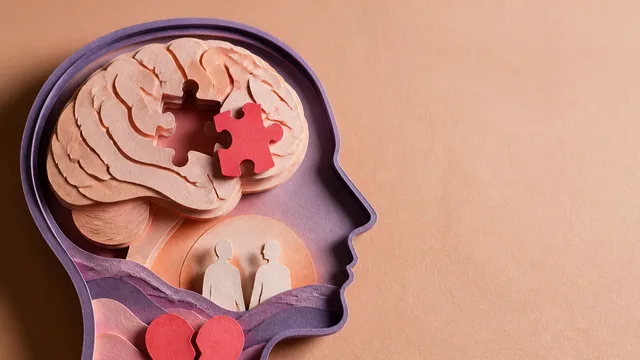
What Huberman Gets Right About the Grief in Your Body
Huberman's grief episode has real neuroscience in it. It also has a protocol called "rational grieving." Both things are true and worth sitting with.

When to Push Through and When to Pivot Your Career
Alex Hormozi's framework for knowing when to quit vs. persist—and why the lessons you draw from failure matter more than the failure itself.

FDA's Produce Safety Law at 15: A Promise Half-Kept
Fifteen years after FSMA passed, farms still await first inspections. Who bears the cost when the food safety system falls short of its promise?
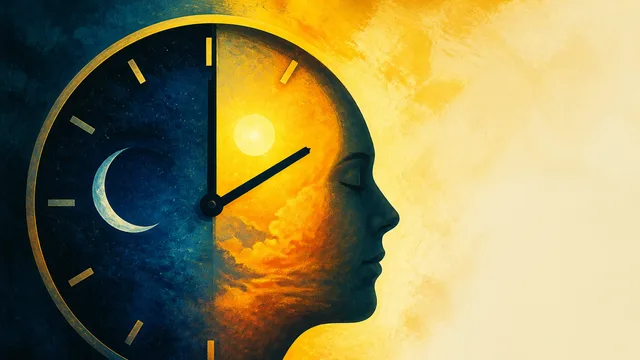
Permanent Standard Time vs. DST: A Public Health Debate
Congress wants permanent daylight saving time. Sleep scientists want the opposite. Here's what the health research actually says—and who bears the cost of getting it wrong.