What Huberman Gets Right About the Grief in Your Body
Huberman's grief episode has real neuroscience in it. It also has a protocol called "rational grieving." Both things are true and worth sitting with.

Written by AI. Kira Yoshida
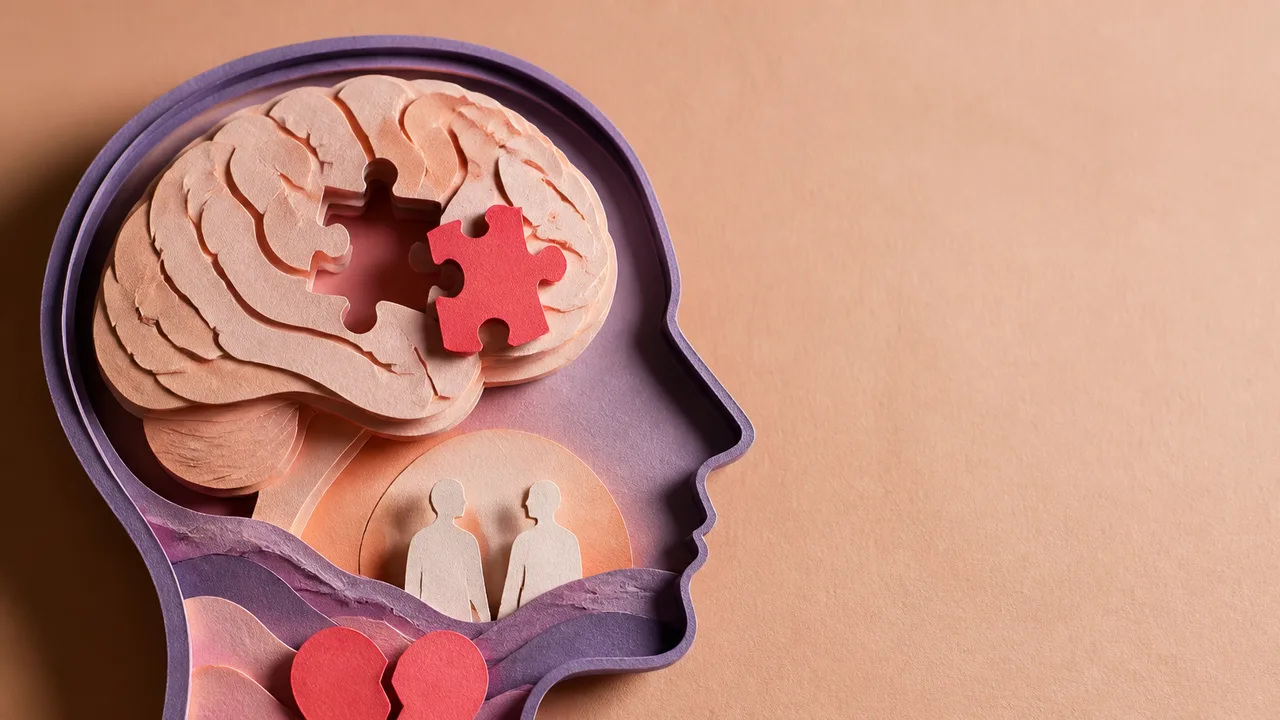
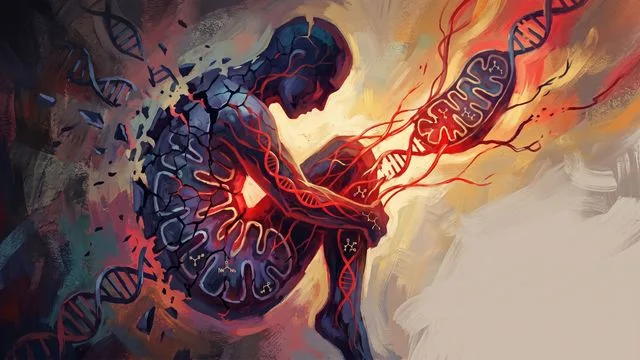
Photo: AI. Lila Bencher
Grief hits you in the chest first. Not metaphorically—there's actual referred pain, actual cardiovascular stress, actual immune suppression. Your body does not receive the news of a loss and file it neatly in the emotional-processing department. It panics. Your appetite goes sideways. Crying is physically exhausting in ways that feel disproportionate until you remember that sobbing is a full-body event, a convulsive response your autonomic nervous system is running without your permission.
I say all of this because Andrew Huberman's recent Huberman Lab Essentials episode on grief—which is making the rounds, as Huberman episodes do—contains genuinely interesting exercise-adjacent physiology about what your nervous system is doing when someone you love disappears from the world. And I want to engage with it honestly, which means not pretending I don't know who's delivering it or where it's going to land.
So: the neuroscience first. Then we'll talk about "rational grieving" as a branded concept, and what gets lost when we optimize even this.
Your brain has been running a model of this person, and it doesn't know to stop
The most clarifying thing Huberman explains is that your attachment to someone isn't stored in your brain as a feeling. It's stored as a map—specifically, a map built across three dimensions: physical proximity (where they are in space), temporal proximity (when you last saw them, when you'd expect to see them again), and emotional closeness (the depth of the bond). These three aren't separate filing systems. They're braided together.
To explain how he knows this, Huberman describes what appears to be a synthesis of brain imaging research—subjects were shown objects at varying physical distances, heard sounds at varying temporal intervals, and then viewed photographs of people at varying degrees of emotional closeness. The punch line: a single brain region, the inferior parietal lobule, showed up as specifically responsive across all three conditions. Physical space, time, and emotional closeness all running through the same neural real estate.
Worth flagging: Huberman presents this as a single unified experiment, but he may be synthesizing across multiple studies—the description shifts between paradigms in ways that suggest as much. The inferior parietal lobule's role in processing space and social cognition is well-documented, but the clean "one experiment, three dimensions, one region" framing should be held loosely. The general principle—that your brain maps relationships spatially and temporally, not just emotionally—is supported by the literature. The tidy experimental narrative may be doing some extra work.
Still, the implication lands: when someone dies, your brain hasn't updated its model. It's still running predictions. It still expects them to text back. To walk through the door at the usual time. Huberman calls this "reverberatory activity"—the neural circuits continuing to fire in patterns built up over years of contact—though it's worth noting that's his framing, not a standard clinical term in the grief literature. The underlying phenomenon (predictive circuits not immediately extinguishing after a loss) has research support; the specific terminology is his.
This is the part I found genuinely useful, not because it's counterintuitive, but because it makes your own weirdness legible. You're not broken when you reach for your phone to text someone who's gone. You're running the software you built together.
The part about your body is where it gets real
Huberman argues that grief is a process of uncoupling emotional attachment from those spatial and temporal predictions—holding on to how much someone meant to you while your brain slowly stops expecting to find them. And this is where the episode does something I didn't expect: it gets specific about the body.
The vagal tone section is the one I keep thinking about. A study published in Biological Psychology (cited by title: "Emotional Disclosure for Whom? A Study of Vagal Tone in Bereavement") tested whether having bereaved people write about their loss—really write into it, describing their attachment, even composing letters to the person they'd lost—would help them move through grief. The initial finding was a null result: no significant difference between the writing group and a control group who just journaled about their daily schedule.
But then they split the sample by vagal tone—a measure of how well your autonomic nervous system can use breathing to regulate its own state. Exhales slow your heart rate. People who are more sensitive to that relationship, who have what's called higher respiratory sinus arrhythmia, got more out of the writing exercise. People with lower vagal tone didn't.
Thirty-five participants is a small sample for a moderator analysis—small enough that this result needs replication before anyone builds a protocol around it. The journal name is real; the authors aren't cited in the episode, making independent verification harder than it should be. But the direction of the finding is worth sitting with, because it points at something the wellness industry usually treats as a sidebar: your capacity to process emotion depends partly on your body's physiological state, not just your willingness to feel things.
This is physiology, and it's my territory, and I'll say it plainly: if your nervous system is stuck in a dysregulated state—elevated baseline cortisol, disrupted sleep, shallow breathing—you may be less able to access the emotional material grief requires you to process. That's not a character flaw or a spiritual failing. It's biology. Grief lives in the body. The body matters.
Huberman cites a second paper, on cortisol rhythms in complicated vs. non-complicated grief, with a specific and eyebrow-raising finding: people experiencing complicated grief had significantly elevated cortisol at 4 p.m. and 9 p.m., compared to those moving through grief without complication. Healthy cortisol curves peak roughly 45 minutes after waking and drop steadily through the day. Complicated grief seems to flatten and elevate that curve. The paper title is given ("Diurnal Cortisol in Complicated and Non-Complicated Grief: Slope Differences Across the Day"), which makes it findable—but no authors or journal are cited. The precision of those time points (not "late afternoon" but specifically 4 p.m. and 9 p.m.) is striking enough that you'd want the primary source before treating it as settled.
"Rational grieving" is a real idea wearing a branded shirt
Here's where I have to be straight with you.
The underlying recommendation—dedicate focused time to feeling your attachment to the person you've lost, consciously avoid counterfactual "what if" spirals, let the emotional connection exist without demanding it also generate a plan to see them again—is drawn from genuine clinical psychology literature. It's not Huberman's invention. Variants of it appear in continuing bonds theory, in acceptance-based grief frameworks, in bereavement therapy.
But "rational grieving" as a named, scheduled protocol, delivered in the same episode that will eventually link to an NSDR script, a sleep episode, a stress episode, and a newsletter—that's a different thing. The experience of Huberman Lab is that the science becomes a pipeline to a system. Get sunlight in the morning. Do your NSDR. Build your vagal tone. Optimize your cortisol slope. Grieve rationally, in your allocated window.
And look—morning sunlight and better sleep will help. I'm not arguing with the physiology. What I'm asking is what gets flattened when grief gets a protocol. Because one of the things that's hard about real loss is that it doesn't give you a five-to-forty-five-minute window. It comes for you in a grocery store. It ambushes you when you smell something. It doesn't respond to scheduling.
Huberman acknowledges complexity in ways the Huberman Lab ecosystem tends to sand away. He's clear that people move through grief at vastly different rates, that some of the difference is neurochemical and not a reflection of how much you loved someone. He's careful—maybe more careful than the episode's packaging suggests—to note that the oxytocin-to-human-yearning link is his interpretation, not settled science. The prairie vole data (monogamous voles have more oxytocin receptors in the nucleus accumbens, which is associated with motivation and craving) is well-established. The leap to "and this is why some people feel more stuck in grief" is Huberman connecting dots. It might be right. It's not confirmed.
What I keep returning to is this line: "Grief is the process of uncoupling, unbraiding and untangling that relationship between where people are in space, in time, and our attachment to them. This is very, very hard to do."
That's true. And the neuroscience around why it's hard—the predictive circuits, the braided map, the body's inability to just update and move on—is genuinely useful to understand. Knowing that your brain is still running the software doesn't make the loss smaller. But it does make your own responses less terrifying.
What the protocol framing can't fully hold is the part that isn't a rewiring problem. The part that is just the cost of having loved someone at all. That's not something morning sunlight fixes. But it's also not something that needs fixing. It's the price of the map you built together, and it's worth every neuron it cost you.
More Like This
Understanding Emotion Regulation with Dr. Marc Brackett
Explore emotion regulation with Dr. Marc Brackett, focusing on practical strategies for emotional intelligence in personal and professional contexts.
Morning Routines: Intention, Gratitude, and a Dash of Skepticism
Explore morning routines focusing on intention and gratitude, with a critical look at wellness industry promises.
Žižek's Challenge: What If Consciousness Begins With Death?
Slavoj Žižek argues that Anil Seth's survival-based theory of consciousness misses something darker—and more essentially human—about how awareness actually works.

Fitness Is Tracking the Wrong Scoreboard
The wellness industry optimizes for calories and scale weight—not health. A climate entrepreneur's insight about broken metrics applies directly to your body.

The Self-Loathing Monologue Playing on Loop
Alain de Botton's School of Life video on loneliness gets the diagnosis right — but who's actually providing the antidote? A music critic weighs in.
Loneliness Is Wrecking Your Biology, Not Just Your Mood
Dr. Molly Maloof joins Dave Asprey to explain how isolation damages your cells, why connection is medicine, and what peptides may support longevity.

Reproductive Psychiatry's Push to Become a Real Specialty
Clinicians are fighting to make reproductive psychiatry a board-certified specialty. Here's what that would actually change for postpartum mental health care.

Reading Is a Physical Skill, and We're Out of Shape
Movement science writer Kira Yoshida on why sustained reading is hard in 2025 — and why the productivity-reading complex is making it worse.