Loneliness Is Wrecking Your Biology, Not Just Your Mood
Dr. Molly Maloof joins Dave Asprey to explain how isolation damages your cells, why connection is medicine, and what peptides may support longevity.

Written by AI. Vanessa Torres
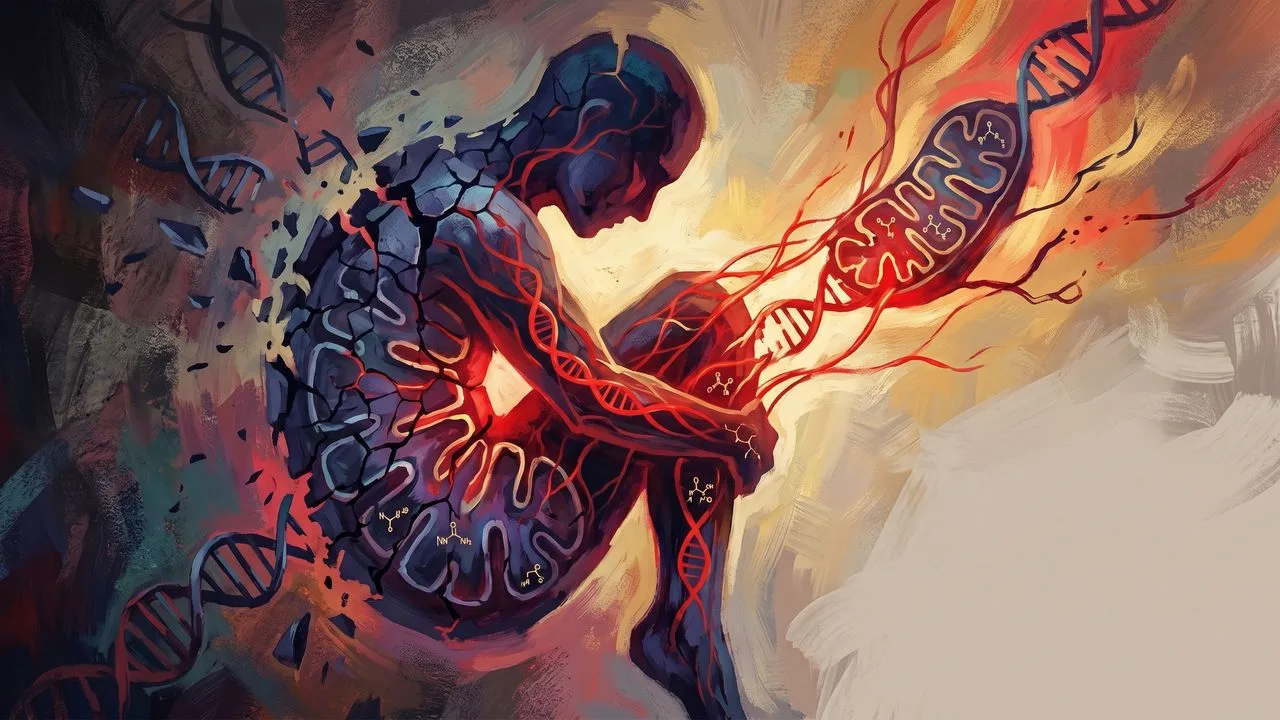
Photo: AI. Yuna Blackwood
I remember sitting in my apartment in the spring of 2020, eating the same foods I'd always eaten, doing the same workouts in my living room, and feeling genuinely worse. Not COVID-worse. Just... depleted. Hollow in a way I couldn't metabolize-track my way out of. At the time I thought it was anxiety about the news. Now I think something more fundamental was happening — the same thing Dr. Molly Maloof, physician and founder of Adamo Bioscience, spent the pandemic trying to understand.
"I kept asking myself during the pandemic: why is this isolation affecting my body?" she tells Dave Asprey on a recent episode of The Human Upgrade. "I'm eating the same foods and my body is changing — and not in ways I'm happy about."
Maloof's answer, developed over years of research into metabolism, love, and human connection, is both simple and inconvenient: we are not built for solitude. Not philosophically. Biologically.
The Three Drives Nobody Talks About Together
Maloof's framework draws heavily on the work of the late anthropologist Helen Fisher, who identified three distinct neurobiological systems driving human reproduction: the sex drive, romantic love, and attachment. They're interconnected but run on different chemistry. The sex drive is largely testosterone and estrogen. Romantic love is a dopamine-norepinephrine storm — that obsessive, sleepless, can't-eat early-relationship feeling — with serotonin initially dropping, which creates a kind of craving that pulls you toward your partner. (Note: this is the dynamic in early romantic love as Fisher described it; the pharmacology of MDMA works differently — it triggers a massive serotonin release, which is one reason it produces feelings of closeness and warmth.) Attachment, the long-game system, runs on vasopressin and oxytocin.
What Maloof finds compelling — and what Fisher's research supports — is that these aren't just relationship drives. They're metabolic ones. When you're under chronic stress, your body redirects hormonal resources toward cortisol production and away from reproduction and bonding. The result isn't just low libido. It's a whole-body shift toward survival mode.
"Mitochondria are social organelles," Maloof says. "They literally determine where our energy goes — is it for survival or for reproduction?"
That reframing is worth sitting with. Your mitochondria aren't just power plants. They're reading your social environment and allocating resources accordingly.
What Isolation Actually Does to Your Cells
This leads to one of the more clinically grounded parts of the conversation: the cell danger response. Originally developed by researcher Robert Naviaux, the concept holds that cells under sustained threat — whether from mold, infection, trauma, or chronic relational stress — enter a self-protective mode. They get stiff, less permeable, less able to communicate. The problem isn't that cells do this. The problem is when they get stuck doing it.
"It's mold, it's Lyme, it's the wrong relationship, it's inactivity, it's eating the wrong foods," Maloof explains. "It adds up to the cell going into essentially a self-protection mode. It's trying to get you to complete the healing cycle, but the cell danger response is not supposed to get stuck."
The compounding nature of this is important. A toxic relationship alone might not lock your cells into danger mode. A toxic relationship on top of a moldy apartment on top of chronic overwork and social isolation? That stack looks different. It's one reason Maloof argues that treating the body's stress response requires more than supplements — it requires examining the whole environment, including the relational one.
For the physiological side, she points to phospholipid therapy (both IV and oral), IV vitamin C, and glutathione as tools she uses personally to support cell membrane fluidity. Neurofeedback programs like DNRS and the Gupta program are on her list for retraining the nervous system's threat response. And for some patients, peptide therapies targeting mitochondrial repair are part of the picture — though the conversation on the specific peptides she favors runs long and technical, and is worth watching in full if that's where you are in your health journey.
The Loneliness Data That Predates the Pandemic
One detail in this conversation deserves more attention than it gets: former Surgeon General Vivek Murthy had been sounding alarms about social disconnection well before COVID. His book Together, published in April 2020 right as lockdowns began, argued that loneliness was already a public health crisis — one that had been building for decades. The pandemic didn't create it. It just made the consequences undeniable and impossible to route around.
"We have record numbers of people who described having zero confidants, zero friends," Maloof says. "This is horrible for human metabolism."
She's not speaking loosely. The research on social isolation and mortality risk is robust enough that it keeps getting compared to smoking. The problem is that it's hard to monetize a prescription for "go be with people," so it doesn't get the institutional weight it deserves.
The Part Where I Have to Talk About Access
Here's where I want to be direct with you, because this is the part of longevity content that tends to slide past without acknowledgment.
The interventions Maloof and Asprey discuss — weekly IV phospholipids, peptide protocols, neurofeedback programs, psychedelic-assisted therapy — are expensive. Not "skip your daily latte" expensive. We're talking therapies that can run hundreds to thousands of dollars per session, often not covered by insurance, administered in clinics that exist in a narrow geography of wellness-friendly cities. The conversation is happening among people who have already solved for the basics and are optimizing at the margins.
I've spent enough time in HR watching what actually depletes people's health — not optimization deficits, but structural ones. Chronic overwork with no sick leave. Jobs that don't offer mental health coverage. Living in a city where a studio apartment eats 50% of your income, leaving nothing for therapy, let alone peptide IVs. The longevity gap in this country isn't primarily a knowledge gap. It's a resource gap, and a conversation that treats personalized medicine as the primary solution without naming that context is a partial conversation.
That doesn't make the science wrong. The neurobiology of attachment and the cell danger response don't care about your zip code. What changes is which interventions you can access.
The Psychedelics Section (and Why It's Complicated)
Maloof's work on psychedelics as "hormetic love drugs" is genuinely interesting, and her ethical pause around it is worth noting. She and her team were developing what she describes as a compound designed to activate dopamine, serotonin, norepinephrine, and oxytocin simultaneously — essentially engineering the neurochemistry of falling in love. She stopped when people started asking whether they could slip it to someone they were interested in.
"I started realizing how deeply unethical it would be to commercialize a love potion," she says.
The parallel to existing psychedelic-assisted therapy research is real. MDMA, which causes a massive release of serotonin alongside dopamine and oxytocin, has been studied for its capacity to facilitate trust and emotional openness — which is why it was being investigated by MAPS for PTSD treatment before their trial ran into serious problems. The power of these compounds to reshape relational experience is precisely why the ethical stakes are so high. Maloof seems genuinely troubled by the consent implications, which is a more honest position than you get from a lot of psychedelic boosters.
On the AI Friendship Problem
Maloof raises a concern about AI companion apps that I find hard to dismiss. The widely reported case she references — the details of which remain under legal scrutiny and involved questions about a teen user and Character.AI, not OpenAI as she states — points to a genuinely unresolved question about what happens when you build a product that meets the social needs of isolated people without requiring them to do the hard work of actual human relationship. Co-regulation, the process by which nervous systems actually calibrate each other through physical proximity, tone of voice, and presence, is not something a chatbot can replicate. The question of whether AI companionship is better than nothing — or whether it crowds out the motivation to build real connection — is one that deserves more than a podcast sidebar.
What Runs Under All of It
The hormone replacement thread is the one I'd push back on most gently. Maloof and Asprey are enthusiastic advocates, and they're not wrong that the 2002 Women's Health Initiative results scared a generation of physicians off prescribing HRT, often in ways that left patients without options they might have benefited from. The research picture has shifted since then — but how much, and for whom, and with what formulations, remains genuinely contested. If you're in perimenopause or beyond and you haven't had this conversation with a clinician who's actually current on the literature, that conversation is worth having. Just go in with questions, not a protocol you found on a podcast.
What Maloof keeps returning to, underneath the peptides and the phospholipids and the psychedelics, is something much simpler and harder to sell: we are wired for connection, and when we don't have it, our cells feel it. The fancy interventions may help. The community is the intervention.
More Like This
Microplastics: The Unseen Invaders in Our Lives
Explore the hidden world of microplastics in our daily lives and what you can do to minimize exposure.
Tim Dillon on Meta's Slow Death and Facebook Boomers
Tim Dillon's latest episode covers Meta's decline, Facebook-brained Boomers, and the Selling Sunset audience that's done pretending they can own a house.

Why You Cooperate Even When It Costs You
Game theory says you should betray. Your nervous system says otherwise. What MIT's Prisoner's Dilemma reveals about trust, relationships, and being human.
When Self-Help Becomes Self-Harm: Looksmaxxing
Dr. K's breakdown of looksmaxxing is sharp—but the line between self-improvement and self-destruction is more physiological than he lets on.

Why Struggling With Math Is the Point
A viral study method reframes math frustration as a feature, not a bug. Here's what the research-adjacent advice gets right—and what it quietly sidesteps.
Unlocking Muscle Strength Post-40: The Urolithin A Debate
Explore how urolithin A might combat muscle decline after 40. Evidence-based insights.

Freelance Consulting vs. Employment: How the Money Works
Freelance consultants earn significantly more than employees—but not for the reason most people think. Here's how the money actually moves, and what it costs you.

How to Apply for Jobs Strategically in Cybersecurity
TCM Security's free course breaks down the job application process for cybersecurity roles—from job boards and Google Alerts to OSINT worksheets and cover letters.