Permanent Standard Time vs. DST: A Public Health Debate
Congress wants permanent daylight saving time. Sleep scientists want the opposite. Here's what the health research actually says—and who bears the cost of getting it wrong.

Written by AI. Samir Patel
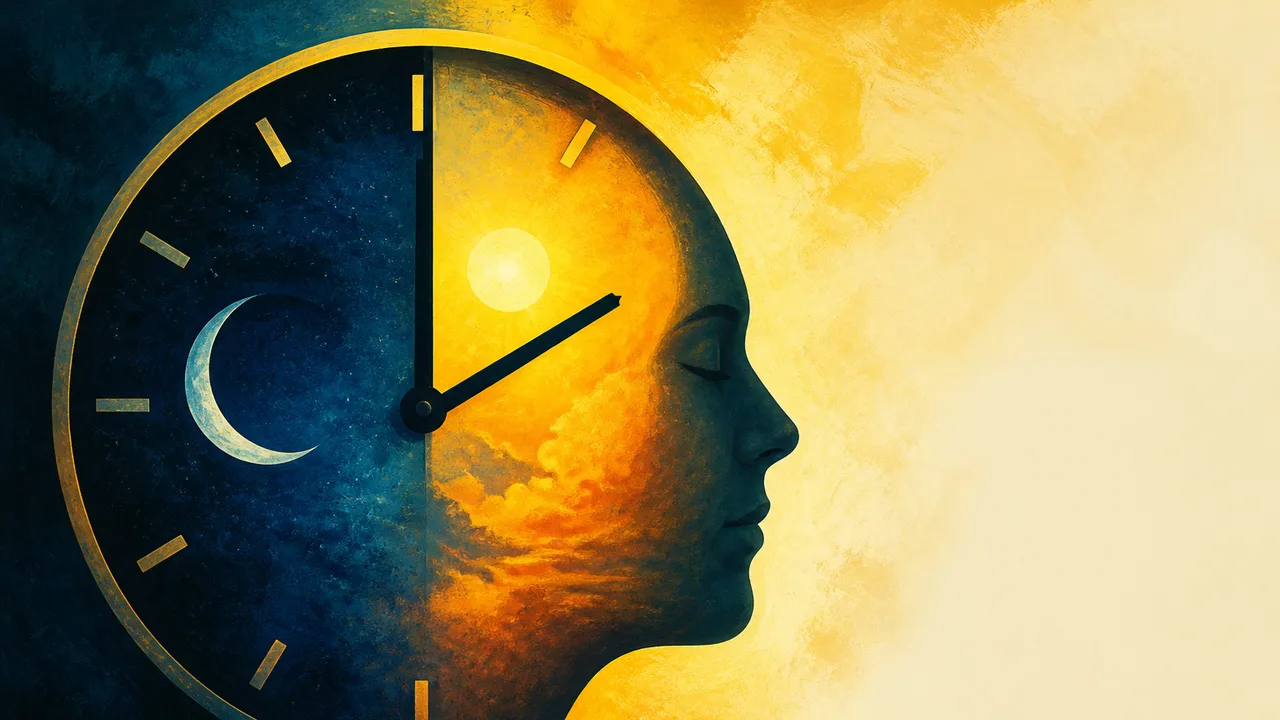
You know the feeling. The clock says it's time to get up, but your body is filing a formal complaint. That particular form of wrongness—not tired exactly, more like displaced—is familiar to anyone who has lived through the March time change. The morning after "spring forward," the world runs one hour ahead of where your biology thinks it is, and for days you feel like you're moving through something slightly thicker than air.
Most people write that off as adjustment fatigue. You push through. You blame yourself for not going to bed earlier, for being bad at mornings, for not being a person who thrives. What you probably don't think is: a policy choice did this to me. But that reframe matters—because Congress is currently deciding whether to lock in that displaced feeling permanently.
What Congress wants, and what scientists are pushing back with
The U.S. House is moving toward permanent daylight saving time—a measure that would eliminate the twice-yearly clock change by keeping us on DST year-round, as Wikipedia's overview of permanent time observation in the United States explains. The political logic isn't hard to follow: people hate the clock change, DST means more evening light, and more evening light is popular.
But sleep researchers and physicians have been largely unmoved by the popularity argument. According to Psychology Today, scientists and physicians favor permanent standard time—the time we're on right now during winter months—based on years of accumulated health research. Their position is not that clock changes are fine. Their position is that if we're going to stop changing the clocks, we should stop in the right place.
The organizations backing that view are not fringe. Stanford Medicine's news coverage of the research notes that the American Academy of Sleep Medicine, the National Sleep Foundation, and the American Medical Association have all endorsed year-round standard time. That's a fairly remarkable degree of institutional alignment for a topic that could be mistaken for a minor scheduling question.
What circadian science actually says
Here's the underlying biology, briefly. Your circadian rhythm is your body's internal clock—a roughly 24-hour cycle that regulates sleep, hormones, metabolism, and mood. The most powerful cue that sets and resets this clock is morning light. When sunlight hits your eyes early in the day, your brain reads it as a start signal and begins a cascade of physiological processes that eventually—when darkness comes—produce melatonin and tip you toward sleep.
Standard time aligns this process reasonably well with the solar day. Daylight saving time shifts the clock one hour forward relative to the sun—meaning that on permanent DST, "morning" as the clock defines it arrives before the sun has done the work of signaling your brain to wake up. The practical result, compounded across seasons, is chronic misalignment between social time and solar time.
What does that misalignment actually do? According to phys.org's reporting on the DST debate, the debate has raged for decades between sleep scientists and industry groups, with researchers pointing to effects on sleep quality, mood, and downstream health outcomes. The Stanford Medicine coverage describes researchers arguing that health outcomes favor standard time—a conclusion the piece frames carefully as a direction the evidence points, rather than a settled population-level verdict.
One concrete consequence worth naming: under permanent DST, people in certain parts of the country would face starkly late winter sunrises. According to al.com's detailed breakdown of sunrise and sunset times under permanent DST, the effect varies significantly by location—residents in western edges of time zones and higher latitudes would face the latest, darkest mornings. That isn't just an inconvenience. Starting your day in sustained darkness, day after day, month after month, has measurable effects on mood and mental health.
The part of this story that gets buried
The pro-DST camp has a legitimate point that doesn't always get a fair hearing: evening light matters too. Newsweek's comparison of the two approaches notes genuine arguments on both sides—including that longer evenings give people time for outdoor activity and social engagement after work. That's not nothing.
And Johns Hopkins Medicine's guidance on Seasonal Affective Disorder documents that diminished light exposure, particularly in winter, is associated with depression, social withdrawal, and reduced physical activity. People advocating for DST aren't making that up—the intuition that more usable evening daylight supports wellbeing has something real behind it.
The sleep scientists' counterargument is that morning light is more biologically powerful than evening light for circadian entrainment, and that the marginal benefit of a brighter evening doesn't offset the harm of a chronically misaligned morning. That's probably the stronger scientific position. But it's worth sitting with the genuine tension rather than flattening it.
Who actually bears the cost
Here is where I think this conversation goes most wrong, and where the public health stakes become clearest.
The debate tends to be narrated by and for people with flexibility over their schedules—knowledge workers, people whose 9 a.m. start time can slide, people who can drink a second cup of coffee and ease into a misaligned morning. For them, permanent DST is genuinely more tolerable, maybe even preferable. The extra evening light is usable because they have evenings.
But who actually bears the health costs of chronic circadian misalignment? Construction workers, healthcare workers rotating through night and early-morning shifts, grocery and warehouse workers clocking in before dawn, parents of young children whose school start times are non-negotiable. These workers can't decide to align their schedule with the sun when policy has separated the two. They can't choose a bright morning. They get the darkness, and then they get the health outcomes.
This is a structural equity issue hiding inside what looks like a preference debate. The same pattern shows up repeatedly in mental health: when external conditions—policy choices, economic pressure, systemic design—make people chronically unwell, we tend to attribute the resulting symptoms to personal failing rather than to the conditions that produced them. Someone who is perpetually exhausted, irritable, and struggling to concentrate under a permanent-DST regime is not "bad at sleeping." They are poorly served by a time system misaligned with their biology, with no flexibility to compensate.
And because sleep deprivation tends to compound other mental health vulnerabilities—amplifying anxiety, blunting emotional regulation, lowering the threshold for depressive episodes—the choice of which permanent time to adopt isn't just a scheduling question. It's a question about whose chronic stress we're willing to build into law.
Where the policy actually stands
According to Yahoo News' coverage of the congressional debate, ending the twice-yearly time change would itself bring significant benefits, and proposals for permanent standard time have also been introduced in Congress—not just the DST-favoring Sunshine Protection Act. Newsweek confirms that permanent standard time has legislative sponsors too, reflecting the scientific community's position.
The near-term outcome is genuinely uncertain. But the scientific community's input matters precisely because public preference—people think they want more evening light—and biological reality are not always the same thing. We've spent decades in a health system that tells people to optimize their individual choices while the structural conditions undermine them. The clock question is a small but unusually legible version of that dynamic.
We're going to stop changing the clocks. That part seems increasingly settled. The question is whether the policy reflects what people say they want in the abstract, or what the evidence says their bodies actually need.
Those are not always the same answer. And the people least able to absorb the gap between them are the ones who never get asked.
More Like This

When Feeling Stuck Is Actually Feeling Safe
The Art of Improvement argues comfort—not laziness—is what keeps people stuck. The idea is compelling. It's also worth examining carefully.
Understanding Emotion Regulation with Dr. Marc Brackett
Explore emotion regulation with Dr. Marc Brackett, focusing on practical strategies for emotional intelligence in personal and professional contexts.
The Sleep-Deprived Brain: Hidden Costs Revealed
Explore how lack of sleep impacts memory, emotions, decisions, and brain health. Discover why sleep is crucial.

Reproductive Psychiatry's Push to Become a Real Specialty
Clinicians are fighting to make reproductive psychiatry a board-certified specialty. Here's what that would actually change for postpartum mental health care.

Smartphones and the Global Baby Bust
John Burn-Murdoch's data on falling global birth rates points to smartphones as a key driver—and the mechanism looks familiar to anyone who covers collective action failures.

The Science Behind Becoming an Early Riser
Discover the neurological and behavioral strategies to make early rising effortless, not forced.

Why You Keep Second-Guessing Decisions You've Already Made
The psychology of post-decision doubt—what research says about indecision, counterfactual thinking, and how to actually close a choice.
Matt Walker on Sleep Science, Dreams, and Mental Health
Sleep researcher Matt Walker joins StarTalk to explain what dreaming actually does, how the brain cleans itself at night, and why sleep is the foundation of mental health.