Tom Skerritt Dies at 93 After Decades in Film and TV
Tom Skerritt, the actor behind Alien's Dallas, Top Gun's Viper and Picket Fences' Sheriff Brock, has died at 93. How ensemble roles made worlds feel lived in.

Written by AI. Amara Osei
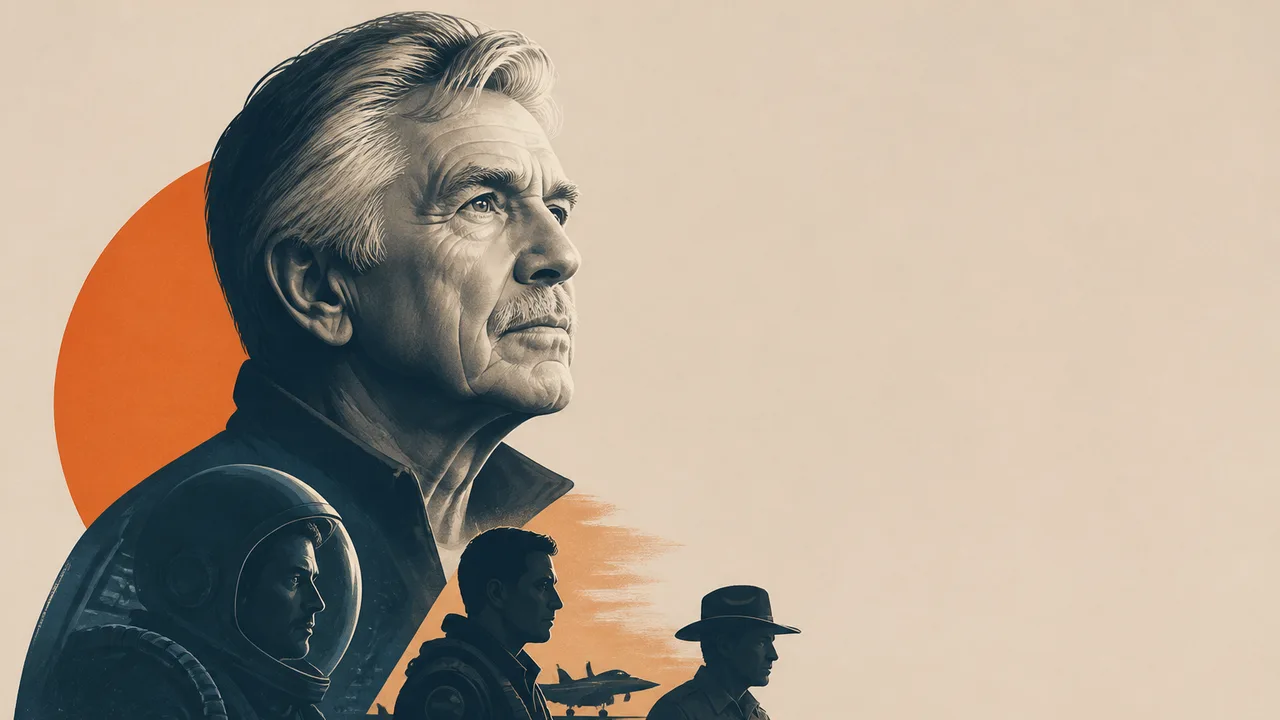
Tom Skerritt has died at 93. A viewer who knows him as Captain Dallas in Alien may have encountered him elsewhere as Viper in Top Gun, or as Sheriff Jimmy Brock in Picket Fences, without immediately connecting the three. Across those parts, Skerritt played people whose authority gave other characters something to push against, depend on or fear losing.
An actor can become familiar without becoming easy to place. Skerritt’s face belonged to a spaceship, a flight school and a small town. The settings changed radically; each needed someone who seemed to have been working there before the story began. His career offers a way to think about ensemble acting: the performer who makes a fictional place feel occupied also helps determine how much we believe its central drama.
The Captain in the Ship
In Alien, Skerritt plays Dallas, captain of the Nostromo. A captain in a science-fiction film could function as a tidy source of orders and exposition. Dallas instead occupies a more uneasy position. He has responsibility for the crew, but his rank gives him no dependable command over what threatens them. The title survives even as its practical power shrinks.
Consider what that does for the film’s tension. Alien needs the Nostromo to feel like a workplace before it can become a trap. Its crew members have jobs, disagreements and a chain of command. Dallas helps establish that order, so its failure has a shape the audience can recognize. When a captain cannot secure the ship, the danger reaches beyond any one character.
The sound of Alien contributes to that effect. Machinery and crew talk place human voices inside a working vessel; people have to communicate through an environment already making its own noise. Dallas’s authority belongs to that shared space. He is part of the crew’s conversations rather than a distant figure who appears only to explain the plot. For a film remembered for its creature and its terror, the ordinary texture of those exchanges is part of the construction.
Dallas also gives the story a limit to test. A familiar face in command can make an audience expect some degree of protection. Alien cannot keep that promise. Skerritt’s role helps the film establish an expectation before the film dismantles it, leaving the rest of the crew, and the audience, to adjust.
The Instructor and the Sheriff
Top Gun puts Skerritt’s authority on firmer institutional ground. Viper is an instructor whose standing is built into the film’s world: young pilots come to learn, compete and prove themselves. His job in the story is different from Dallas’s. He gives the training environment a history and a standard. The pilots’ ambitions need an experienced person to answer to, or their achievements risk feeling like contests they invented for themselves.
A mentor role can be thin on the page. Instructions, assessments and reminders of the stakes often sound as though they come from the screenplay rather than from a person. Viper’s place in Top Gun gives those functions a human address. The film’s speed and spectacle depend, in part, on the slower proposition that judgment has to be earned from someone already inside the institution.
Skerritt played Sheriff Jimmy Brock, a small-town lawman whose work and family life gave the series two ways to put his authority under pressure. His Emmy-winning television work belongs beside the film roles in any account of his career. A sheriff at the center of a continuing drama has to remain credible from week to week, through changing cases and domestic conflicts. He cannot solve every problem by delivering the decisive line and leaving the frame.
That shift in format changes what viewers ask of an actor. A film can introduce a captain or instructor through the immediate needs of its plot. A series has time to let a character’s public office rub against private obligations. Brock’s badge gives him standing in town; fatherhood and family make standing at home harder to settle with a ruling. The part could carry an episode’s argument while remaining available for the next one.
These are three kinds of authority, with three different relationships to uncertainty. Dallas faces a threat his rank cannot contain. Viper represents a standard the younger pilots want to meet. Brock has to live among the people affected by his decisions. Grouping the roles under a single label would flatten what each production needed from Skerritt.
A Familiar Face Across Formats
The career extends beyond the three titles most often attached to his name. MASH* is among his screen credits, and Contact offers another point on the map. Together with Alien, Top Gun and Picket Fences, those works place him across war comedy, science fiction, blockbuster filmmaking and television drama. Such a list can look like a tour of famous titles. It is more revealing as a record of changing demands on a supporting performer.
A movie asks its audience to accept an entire workplace or community in a limited time. Television can build recognition through repetition. Skerritt could serve either rhythm. In a film ensemble, his presence helped establish who knew the rules before events overturned them. In Picket Fences, his central role had to sustain the contradictions of a man who enforced rules and lived with their consequences. The shared craft lies in making responsibility seem carried, rather than merely assigned by a costume or job title.
Familiarity can obscure that labor. Viewers often remember a film through its lead, its image or its most quoted line. Dallas, Viper and Brock occupy different places in that hierarchy, and their worlds do not work in the same way without them. The captain makes the Nostromo’s chain of command legible. The instructor makes Top Gun’s standards legible. The sheriff gives a town’s disputes a person who must keep answering for his office after any single confrontation ends.
Authority on screen also invites scrutiny. A captain’s confidence may be misplaced; a mentor’s judgment may be challenged; a sheriff’s position does not make his choices simple. Skerritt’s recurring casting in such roles says as much about the stories built around him as it does about his image. Filmmakers and television creators repeatedly needed an actor the audience would accept in charge, then found drama in what that charge could and could not accomplish.
That may be why people can remember Skerritt clearly while remembering him in different places. Alien leaves Dallas’s command exposed. Top Gun lets Viper’s experience give the young pilots a measure. Picket Fences keeps Brock’s obligations close to home. In each, Skerritt helps establish the rules of a world so that its characters have something real to confront.
More Like This

Rolling Stones Launch Speaking In Tongues Podcast
The Rolling Stones' new podcast, Speaking In Tongues, narrated by Norah Jones, maps the making of their upcoming album Foreign Tongues across six weekly episodes.

Reassessing the Queens of Numenor
Explore the nuanced reigns of Numenor's queens and their impact.

What Camera Sensors Can Teach You About Sound
StudioBinder's sensor explainer is solid filmmaking education — but it reveals something bigger about how creators misunderstand the infrastructure beneath their craft.
JD Vance on Joe Rogan: What Three Hours Reveals
JD Vance spent nearly three hours on the Joe Rogan Experience. An audio critic listens for what the voice does when politics gets comfortable and the mics stay hot.

Legally Blonde at 25: How Elle Woods Shaped Women in Law
Twenty-five years on, Legally Blonde's Elle Woods has inspired real women to enter law. Here's how a comedy's sound and craft made that possible.

Charlotte Edwardes's Debut Novel Hears What Children Can't Say
Charlotte Edwardes's 'Trouble Was' renders the summer of 1976 through a child's silence. Amara Osei on what the novel's restraint actually sounds like.