Tom Brady's On-Air Swearing Tests Fox's Broadcast Controls
Tom Brady's latest on-air expletive puts Fox's live controls under scrutiny. FCC exposure depends on the transmission; any financial cost remains unconfirmed.

Written by AI. Denise Okafor-Williams
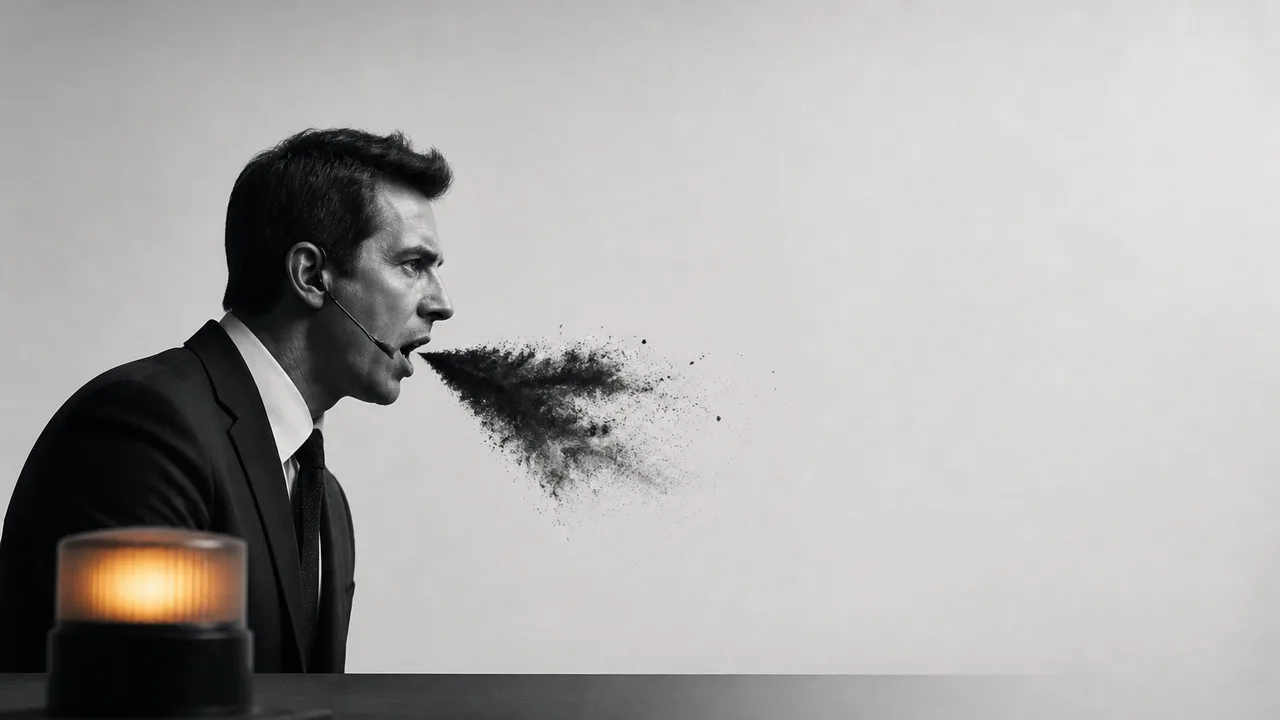
Tom Brady swore during Fox’s NFL pregame coverage on Sunday, Nov. 1, the second on-air slip attributed to him this season. He had also blurted out a swear word during a Week 2 broadcast. For Fox, the question is how much of that moment traveled through its live distribution system before anyone could intervene.
The reported phrase was “oh, sh*t.” A star commentator saying it twice in one season invites scrutiny of Fox’s controls. It does not produce an automatic FCC penalty. The station or distribution feed that carried the remark, any formal complaint, and any regulatory or financial response remain unconfirmed.
That leaves Fox with two separate questions. One concerns the rules governing a broadcast that reaches viewers. The other concerns the workplace arrangement that puts a former quarterback on a live microphone, alongside producers and other employees who share responsibility for what goes out. The first question determines possible regulatory exposure. The second determines whether Fox changes its production practices after the microphones are off.
Where FCC Exposure Begins
The Federal Communications Commission can issue warnings or fines over profanity on live television. Its broadcast rules apply to licensed over-the-air stations. A program’s presence on social media, a streaming service or a cable channel does not, by itself, establish that the FCC’s broadcast indecency rules apply to that transmission.
For a Fox network program, the path through a local television affiliate is therefore relevant. Networks assemble national programming; licensed stations deliver broadcasts to viewers in their markets. The FCC evaluates potential broadcast violations in context, including what aired, when it aired and how it reached the public. A recognizable swear word can start that inquiry. It cannot finish it.
Time is part of the calculation. The FCC restricts indecent and profane broadcast material between 6 a.m. and 10 p.m., when children are more likely to be in the audience. Fox’s NFL pregame setting makes that daytime rule relevant, subject to the timing of the actual transmission. The agency’s treatment of a remark also depends on its context. An unscripted exclamation during a sports segment presents a different set of facts from language selected for repeated use in a scripted program, though spontaneity supplies no blanket exemption.
The legal route from a complaint to a sanction has several steps. A viewer can object to a broadcast; the agency can assess the complaint, seek information and decide whether enforcement is warranted. Those steps require more than online attention. They also place a premium on records that rarely figure in the initial public reaction: the transmission time, the station involved and the program audio as broadcast.
The Delay Button Has Its Own Economics
Fox’s production choices are worth examining whether or not the FCC takes up the remark. A live show gives commentators room to react in real time. It also asks a production team to catch every unexpected word before that word reaches the audience. A delay can create an opportunity to remove an expletive, but its usefulness depends on the show’s setup, the timing of the remark and the person controlling the feed.
This is where Brady’s status changes the management problem. Fox has reason to value the immediacy of an unscripted remark from a prominent former player. It also has reason to keep such remarks within broadcast standards. Giving talent room to speak and giving producers authority to intervene are choices made before the show starts, then tested in seconds.
A second slip can lead a broadcaster to revisit microphone protocols, delay settings, rehearsals or the instructions talent receive before going live. Each option asks for a different kind of work. Producers can watch more closely; an operator can be assigned to a delay; commentators can adjust how they respond while their microphones are open. Those measures have costs in staff attention and, potentially, in the rhythm of the show. None guarantees that every live remark will be caught.
The distinction between the original broadcast and a later replay also shapes the response. Brady reportedly wanted Fox to cut the expletive from subsequent pregame coverage. Editing a replay could limit further circulation through Fox’s own programming. It cannot change what reached viewers during the initial transmission. For a network, that makes prevention and later editorial control related tasks with different deadlines.
Who Carries a Broadcast Mistake?
Brady is the person who spoke. Fox controls the program and its production decisions; a licensed affiliate, if it carried the remark over the air, has its own regulatory position. Producers and control-room staff have responsibilities during a live show, but they do not set the terms of the commentator’s employment or the network’s tolerance for risk.
That division of responsibility becomes clearer when money enters the conversation. A regulator’s warning, a fine, a sponsor’s objection and an internal production change would each carry a different cost and fall on different parties. No contract terms cited here establish whether Brady would face discipline or bear any expense. A reported expletive should not be converted into a dollar figure by assuming that one of those outcomes has occurred.
The strongest argument for tighter controls is operational: Fox can keep a live show lively while reducing the chance that one commentator’s language creates a problem for stations and production staff. The strongest caution against overreacting is proportionality. A brief, unscripted exclamation does not tell us that Fox’s entire live system has failed, and a cumbersome safeguard could affect a show long after viewers have moved past the remark.
Fox’s decision now sits at the point where those arguments meet. It can review what went out and decide whether its existing controls fit the way Brady works on air. The public regulatory question, if it develops, will turn on the broadcast itself. The workplace question is already in Fox’s hands: how much room does a live commentator get, and who is expected to catch the words that escape it?
More Like This

NFL and NFLPA Negotiate Flag Football at 2028 Olympics
The NFL and NFLPA are negotiating player participation in Olympic flag football. Here's what the labor dynamics and scheduling realities actually mean for athletes.

World Cup Knockout Ticket Prices Drop 39% on Resale Markets
World Cup knockout stage resale prices fell 39% from $2,040 to $1,245. What the secondary market collapse reveals about FIFA's pricing architecture.
USMNT Beats Bosnia, Advances Despite Balogun Red Card
The USMNT beat Bosnia 2-0 to reach the World Cup Round of 16, despite Folarin Balogun's controversial red card. Here's what it means on and off the field.

Chelsea Stake Sale Would Put Clearlake in Full Control
Chelsea's reported £950 million stake sale would give Clearlake full control, raising questions over spending, cash flow, stadium plans and exit timing.

F1 Eyes European Finale as Middle East War Threatens Season
F1 CEO Stefano Domenicali says the 2026 season could end in Europe if war in the Middle East cancels the Qatar and Abu Dhabi Grand Prix races.

Mark Cuban's Harbinger Sports Takes Minority Stake in A's
Mark Cuban and Rashaun Williams' Harbinger Sports Partners has made its first investment, acquiring a minority stake in the Las Vegas Athletics. Here's what it means.