Titan Quest 2 Adds Spirit Mastery in Update 0.7.0
Titan Quest 2's update 0.7.0 adds Spirit Mastery—its sixth class—plus a crafting system. Here's what the skill tree looks like and why it matters for the game's EA arc.

Written by AI. Lily Tsai
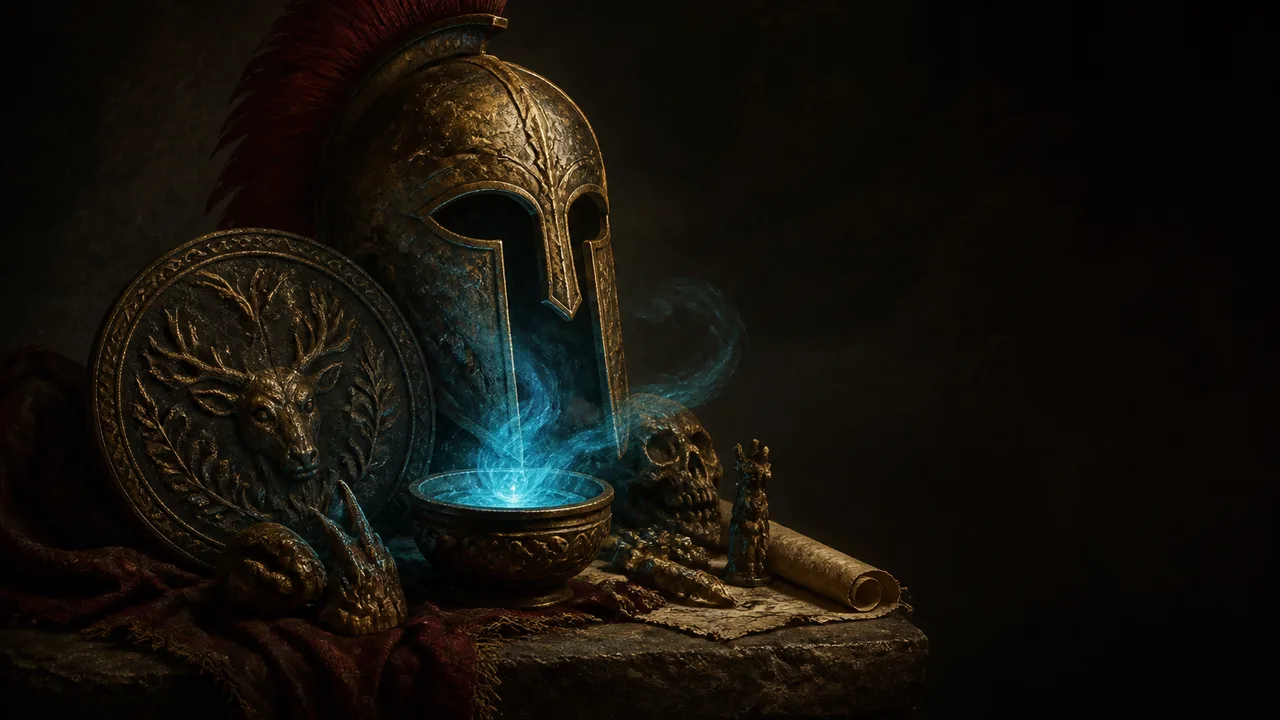
There's a moment in most ARPG Early Access runs where you can feel the team's confidence shift. The early updates patch the obvious stuff—hitboxes, performance, the inventory system that was clearly held together with digital duct tape. Then, eventually, comes the update that says: we know who this game is for now.
For Titan Quest II, that update might be 0.7.0.
According to Gematsu, publisher THQ Nordic and developer Grimlore Games have dropped the "Spirit Mastery and Crafting" update for the game's Early Access version. It's a substantial one. The headliner is Spirit, the game's sixth Mastery class—but the patch is broader than that, touching movement speed, loot quality, and balance across the board, per Noisy Pixel.
What Spirit Actually Does
The official framing, posted to both Steam News and the Steam Community, leads with the mythological angle: Spirit lets you "wield the powers of the Underworld." That's the flavor. The mechanical reality, per gagadget.com, is 10 active skills and 26 passive abilities built around three overlapping pillars: summoning spirits, manipulating enemies, and life-drain spellcasting.
That's a reasonably dense kit. Gagadget describes it as sitting "somewhere between Path of Exile's minion necromancer and Diablo 4's summoner"—which is useful shorthand if you've played either, though it also raises the question of what Spirit actually does that those versions don't. The sources don't go deep enough on specific skill mechanics to answer that definitively, so I'll flag it as something players will need to test in practice.
PCGamesN frames the whole thing as a dream for fans of Diablo's Necromancer, and that framing makes sense as a marketing hook—the Necromancer has been one of the genre's stickiest archetypes since Diablo II, and Diablo 4's version has sustained enormous player investment since launch. Grimlore clearly knows what crowd they're courting here.
The Mastery System Is the Real Story
Spirit being the sixth Mastery is worth sitting with for a second. In the original Titan Quest (Iron Lore, 2006), the dual-Mastery system—where you picked two classes and blended their skill trees—was what made character building interesting. It wasn't just "what class are you," it was "which weird intersection of two classes can you make work." A Storm/Defense build felt categorically different from Storm/Earth, even though they shared a skill tree.
Titan Quest II is building that same combinatorial system, and six Masteries means fifteen possible pairings. Spirit opens up combinations that the previous five couldn't—a life-drain summoner paired with, say, a warfare-forward Mastery creates different strategic textures than Spirit paired with something more elemental. The number of Masteries isn't just content volume; it's the multiplier on the whole character-building premise.
That context matters when evaluating the pacing of content releases in Early Access. Each new Mastery doesn't just add one option—it retroactively expands the option space of everything already in the game. Six Masteries is when this starts feeling like an actual system rather than a character selection screen.
The Crafting Addition Is Harder to Read
The other major addition—a crafting system—is mentioned across most sources but discussed in the least detail. Noisy Pixel confirms it's in the patch alongside the movement speed improvements and loot changes, and gagadget.com names the update "Spirit Mastery and Crafting," but the sources don't give us much on how the crafting mechanics actually work.
Crafting systems in ARPGs occupy a wide spectrum—from Diablo's relatively light enchanting options to Path of Exile's crafting that spawned its own cottage industry of guides, tools, and community spreadsheets. Where Titan Quest II's system lands on that spectrum matters enormously for the game's long-term loop. Item crafting that feels meaningful creates a reason to engage with drops beyond just equipping the thing with the higher number. Crafting that's purely cosmetic or marginal tends to be forgotten within a week.
I can't tell you from available sources which end of that spectrum this implementation lives on. That's a genuine unknown right now, and worth watching as the player community starts stress-testing it.
What This Patch Signals About Grimlore's Early Access Strategy
Reading update 0.7.0 in isolation is less interesting than reading it as a data point in a pattern. Grimlore is stacking content in layers: add Masteries to expand the character system, add crafting to expand the economy, improve loot and movement to make the core feel better. These are the right levers to pull, in roughly the right order.
The movement speed improvement is actually the one I'd watch closest if I were a player tracking whether the team understands their own game. Speed feel is notoriously hard to tune in ARPGs—too slow and the game feels punishing; too fast and it loses tactility. The fact that Grimlore identified it as worth addressing in a major content update suggests someone internally was looking at retention data or player feedback and saw a friction point worth fixing before adding more content on top of it. That's a healthier instinct than the inverse.
The balance changes and fixes mentioned by Noisy Pixel are the kind of patch notes that rarely get written about but that players who've been in the game for months care about disproportionately. A balance patch alongside a content drop says: we're not just throwing new stuff at you to distract from the old stuff being broken.
The Necromancer Comparison Is a Feature, Not a Crutch
One last thing worth naming directly: the Diablo Necromancer comparison that surfaces in both the PCGamesN headline and the broader coverage isn't laziness on the part of journalists—it's the clearest available shorthand for a genuinely familiar archetype. Summoner-style builds have existed in ARPGs since at least Diablo II's original Necromancer, and they persist because the fantasy is durable. Commanding a miniature army while you hang back and apply debuffs is a specific kind of power fantasy that a meaningful subset of ARPG players return to in every game that offers it.
The more interesting question is whether Spirit does something with that archetype that feels specific to Titan Quest II's Greek and Egyptian mythological setting, or whether it's a generic underworld-flavored necromancer that could've been dropped into any ARPG without friction. The Steam announcement's framing—"the powers of the Underworld"—gestures at mythology, but the actual skill descriptions in the sources don't get specific enough to confirm it lands.
Titan Quest II is building toward something. Update 0.7.0 is a good argument that Grimlore knows the shape of what it's building. Whether Spirit ends up feeling like a Titan Quest class or just a Necromancer reskin with a toga on it—that's the question the next few weeks of player feedback will answer.
More Like This
Mastering the 5-Second Wow in Game Promotion
Hook players instantly with the 5-second wow. Discover strategies for game promotion.
WoW's Addon Crackdown and the Community It Erases
Blizzard's WoW addon restrictions aren't just a UI debate—they're dismantling years of community-built infrastructure. Here's what's actually at stake.
Diablo IV: Lord of Hatred Expansion Review
Explore Diablo IV's Lord of Hatred expansion. New classes, zones, and a thrilling campaign await.
Dragon's Dogma 2: Dark Arisen Is Getting a Hard Mode
Capcom is adding a Hard Mode to Dragon's Dogma 2: Dark Arisen, built for level-capped players. Here's what it means for the game and the franchise.

Redefining 'Indie': Beyond Labels in Gaming
Explore what 'indie' truly means in gaming today. Is it a genre, a spirit, or something else entirely?
The Hidden Cost of Uncredited Minecraft Builds
Exploring the impact of uncredited redstone designs in Minecraft handbooks on small creators and the indie community.
Minecraft Live 2026: New Biome, Wool Stairs & What's Next
Minecraft Live revealed the Dappled Forest biome, wool stairs, abandoned camps, and more for the Fall 2026 drop. Here's what it means for builders and creators.
Minecraft Java Multiplayer in 2026: Who Pays the Price?
Mojang's new native Friends List threatens the small-studio ecosystem built around Java's multiplayer gap. Here's what that means for how you play.