SpaceXAI's Proposed SpaceXSI Name Tests What SI Means
Elon Musk plans to rename SpaceXAI after a federal shift to “Super Intelligence.” The label covers existing AI, while the company name proves no new capability.
Written by AI. Yuki Okonkwo
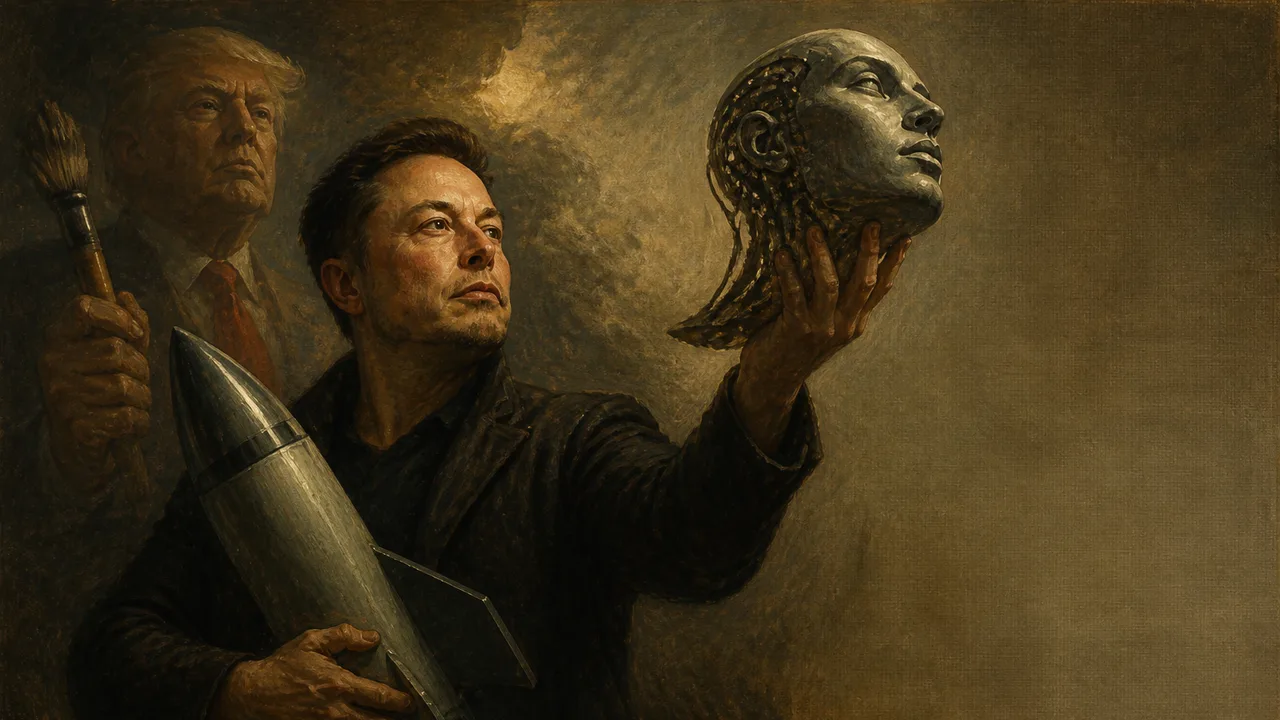
Elon Musk says SpaceXAI will become SpaceXSI, giving the business new initials days after President Donald Trump directed federal agencies to call artificial intelligence “Super Intelligence.” The administration is using SI as a label for technology already covered by the federal definition of AI. Musk is proposing to put those initials in a company name. One set of letters, two different jobs, and plenty of room to mistake either for a breakthrough.
Asked on X whether SpaceXAI could be renamed SpaceXSI, Musk replied, “Yes, we will make that change,” Reuters reported. Earlier on Sunday, he had posted that SI was better than AI. He gave no effective date. At the time of The Next Web’s October 5 report, the SpaceXAI account on X still carried its old name. SpaceXSI remains a stated plan with no announced start date.
If the name appears on an account or a product page, pause before promoting it in your head from initials to achievement. Musk’s reply tells us what he intends to call the unit. To find out what SI means in any given sentence, look at who is using it and what, if anything, they say a system can do.
Who Has to Say SI?
Trump’s September 29 order directs executive branch agencies to use “Super Intelligence,” or SI, in official communications and other non-statutory documents instead of AI. It gives his science and technology adviser 60 days to propose a legal definition of superintelligence. For now, the federal label covers technology under the existing AI definition. The order does not require private companies to change their names.
Say an agency describes a tool as “SI technology.” Under the order’s current usage, that tool can fall into the category previously called AI without passing a new performance test. A reader would still need the tool’s description to learn what it does. SpaceXSI would work differently: it would identify a privately named business. Seeing the same initials in a federal document and a company name could make the latter sound like an official designation. The order provides no such designation for SpaceX, and Musk has given no capability criterion for the rename.
Musk has endorsed the new wording and called SpaceX a “super intelligence company.” A SpaceXSI name would fit both his stated preference and the administration’s vocabulary. Alignment is a plausible reading of that sequence; his private reasons for choosing the name remain his own. The federal instruction and the company proposal also have different force. An agency has a communications directive to follow. SpaceX can choose whether and when to update its name.
Trump has said he dislikes the word artificial. Someone who wants language that conveys ambition has a comprehensible reason to favor SI. The trade-off shows up in a federal announcement: if SI covers the existing AI category, its grander sound cannot tell a reader whether the tool in front of them handles one narrow task or reaches far beyond it. The label supplies enthusiasm; the details have to supply the rest.
One Business, Three Possible Names
SpaceX bought xAI in February 2026. The business adopted the SpaceXAI name and a new logo on July 6. If Musk follows through now, SpaceXSI will be its third name this year. July’s change followed a purchase and made the relationship to SpaceX visible in the name. October’s proposal follows a government vocabulary change that imposes no naming duty on SpaceX.
Those two changes have different things attached to them. Behind the July name stood a corporate transaction. Behind the proposed October name, so far, stand Musk’s posts and a federal terminology order. If a new model, application or deployment arrives later, it will have its own details to examine. A renamed account alone cannot tell us whether anyone changed the software, how it performs or where people might use it. Even the company’s earlier acquisition is a poor shortcut for answering those questions: it explains why SpaceX entered the name, not what any model can accomplish.
The phrase “superintelligence” has carried a bigger idea for years. Nick Bostrom’s book Superintelligence: Paths, Dangers, Strategies considers a hypothetical future in which computer-based intelligence outclasses humanity. Musk posted its cover during his Sunday SI posts. That reference brings the hypothetical meaning into the same conversation as an order that applies “Super Intelligence” to the current federal AI category. A book cover indicates a concept Musk chose to invoke; the proposed company name supplies no test of whether its systems meet it.
Meta offers a comparison, with a limit. Mark Zuckerberg’s 2025 essay “Personal Superintelligence” discussed the path the technology might take later in the decade. That is language about an ambition. Trump’s order instructs agencies on terminology for an existing category; Musk’s proposed SI would identify a business. All three put the word in public view, but they answer different questions: what might be built, what an agency should call its subject and what a company should call itself. None supplies a shared yardstick for Bostrom’s hypothetical level of capability.
The administration has also introduced the voluntary White House Accord on Super Intelligence. Musk was among six tech leaders who signed it on September 29; the pledge asks frontier-model builders for internal controls and outside audits. Those are proposed practices a reader can ask about separately from the rename. Whether the signatories carry them out cannot be inferred from the initials on an account.
If a future product pitch says “our SI can do X,” make X earn its place in the sentence. Which system did the task? What task was it given, under what conditions, and against what comparison? A benchmark score would speak to performance on a defined test; a claim about outclassing humans across tasks would demand much broader evidence. SpaceXAI’s proposed name offers neither kind of result. That leaves room for future progress without granting a capability claim on the strength of two letters.
The science adviser has 60 days from the September 29 order to propose a legal definition. A proposal could sharpen the government’s terminology, though its eventual contents remain unknown. If it keeps today’s broad AI category, an agency’s “SI” will remain a poor shortcut for judging performance. If it draws a narrower boundary, readers will need to know which meaning a company intends when it uses the term. For now, the next useful question for SpaceXSI is simple: what changed besides the name?
More Like This

Five AI Terms That Actually Change How You Use It
Tokens, context windows, temperature, hallucinations, RAG—Kai's video breaks down the five AI concepts that separate fluent users from confident nodders.
AI Safety Pledges Meet the Limits of Self-Regulation
AI leaders say frontier models should slow while opposing binding oversight. Musk's stance, a rejected regulator plan and state action reveal the policy gap.
Are We Alien Probes? Yampolskiy's Wild AI Theory
AI safety researcher Roman Yampolskiy argues aliens would send biological von Neumann probes—and humans might be them. Then physics complicates everything.
Why the US Joined X's Fight Over EU Tech Enforcement
The DOJ wants into X's appeal of a €120 million EU fine. The case could define how far Brussels can reach through US tech groups and their owners.

Grok Build Goes Open Source After Data Privacy Scandal
SpaceXAI open-sourced Grok Build days after researchers caught it uploading entire user repos to the cloud. Is this transparency—or damage control?
Elon Musk's Problem-Solving Methods, Examined
Eric Jorgenson spent five years studying Elon Musk. Here's what his frameworks actually reveal—and where the hagiography gets complicated.

GPT 5.6 Sol vs Fable 5: Early Numbers, Real Tradeoffs
GPT 5.6 Sol is half the price of Fable 5 — but is it half as good? Early benchmark comparisons, alignment regressions, and the politics reshaping who gets access.

Claude Fable 5 Prompting Habits That Actually Matter
Nate Herk distilled Anthropic engineer insights into six Claude Fable 5 prompting habits. Here's what holds up, what's wild, and what it means for how you work.