Samobor Hills Offer Croatia a Route Beyond the Coast
West of Zagreb, the Samobor Hills pair wooded hikes, vineyards and kremšnita with a tourism test: welcoming visitors without flattening local character.

Written by AI. Kael Maddox
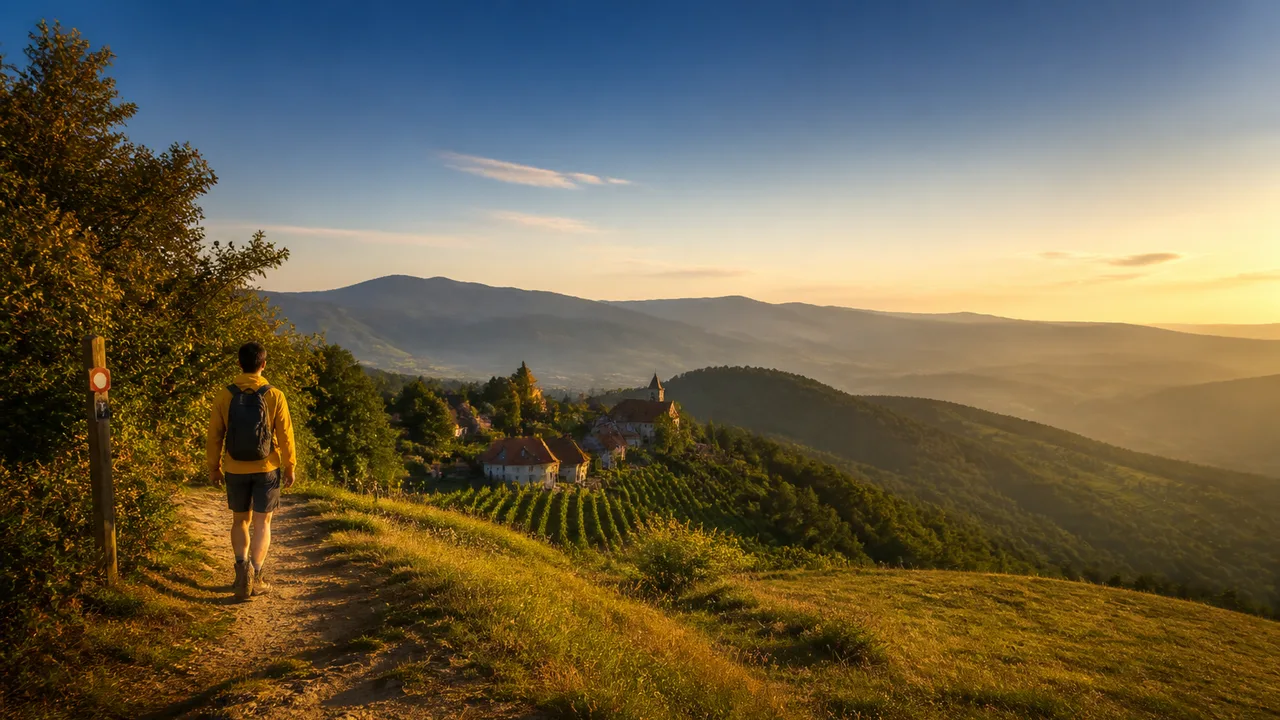
Samobor, west of Zagreb, is being pulled into Croatia’s tourism conversation at a moment when much of that conversation still faces the Adriatic. Its wooded hills, vineyards, old center and sugar-heavy signature pastry offer a compact inland trip, with enough walking to make lunch feel earned.
That combination has attracted fresh attention from The Guardian, which presents the Samobor Hills as a culinary and outdoors counterpoint to Croatia’s heavily visited coast. The area works within a short itinerary: arrive from Zagreb, walk through town, climb into the trees, eat kremšnita, perhaps visit a producer, then return to the capital.
Staying overnight gives the hills room to become a place rather than an accessory to Zagreb. It also raises the question now following rural destinations across Europe: can Samobor convert attention into durable local income without funneling every visitor toward the same pastry counter, parking space and castle photograph?
A Small Hill that Still Makes You Pay Attention
I climbed Tepec alone, carrying too much water for a hill that rises beside town and too little respect for wet leaves. The Anindol promenade runs along its flank, where a 14-metre viewpoint pyramid stands at about 368 metres above sea level, according to Holiday Visit Croatia.
The numbers sound tame. My lungs agreed. My footing filed a dissent.
Below the ridge, my right boot slid sideways on a skin of damp leaves. I caught a tree trunk with one hand and drove my left knee into the slope. No injury, no rescue, no stirring tale for the pub. Just mud on my trousers and the useful reminder that modest elevation does not guarantee obedient ground. A solo walker can turn a minor slip into a tedious problem by leaving a phone buried in a pack or charging ahead after rain in smooth-soled shoes.
The ruined Samobor Castle occupies another forested ridge above town. PONANT dates the ruins to the 13th century and places them among the area’s Central European monuments, alongside the Franciscan monastery and Church of Saint Anastasia. The castle does not require expedition planning, but the climb supplies enough sweat and uneven footing to separate it from a drive-up viewpoint.
Farther into the hills, the scale increases. Time Out Croatia identifies Šoićeva kuća, a rustic tavern in a valley nine kilometres west of Samobor, as a starting point for climbs of 879-metre Japetić and 752-metre Oštrc. These are smooth, wooded hills rather than exposed alpine summits. Rain, fallen leaves, early darkness and poor route attention can still complicate an easy-looking day.
That middle ground is part of Samobor’s appeal. The hills demand shoes with grip, a weather check and some spare time, while leaving most reasonably active visitors with functional knees for dinner.
Kremšnita Carries More than Custard
Back in town, the physical argument gives way to pastry. Samobor’s kremšnita layers custard and meringue into a square that appears structurally ambitious until the fork goes in. The pastry has become one of the town’s clearest tourism hooks, and The Guardian places it within a wider landscape of traditional food, vineyards and regional hospitality.
Food can move visitors through a landscape more effectively than another scenic adjective. A pastry prompts a café stop. Wine prompts a cellar visit. Lunch at a rural tavern can pull spending beyond the historic center. An overnight stay adds breakfast, accommodation and another meal, spreading a traveler’s budget across more businesses.
The limits deserve equal attention. The available sources do not provide current visitor totals, traffic counts, waste volumes or figures showing how tourism income is distributed across Samobor and the surrounding hills. Claims that growing attention will rescue small producers or overwhelm villages therefore remain projections, not measured outcomes.
The likely pressure points are familiar. Day visitors often arrive within the same few hours, follow prominent search results and leave after buying one or two highly recognizable products. The café receiving the queue may benefit. Residents living beside the road absorb the parking hunt and engine noise. A winery or guesthouse outside the promoted center may see little change.
Travelers cannot solve municipal planning through virtuous brunch choices. They can alter where their money goes. Booking a night, eating beyond the main square and buying directly from regional producers create more local transactions than a fast photograph-and-pastry circuit. Whether enough visitors will do that depends on accommodation, transport, marketing and how the destination presents itself.
Why the Tuscany Comparison Shrinks Samobor
Comparisons with Tuscany offer an easy sales pitch: vineyards, rolling terrain, old buildings, good food. The shorthand gives unfamiliar travelers a picture in five seconds. It also imports expectations built around another region’s climate, scale, architecture, fame and tourism economy.
Samobor’s identity comes from its own geography and history. Forested ridges rise close to town. Habsburg-era and broader Central European influences sit in the streetscape and monuments. The Church of Saint Anastasia, Franciscan monastery and ruined castle anchor the town in a story that needs no Italian costume.
Calling the hills “Croatia’s Tuscany” would also steer attention toward the most Tuscany-shaped pieces of the landscape: vineyard rows, stone facades, long lunches and photogenic slopes. Wooded footpaths, local religious architecture and the ordinary rhythms of an inland Croatian town become background scenery. The nickname starts selecting the destination on the visitor’s behalf.
Tourism branding always edits. “Adventure” favors summits. “Wine country” favors tasting rooms. “Hidden gem” attracts people who want proof they arrived before everyone else, usually while standing in a queue of people pursuing the same proof. Samobor will be easier to understand if its hills, food and Central European inheritance share the frame.
Zagreb is Both Gateway and Gravity
Proximity to Zagreb gives Samobor an advantage many rural destinations would happily steal. Visitors already staying in the capital can add the town without rebuilding an entire Croatia itinerary. That opens a route inland for travelers who might otherwise divide their time between Zagreb and the Adriatic.
The same convenience can reduce Samobor to a short excursion. When a place is marketed as easy to enter and easy to leave, visitors often do both at speed. Restaurants may get lunch traffic while accommodation providers miss out. The central streets fill while trails and businesses farther west receive fewer customers.
A slower itinerary could begin in Samobor, continue onto Tepec or the castle ridge, and reserve a separate day for Japetić, Oštrc or producers beyond town. That plan asks for more time, and limited vacation days make time the expensive ingredient. A day trip remains a legitimate way to visit. The sharper question concerns what kind of day trip develops: a concentrated rush through three famous stops, or a visit that distributes attention across the area.
Local authorities and businesses hold the larger levers. Trail information, waste collection, parking management and promotion of multiple villages can redirect pressure before frustration hardens. Yet the public record supplied for this story offers little detail on current capacity or formal tourism strategy. Samobor is receiving coverage as an alternative destination faster than outsiders can assess how prepared its surrounding communities are for higher demand.
An Alternative Without Becoming a Substitute
Croatia’s coast and the Samobor Hills satisfy different appetites. The Adriatic offers islands, swimming, maritime towns and long-established visitor infrastructure. Samobor offers leaf cover, short climbs, vineyards, Central European architecture and custard with the load-bearing properties of masonry. Travelers may want both.
That distinction frees Samobor from the burden of “beating” the coast. Its stronger role is to complicate the standard Croatian route, especially for visitors arriving through Zagreb. A country known abroad through beaches and old coastal cities contains inland landscapes where weather, food and history work differently.
Interest will change the hills if it becomes sustained. More guests may support taverns, wineries, accommodation and maintained trails. More cars and concentrated footfall may also strain the places featured most heavily in travel coverage. No available data settles where that threshold lies.
On Tepec, the useful moment came before the viewpoint. One boot slid, one hand found bark, and the hill collected a little concentration from me. Samobor deserves visitors willing to offer the place the same thing.
More Like This
Bosnia Travel Tips: What to Know Before You Go
From Mostar's slick cobblestones to Balkan time, here's what seasoned travelers wish they'd known before visiting Bosnia and Herzegovina.

Hotel AI Visibility: Why Google Rank No Longer Guarantees Discovery
Hotels that rank well on Google are disappearing from AI chatbot results. Here's what's driving that gap and what properties need to rethink about their content.
andBeyond Amazon Explorer Yacht: Luxury on the River
andBeyond launches the Amazon Explorer yacht in the Peruvian Amazon in 2026. A look at the specs, the route, and what eco-luxury really demands here.

Airbnb Hires Pepijn Rijvers as Chief Business Officer
Airbnb named Pepijn Rijvers, ex-Booking.com and Viator, as its new CBO. Here's what his hire signals about the platform's hotel ambitions.

Delta Sky Club Access Is Now a Reward for the Right Credit Card
Lounge access used to cost a membership fee. Now it takes the right card, the right fare, and the right clock. Here's how the rules changed and who pays.

Budapest in 48 Hours: Baths, Ruin Bars and the Residents
A two-day Budapest itinerary balancing thermal baths, ruin bars and heritage, and what visitors owe the neighborhoods that live with tourism.

The World's Longest Domestic Flights, Explained
From Boston to Honolulu to Paris to Réunion, the world's longest domestic flights reveal how borders, customs zones, and sovereignty really work.