Russia Weighs Underground Data Centers as Drone Risk Grows
Russia is weighing underground data centers amid drone threats. Mines may shield servers, but power, cooling and network connections still need protection above ground.

Written by AI. Zara Chen
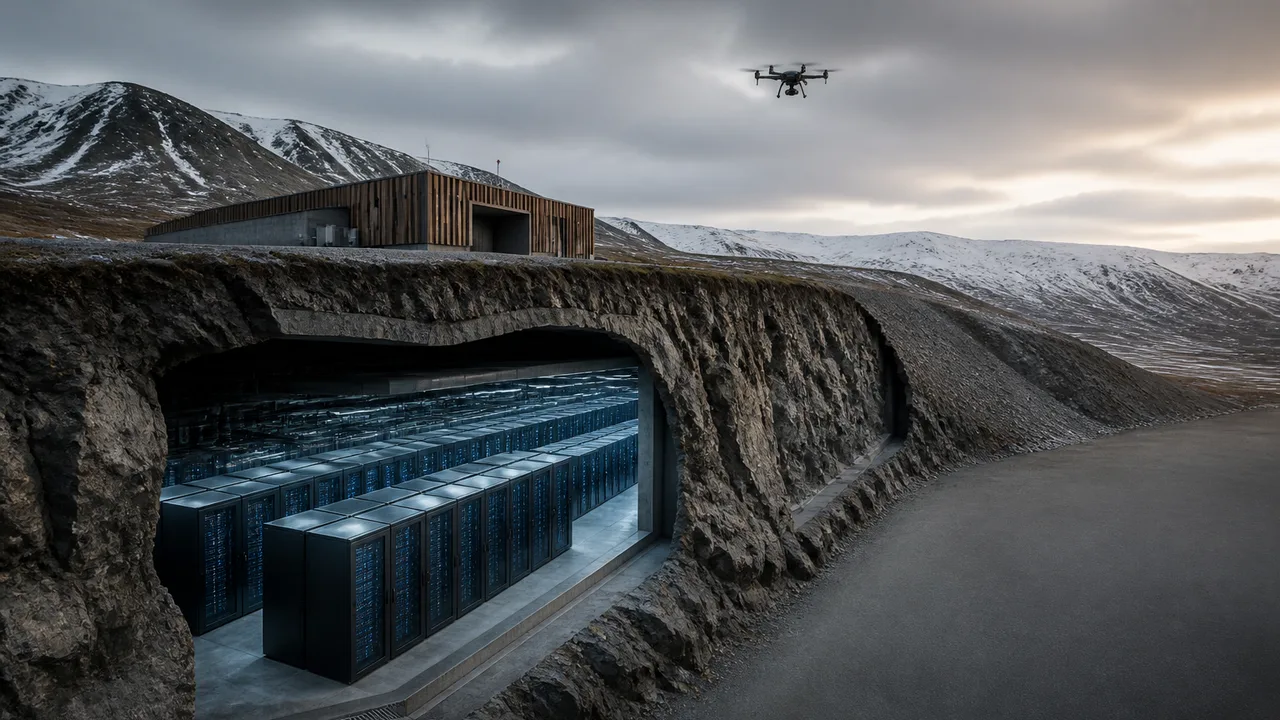
Rostelecom has reportedly discussed putting some data-center capacity underground with mining company Norilsk as Ukrainian drone strikes sharpen concern about Russia’s exposed infrastructure. The idea is easy to picture: move servers beneath the surface, put rock between them and an incoming drone, keep the machines running.
The hard part starts one question later. How does an underground server room get electricity, shed heat and stay connected when the infrastructure serving it remains within reach above ground?
A regional governor has also raised an underground data-center proposal, suggesting the idea has appeal beyond one corporate discussion. Neither a funded project nor a construction timeline has been identified in those reports. For now, the story is about a defensive option being considered, and the engineering and political choices that would determine whether it helps.
Why a Mine Makes Sense on Paper
A data center is a physical place doing work that often feels invisible. It houses computers that store information and run services, plus the electrical equipment, cooling systems and network connections those computers need. Damage to a facility can interrupt whatever depends on it, even when the affected users are nowhere near the building.
That makes a hardened location an understandable response to an airborne threat. Rock and depth could protect equipment from some direct damage. A mining company could bring familiarity with underground access and industrial operations. If an operator already relies heavily on a facility in an exposed location, shielding selected systems might buy time during an attack and make repair or replacement less likely.
The strongest case for the proposal is selective. A company might identify equipment whose interruption would be especially costly, then weigh whether an underground site offers that equipment better protection than its current location. That requires answering a much narrower question than “Should Russia put data centers in mines?” Different workloads have different demands for power, connection speed and maintenance access.
Those choices also carry a timing problem. Planning and building a hardened site takes time; a drone threat is already present. Operators would have to judge whether moving equipment would improve protection soon enough to justify construction and migration, or whether other resilience work could be completed faster.
The Server Room Still Needs the Surface
Electricity is the first dependency to follow. Servers need a steady supply, and the systems keeping them cool need power too. An underground room may be shielded while the lines and equipment feeding it remain exposed. Backup generation could help through an interruption, but it brings its own requirements: fuel, ventilation, maintenance and a safe place to operate. A proposed site would need an actual power design, not just a deep entrance.
Heat is the next problem. Computers turn electricity into heat, and that heat has to go somewhere. An underground location can offer a different temperature environment from an exposed building, but it cannot make server heat disappear. Engineers would have to size cooling equipment, move air or liquid through the site, and plan for what happens if a cooling component fails. A facility can lose computing capacity through overheating even when its servers have suffered no physical damage.
Then comes connectivity. A data center that cannot exchange traffic with the wider network has limited use to the people and services relying on it. Fiber routes, entrances and other above-ground links would need protection or alternate paths. Multiple routes could reduce the chance that a single break isolates the site, provided they do not converge on the same vulnerable point outside it.
Put those dependencies together and the mine starts to look less like a bunker with computers and more like a system of entrances, pipes, cables and people. Every connection to the surface is part of the design. So are repairs. Staff need safe access to replace failed equipment, and operators need a workable response when something goes wrong underground. Mining infrastructure offers a starting point for some of those questions, not an automatic answer to all of them.
Who Gets Protection First?
If Rostelecom pursued the idea, deciding what to move could be as consequential as choosing a site. Data centers serve different functions. Some tasks can shift to another facility when one goes down; others depend on where data sits, how quickly systems communicate and how much capacity exists elsewhere. Moving a server without accounting for the services around it could protect the box while leaving users with the same interruption.
The choice also has a public dimension. Digital infrastructure supports communications and services people depend on during ordinary life and emergencies. An operator facing a finite budget could spend it hardening a site, adding backup capacity, separating network routes or improving the ability to restore service after damage. Those options address different failure points. The useful question is which combination reduces disruption for the people relying on the network.
An underground site could also concentrate equipment that was previously spread out. Concentration might make physical protection easier to manage, while increasing the consequences of a failure at that site. Geographic distribution works in the opposite direction: it can let unaffected facilities carry traffic or workloads, if the network and spare capacity are built to support that handoff. Neither approach works by label alone. The layout decides.
This is where a security conversation can become a procurement conversation. Shielding servers is visible and concrete. Redundant connections and recovery procedures are harder to photograph, but their performance determines whether a protected site stays useful during an outage. For a data-center proposal, the test would be the full operating plan: power sources, cooling, separate network paths, safe access and the capacity to keep services running elsewhere.
Russia’s discussions show how drone threats can push digital infrastructure into the same defensive planning as other physical assets. A mine could protect selected equipment. The next meaningful step would be a project specific enough to show what sits underground, what still sits above it and how users stay connected if either part fails.
More Like This

This Creator Got Shadowbanned on YouTube in 25 Days—On Purpose
A vidIQ creator deliberately shadowbanned their channel with AI-generated content to expose how YouTube's algorithm actually works. The results are wild.

Flock Cameras Track Far More Than License Plates
Flock Safety's AI-powered cameras are spreading fast across U.S. cities—and they're capturing far more than license plates. Here's what's at stake.

Renewables Hit 30% of US Electricity in Early 2026
EIA data shows renewables reached 30% of US electricity in early 2026, up from 27.8% a year ago. Here's what that number actually means—and what it doesn't.

Apple's Reference Image Builds a Photo Evidence Chain
Apple's Reference Image proposal could preserve photo provenance through edits and platforms, but its value depends on adoption and careful trust rules.

Cloud Giants Win the AI Investment Race
Investors are going all-in on AI—but the winners aren't scrappy startups. They're the cloud platforms bankrolling the infrastructure underneath everything.
AI Data Centers Are Fueling a Skilled Trades Hiring Boom
AI companies are recruiting electricians and carpenters by the thousands to build data centers. Here's what that means for workers, wages, and the AI boom itself.