Roku's 24/7 AI Film Channel Fairground, Reviewed by the Market
Roku launched Fairground, a 24-hour channel of AI-generated films. Here is what the launch reveals about cheap streaming, filler TV, and audience trust.

Written by AI. Zara Chen
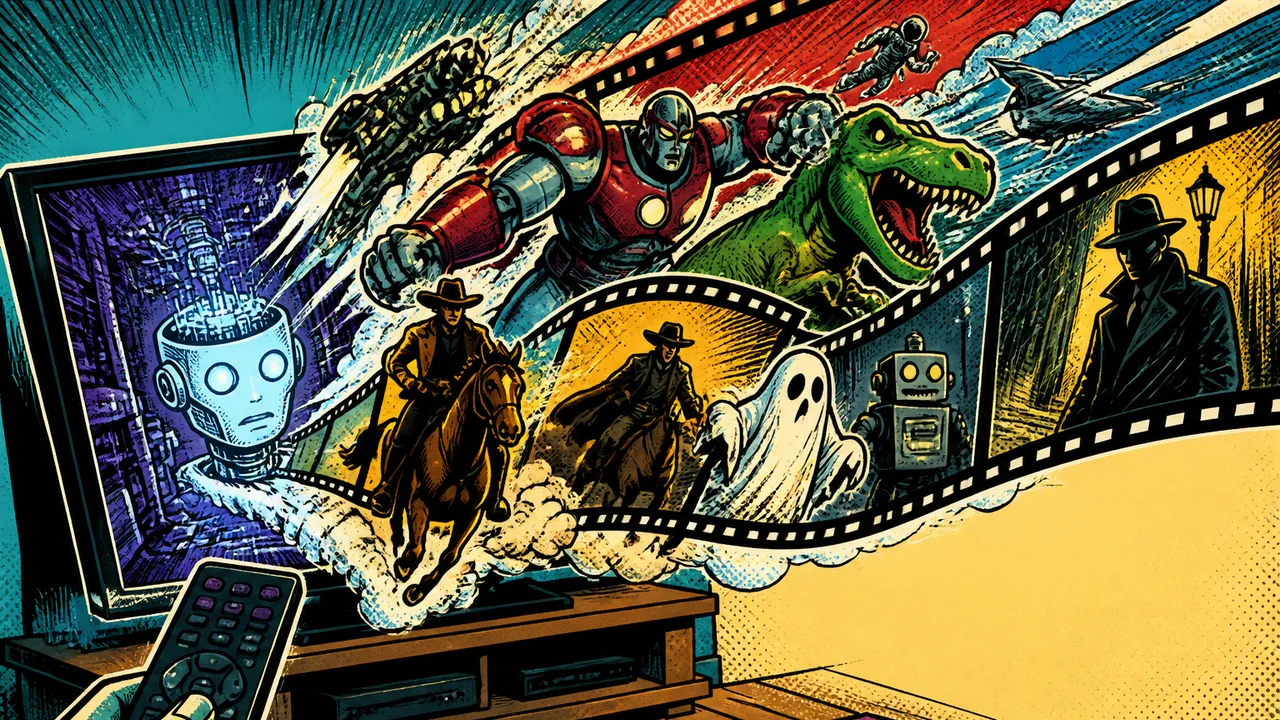
Roku now hosts a 24-hour, ad-supported channel called Fairground, and every film on it was made with generative AI. That sentence alone would have sounded like satire two years ago. As of this week it is a scheduling fact, and the trade press has already decided how to describe it: Futurism called it an "AI slop" channel outright, The A.V. Club went even further in its headline, and Cablefax, an outlet that usually covers carriage deals without adjectives, also ran with "AI slop." When the soberest publication in the bunch is calling your programming slop, the framing has left the building.
The interesting question here is not whether the films are good. Early coverage suggests they mostly are not. The interesting question is what a channel like Fairground is actually for, and who wins if it works.
What We Actually Know
Let's start with the record, because it is thinner than the outrage implies. Multiple outlets reported the launch in the past few days: BGR published a review under the headline "Roku's Controversial New Channel Is Even Worse Than It Sounds," No Film School covered it from a filmmaker's angle, and Slashdot aggregated the reaction under the frame "The Streaming Era's Synthetic Content Test." The consistent picture across these accounts: Fairground is an always-on, ad-supported feed, the films in rotation were produced with generative AI, and reviewers who sat with it found the narrative and visual quality below what most viewers would call a movie.
What we do not know, and I want to be plain about this: how Fairground is performing with actual viewers, what it cost Roku or its programming partners to assemble, how the licensing deals with the AI-generated content's producers are structured, or whether any of the films involved had meaningful human involvement beyond prompting. None of the coverage I can cite addresses retention or ad rates. So treat the "it's bad" consensus as a critical judgment from people who sampled it, not a ratings verdict. Those are different claims and the second one hasn't been made yet.
Television Has Always Had Filler. That's the Point.
Here's the context that keeps getting lost in the pile-on: filler is one of television's oldest business models. Reruns exist because reselling old content costs almost nothing against a fresh feed. Direct-to-video existed. Public domain bins existed. The entire FAST (free ad-supported streaming TV) sector, which Roku helped popularize with channels devoted to single shows, single genres, and in some cases single weather patterns, is built on the insight that some viewers want a screen that just runs. They do not want choice. They want motion and maybe noise while they cook dinner.
Into that environment, generative AI changes one variable: the marginal cost of producing a new "film." If a synthetic feature costs a few hundred dollars instead of a few million, a channel operator can fill 24 hours with material nobody has ever seen, every day, forever. No reruns needed. Endless novelty at near-zero cost.
For a viewer who wants background television, is a weak original AI film worse than a 1990s sitcom rerun they've seen nine times? Ad-supported TV has always monetized attention that wasn't fully present. AI content doesn't have to beat prestige cinema to succeed in that slot. It has to beat a looping screen of beach waves.
The Counterargument, Stated Seriously
The filmmakers and critics pushing back have a real point, and it isn't snobbery. Three of their arguments hold up under scrutiny.
First, craft costs are not optional costs. Story structure, editorial judgment, performance direction: these aren't overhead to be optimized away, they're the product. Generative tools reduce the cost of producing images and scenes; they do not reduce the cost of deciding what images belong in what order or whether any of it adds up to something a human wants to watch. BGR's reviewer, per the outlet's writeup, found the channel worse in practice than the concept sounded, which tracks with what generative video reliably gets wrong: continuity, character consistency, and the boring-but-hard work of a scene meaning anything.
Second, there's a trust and disclosure problem. "AI cinema" can function as a description (this film was made with these tools) or as an excuse (don't judge it by normal standards). If Fairground doesn't label which is which, viewers can't make the choice Roku's channel is ostensibly offering them. On a platform where a click away costs nothing, opacity is fatal.
Third, and this is the one I think matters most long-term: the economics of FAST channels reward volume. The more hours of content you own outright, the more ad inventory you control. If platforms learn that audiences will tolerate synthetic filler at scale, the incentive isn't to make AI films better. It's to make more of them, cheaper. Quality becomes a rounding error in a spreadsheet that only measures hours filled.
The Stress Test Framing, and Where It Might Be Wrong
The best framing in the coverage, honestly, came from the Slashdot aggregation itself, which called this a stress test for the market: will viewers accept endless novelty, or will the absence of craft make the savings obvious?
I'd bet on a boring answer: the market will segment, and it will segment fast. Fairground-type channels will find an audience among second-screen viewers and the insomniac 3 a.m. demographic, where broadcast TV has long dumped its cheapest product anyway. Meanwhile, the people who wanted to watch a movie will keep clicking away within four minutes, and the retention data will show it. The FAST model survives on aggregation across hundreds of channels, so a slop channel coexisting next to a classic-film channel isn't a market verdict; it's just portfolio management.
The open question isn't viewer taste. It's what platforms do with the signal. If Roku reads Fairground's engagement data and concludes "synthetic content fills hours at acceptable cost," volume wins. If it reads "synthetic content has terrible retention and hurts session length," craft survives as a constraint. Same channel, same viewers, opposite strategic conclusions, depending on which metric the platform optimizes.
And there's a supply-side wrinkle nobody's covered yet: every struck-silent writer or underemployed production crew watching this rollout is taking notes. If Fairground proves that audiences reject cheap synthetic film even as background noise, it strengthens the hand of human-made content as a differentiator, possibly with an explicit "no AI" label becoming a marketing asset the way "organic" did for food. If it proves the opposite, the floor falls out of entry-level production work, the exact pipeline that produces the next generation of people who know how to structure a story.
How to Watch This Story
Ignore the review scores. Track three things instead. One: does Fairground survive past the news cycle, or get pruned from the channel store in a quarter? Two: do competitors (Tubi, Samsung TV Plus, Amazon's free channels) follow, because imitation is the sincerest form of "it tested fine." Three: does anyone publish real numbers, engagement, ad fill rates, or whether the films are labeled at all?
The predictable takes are already written. The informative ones take six months. When a cable-industry outlet like Cablefax covers an AI controversy without flinching, that's the tell that the technology has moved from novelty to infrastructure. What kind of infrastructure it becomes depends on what the retention data says, and right now, nobody's saying.
🟡 I'll keep watching the numbers, not the thinkpieces.
More Like This
This Creator Got Shadowbanned on YouTube in 25 Days—On Purpose
A vidIQ creator deliberately shadowbanned their channel with AI-generated content to expose how YouTube's algorithm actually works. The results are wild.

Making Longer AI Films Without Stitching Clips
Jahan of CyberJungle demos a Seedance 2.5 workflow that turns 30-second AI clips into 90-second continuous shots, no frame-by-frame fixes required.
AI Is Now Making Microdrama, and the Math Is Brutal
A new AI workflow lets one creator produce a full microdrama season in hours. The $11B format may never need a human crew again—here's what that actually means.

How Streaming Platforms Use Psychology to Hold Your Attention
Streaming platforms are built on behavioral science. Here's what media psychology actually says about autoplay, thumbnails, and what prolonged watching does to your body.

Starlink Satellites Are Now Scanning Earth's Atmosphere
Kyoto University researchers repurposed 1,200 Starlink satellites as an accidental atmospheric scanner. Here's what that means for science—and who controls it.
Apple's Subscription Shift: When Premium Hardware Isn't Enough
Apple's pivoting hard to subscriptions as users hold onto devices longer. Creator Studio signals where this is heading—and raises questions about value.

Google Now Lets You Log In With a Selfie Video
Google's new selfie video login is a convenience play with real privacy stakes. Here's what it actually does, how it works, and what you should think about before opting in.
LG Bans Smart TV Apps That Sell Your Internet Connection
LG is banning webOS apps that secretly turn your TV into a residential proxy node. Here's what that means, why it took this long, and whether it'll actually stick.