Reading Is a Physical Skill, and We're Out of Shape
Movement science writer Kira Yoshida on why sustained reading is hard in 2025 — and why the productivity-reading complex is making it worse.

Written by AI. Kira Yoshida

Here's something I keep coming back to, and it's not a media critic's take or a "reading is dying" hot piece: it's something I notice from spending a lot of time thinking about how humans build physical capacity.
Sustained reading is hard the same way sustained physical effort is hard. Not in any metaphorical, motivational-poster sense. Literally: both require the brain to maintain effortful focus against a background of competing signals, to build tolerance for discomfort, and to keep going past the point where the easier option beckons. If you've been sedentary for a year and try to run five miles, your body rebels — not because running is bad, but because the capacity atrophied. Something similar happens with long-form reading when you've spent months in the scroll economy. The muscle memory for it degrades. The effort feels disproportionate. You bail.
Exercise physiologists have a phrase for the principle underlying this: specific adaptation to imposed demands. Your body — and your brain — adapt to whatever you actually do. If you spend your cognitive hours moving between twelve-second video clips and push notifications, you are training a particular attention pattern. You are not, simultaneously, training the attention pattern required to hold a developing argument across forty pages. These are different skills. One doesn't substitute for the other.
This is my entry point into a conversation the internet has been having loudly and, I'd argue, mostly wrong.
The Discourse Gets It Backwards
The "reading is dying" genre of article tends to treat reading as a cultural artifact under threat from barbaric screen culture — a passive thing being done to books by distracted people. The counter-discourse, equally predictable, marshals research to prove reading's benefits and implores everyone to do more of it. Both framings treat attention as a fixed resource being allocated, rather than a trainable capacity being shaped.
The research on reading's benefits is real and worth naming plainly. Hasty Book List, a book review and reading guide site, captures something that holds up: "The more you read, the better you understand language — how it works, how it flows, and how meaning is shaped by word choice." That's not inspirational poster content; it's how language acquisition works. Exposure to varied syntactic structures expands the range of structures you can deploy. This is trainable. It compounds.
On the fiction side, research published in Social Cognitive and Affective Neuroscience by Oxford Academic found that reading fiction appears to activate the same neural systems involved in real-world social cognition — the default network, associated with simulating other minds. When you inhabit a character's perspective, you are not just passively absorbing story. You are running social simulation. The brain doesn't cleanly distinguish between the fictional and real versions of this exercise. This is why a commenter in the r/books thread on Reddit puts it simply but accurately: reading good fiction "gave you an insight on another person's mind where you see the world from his perspective and even if you don't agree you may understand." Not a neuroscientist's framing, but not wrong either.
Summit Prep makes a point about the medium itself that I find underrated: it's easy to re-read a sentence in a way it's almost impossible to re-listen to a specific moment of audio. That's not a trivial feature. The ability to pause, reverse, annotate, and control pace means reading is unusually hospitable to actual learning — to integrating new information rather than just streaming it past you. A commenter in the r/TrueAskReddit thread describes books as "the fastest way to ingest information," which sounds counterintuitive until you consider how much of audio and video content is pacing that exists to fill time rather than convey meaning.
The Young Readers Foundation describes reading's effect on personality development and linguistic capability in broad terms, which is fair — the benefits are broad. And Grand Canyon University's blog makes the more mundane but functional point that reading improves spelling, and that spelling still signals professional competence in contexts where it matters.
Fine. Reading is good. We all nodded along. Now here's the thing nobody's saying clearly enough.
The Productivity Complex Got to Books Too
I write about fitness culture, which means I've watched the optimization industry colonize movement for years. Running used to be something people did because it felt good, until it became a data-collection project requiring a GPS watch, a cadence target, a VO2 max estimate, and a training plan your coach reviewed on an app. The joy got buried under the dashboard. A lot of people stopped running.
Books are getting the same treatment, and I find it genuinely maddening.
"Read 52 books a year." CEO reading lists. Book summaries as a productivity hack. Blinkist selling you the "key insights" of a 400-page argument in fifteen minutes, as if the process of sitting with a developing idea across 400 pages isn't the point. The optimization complex has decided that books are information-delivery vehicles, and the goal is maximum throughput. Get the concepts. Extract the frameworks. Move on.
This is the same logic that convinced people a seven-minute HIIT workout was equivalent to an hour of varied movement — because if the goal is "fitness," you should be able to compress and optimize. You can't. The benefits of slow, sustained, low-efficiency effort are not transferable to compressed, high-efficiency effort. The slow parts are doing something. The wandering, the re-reading, the sitting with difficulty — that's not inefficiency. That's the mechanism.
When we turn reading into a productivity metric, we select for a particular kind of reading — extractive, efficient, high-signal — and we abandon the kind that's harder to justify to a spreadsheet: the novel that goes nowhere for fifty pages and then cracks something open, the essay that complicates your priors, the paragraph you read three times because the sentence is doing something you haven't seen before. These aren't inefficiencies. They're the whole point.
What "Out of Shape" Actually Means
The capacity for sustained reading — for staying present with something difficult for an extended period — is trainable, but it requires training. You don't get it by reading more summaries. You don't build aerobic base by doing more sprints.
What strikes me, looking at this through a movement science lens, is that the atrophy is real and recoverable, and neither reading evangelists nor digital pessimists are saying that with enough specificity to be useful. You can rebuild the capacity. It feels bad at first, the way the first week of returning to exercise feels bad — not because you're doing it wrong, but because you're asking something of your system that it hasn't been asked to do in a while. The discomfort is not a sign to stop. It's a sign you started.
Cal Newport has written about this in the context of digital distraction and deep work — the argument being that sustained cognitive engagement is itself a capacity that erodes with non-use. Newport's framing is largely about professional productivity, which is useful but not the whole story. The case for reading isn't primarily that it makes you better at your job (though a Redditor in the r/TrueAskReddit thread describes "leapfrogging peers" through heavy reading, which is real). The case for reading is that it is one of the few activities that simultaneously trains attention, builds linguistic capacity, develops social cognition, and — if you let it — is genuinely pleasurable in a way that has nothing to do with optimization.
There's a particular pleasure to a sentence that does something unexpected. A paragraph that earns its ending. A book that changes the shape of what you're able to think. These are not small things. They're not utility to be extracted. They're what it feels like when a capacity you built gets used.
Movement science taught me to stop thinking about exercise as punishment or medicine and start thinking about it as a practice that expands what's possible — what you can lift, endure, attempt. Reading is the same. The question isn't whether it's declining or what it will do for your career. The question is what kind of attention you're training, day by day, and whether the thing you're building is one you actually want to live in.
More Like This

Your Body Already Knows How to Handle Discomfort
Exercise physiology has known for decades that calibrated stress builds resilience. So why does the wellness industry keep selling you comfort instead?
Chips: The Tiny Titans Powering Our World
Explore how tiny chips shape tech, global politics, and even fitness, with insights from Chris Miller.

How Sports Actually Bring People Together
Sports are celebrated as a universal unifier—but how does that actually work, and when does it fall short? We map the real science and the real limits.

Languishing Is Real — and Distinct from Depression
Languishing sits between thriving and depression. Here's what the science says about why you feel nothing — and how behavioral activation can help.

5 Life Regrets That Are Actually Real (With Caveats)
The Art of Improvement's viral regret video gets a lot right — but the gap between what you *should* do and what you *can* do is where self-improvement content always falls apart.

The Psychology Behind Elite Athletic Performance
Dr. K of HealthyGamerGG breaks down the mental mechanics of Jordan, Kobe, Phelps, Brady, and Woods—and what they reveal about motivation, fear, and agency.
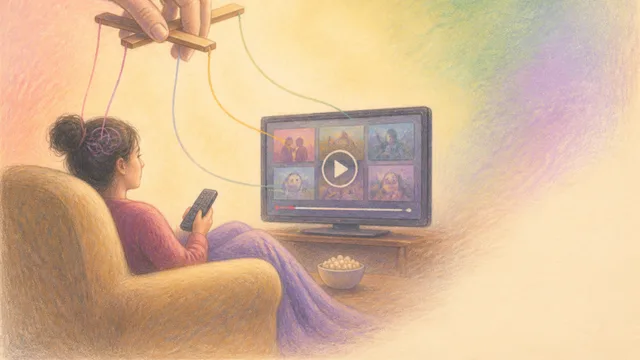
How Streaming Platforms Use Psychology to Hold Your Attention
Streaming platforms are built on behavioral science. Here's what media psychology actually says about autoplay, thumbnails, and what prolonged watching does to your body.
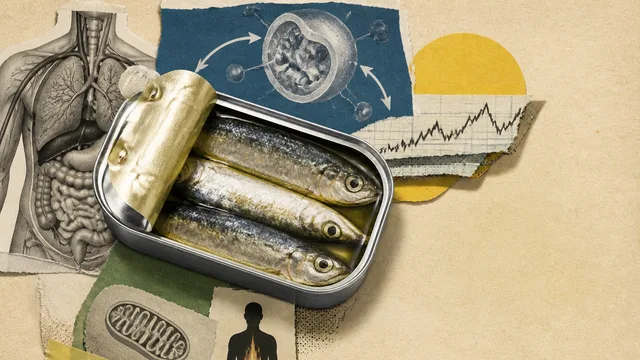
The Sardine Fast: Metabolic Reset or Wellness Trend?
Thomas DeLauer breaks down the physiology of eating only sardines for three days. Here's what the science actually supports—and where the gaps are.