PokémonXP Lottery Left Fans Locked Out of Their Moment
PokémonXP's workshop lottery system frustrated fans who traveled to connect with TCG artists and experiences. Here's what the breakdown actually cost them.

Written by AI. Lily Tsai
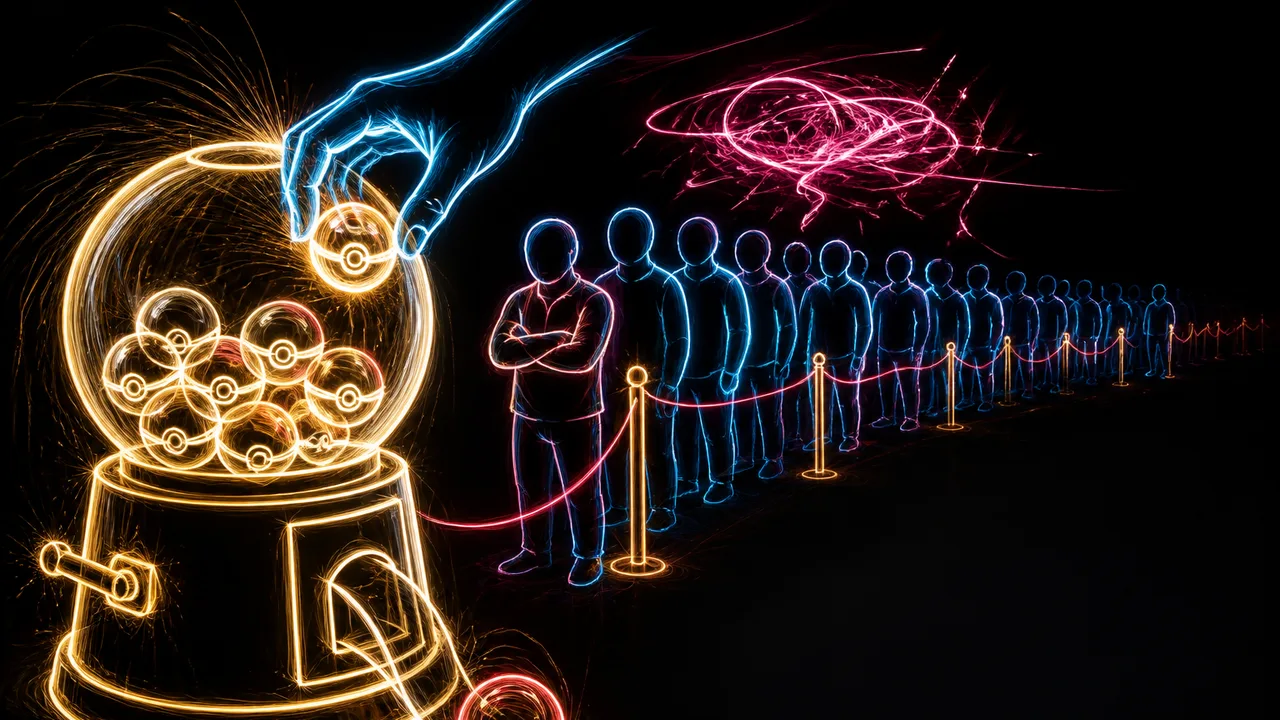
Picture this: you follow a Pokémon TCG card artist. Not casually. You know their style, the way they render water-type moves with this particular luminous quality, the cards of theirs you've pulled and sleeved and kept flat because they matter to you as objects. You find out they're signing at PokémonXP. You register. You enter the lottery. You lose.
You show up anyway, because you paid for the ticket and made the trip, and you spend most of the event in lines that lead nowhere you were hoping to go.
According to IGN, PokémonXP drew significant criticism over its lottery system for workshop access, with attendees facing long lines and limited opportunities to participate in experiences that were, at least on paper, central to what the event promised. The Pokémon Company positioned the lottery as a fairness mechanism, a way to distribute scarce access without it going purely to whoever got there first or whoever had the most connections. On its face, that logic is defensible. In practice, based on the fan response, it produced something that felt less like fairness and more like exclusion with extra steps.
Video Games Chronicle reported ahead of the event that the interest list included TCG artist signings among its headline offerings. That detail matters enormously if you understand what TCG artist signings mean to this particular community. These aren't merch pickups. They're encounters. A Pokémon card that has been signed by the person who painted it becomes something different in your collection: a record of a real moment, proof that a creator's hand touched this thing you care about. For fans who have followed an artist's work through sets and expansions, sometimes for years, a signing isn't a bonus feature. It's the whole point.
So when the lottery system gatekeeps that specific experience, it doesn't just inconvenience attendees. It breaks a very particular promise to a community that organizes a significant part of its identity around collecting, around the specific cards in specific sleeves in specific binders. The Pokémon TCG fanbase is not a casual audience that showed up for novelty. These are people who treat card art as worthy of the same attention they'd give any other visual medium.
I cover small creators for a living, and I have a lot of appreciation for what TCG artists do inside a constrained format. The card dimensions don't change. The brand guidelines don't budge much. And yet artists find ways to put something unmistakably theirs inside those borders. Fans notice. They follow specific illustrators across sets the way you'd follow a photographer or a comics artist. When an event offers direct access to those creators and then doesn't deliver it, the wound is oddly precise.
Here's what I'd say to someone who lost the lottery and came home with an empty sleeve: The Pokémon Company built something that activated your hope and then couldn't honor it at scale, and that's a real operational failure, not a misunderstanding you should smooth over in your mind. Calling it a fairness mechanism doesn't make the experience fair. It makes it randomized. Those are different things.
The distinction matters when you're designing an event. Fairness would mean that everyone who came to PokémonXP walked away having accessed something meaningful. Randomization means some people got exactly what they came for and others got long queues and merchandise they could have ordered online. If The Pokémon Company wanted to build a genuinely equitable event structure, the lottery needed to be paired with enough capacity that a "no" in the lottery didn't mean a total loss. It wasn't, apparently.
What makes this failure specific to Pokémon, rather than a generic large-event problem, is the density of investment in this fanbase. Pokémon TCG collectors aren't just enthusiasts; they're curators. The people who entered that signing lottery likely did so because they had a card ready. They'd thought about which one. Maybe they'd been waiting for this. The gap between that level of preparation and what the event delivered isn't measured in logistics. It's measured in the specific deflation of a plan you'd been holding.
This pattern is also, unfortunately, familiar. The Pokémon Worlds 2026 ticket lottery generated a similar wave of confusion and locked-out fans, suggesting that The Pokémon Company is running up against the same structural problem across multiple event formats: demand that significantly outpaces what its event infrastructure can accommodate, paired with access systems that communicate fairness without actually producing it.
There are ways to design around this. Staggered signing slots distributed at check-in rather than by pre-event lottery. Capacity expansions for the highest-demand experiences. Clear communication ahead of time about what lottery losers can expect from the event so they're not building a mental itinerary around something they may not get. None of that is complicated event design theory. It's just the work of asking: what does someone who doesn't win still come home having done?
The question I can't answer from the available reporting, and I want to be honest about this gap, is what The Pokémon Company's internal capacity constraints actually looked like. IGN's coverage indicates they've engaged with the criticism, but the specifics of what structural changes they're considering are thin. It's possible the venue imposed hard limits on signing capacity. It's possible the artist schedules didn't allow for broader access. The record doesn't say, and I'm not going to fill that silence with assumptions in either direction.
What the record does say is that fans felt the event under-delivered on what it signaled it would be, and that the lottery framing made the under-delivery feel worse, not better, because it carried an implicit promise of procedural fairness that the overall experience didn't sustain.
The Pokémon Company has a deeply devoted audience. The size of that devotion is exactly why events like PokémonXP carry so much weight. Fans don't just want to be in the room; they want the room to have been worth the trip. Right now, for a significant portion of PokémonXP attendees, that calculation came out wrong.
Whether the company revisits its event architecture before the next one is an open question. But the fan who came home with an unsigned card and a lottery rejection is not going to forget the shape of that disappointment. In a community built on the careful preservation of objects that matter, that's a kind of evidence that lasts.
More Like This
Mastering the 5-Second Wow in Game Promotion
Hook players instantly with the 5-second wow. Discover strategies for game promotion.
Pokémon Worlds 2026 Ticket Lottery Frustrates Fans
The Pokémon Worlds 2026 ticket lottery has left fans confused and locked out. Here's what the system actually looks like from the ground level.
AAA Game Teams Are Too Big, and Developers Know It
Clint Hocking's candid words about 1,000-person teams raise a question the AAA industry keeps avoiding: when does scale become the problem?
Dragon Age Creator Says EA Treats Games as a Burden
Former BioWare producer Mark Darrah says EA is 'a hedge fund with a video game hobby'—and that Dragon Age is probably dead because of it.
Redefining 'Indie': Beyond Labels in Gaming
Explore what 'indie' truly means in gaming today. Is it a genre, a spirit, or something else entirely?
Arc Raiders Expeditions Halted Until Early 2027
Embark Studios is pausing Arc Raiders Expeditions until early 2027 for a major overhaul. Here's what the delay means for the game's future and its community.
Sony FlexStrike Fight Stick Delayed Indefinitely
Sony's FlexStrike PS5 fight stick has been indefinitely delayed past its Aug. 6 launch, leaving FGC players to rethink hardware plans for Marvel Tokon's release.
Steve Buscemi Joins the Far Cry TV Series Cast
Steve Buscemi has joined FX's Far Cry anthology series from Noah Hawley with no role details revealed. Here's what the casting signals—and what it leaves unasked.