Pentagon's Anthropic Blacklist Ruled Unconstitutional
A federal judge has ruled the Pentagon's blacklisting of Anthropic as a supply chain risk was illegal retaliation. Here's what the ruling means for AI firms.

Written by AI. Marcus Chen-Ramirez
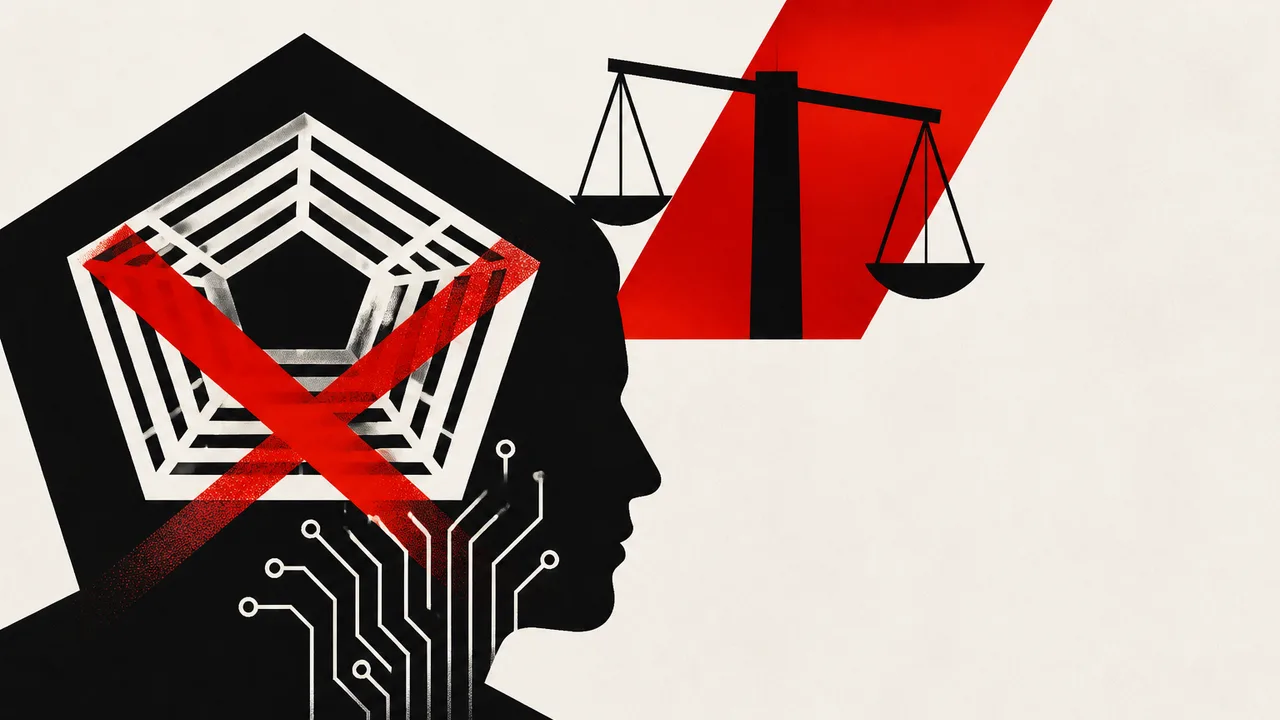
The Trump administration tried to shut Anthropic out of federal contracting by labeling it a national security risk. A federal judge has now called that what it was: illegal.
The ruling, handed down this week, finds that the Pentagon's decision to place Anthropic on a supply chain risk blacklist constituted unlawful retaliation rather than legitimate national security enforcement, according to The Verge and the BBC. The court cleared Anthropic of the national security risk designation that had been hanging over the company since March. Engadget reports the judge described the ban as "illegal and baseless."
That last phrase is worth sitting with. "Illegal" is a legal conclusion. "Baseless" is something closer to a moral one.
How a Safety-Focused AI Lab Became a Pentagon Risk
Anthropic occupies a strange position in the AI landscape. It was founded in 2021 by former OpenAI researchers — including Dario and Daniela Amodei — who left partly over concerns about safety practices at their previous employer. The company has built its public identity around the idea that AI development should be careful, measured, and aligned with human values. Its flagship model, Claude, is marketed partly on the premise that it's less likely to go off the rails than competitors.
The irony of that company getting labeled a national security threat — rather than, say, a national security asset — is not subtle.
The Pentagon's mechanism here was a supply chain risk designation, CNBC reports. Supply chain risk management frameworks were designed, broadly speaking, to keep foreign adversaries from embedding vulnerabilities in systems that the U.S. government depends on. They're a legitimate tool. The question the court appears to have answered is whether they were used legitimately in this case — and the answer was no.
Wired and Gizmodo both note the court found the action to be retaliatory. Retaliation for what, exactly, remains a question the public record is thin on — the sourcing available doesn't fully detail what Anthropic may have done to attract the administration's ire. What the ruling does establish is that whatever the stated justification, the court found it didn't hold up.
The Mechanics of a Blacklist
To understand why this matters, it's worth being precise about what a supply chain risk designation actually does to a company. It's not a criminal charge. It's not a fine. What it does is systematically cut a company off from government contracts and, potentially, from partners who don't want to be adjacent to a designated risk. For a company like Anthropic — which has federal ambitions and whose growth depends on being seen as trustworthy infrastructure — that kind of designation is potentially existential, or at least severely damaging.
This is what makes the "retaliatory" finding so pointed. The government possesses enormous power to wound private companies through administrative mechanisms that never require the evidentiary standards of a criminal proceeding. The designation carries real financial and reputational weight while being, in theory, a bureaucratic risk-management decision. Courts have generally given the executive branch wide latitude here, on the logic that national security judgments require specialized expertise that judges lack.
That this judge concluded the latitude was exceeded is notable. It suggests the evidence for the designation — or the lack thereof — was glaring enough that deference to executive judgment wasn't sustainable.
The Precedent Problem — and the Precedent Opportunity
A ruling like this cuts in more than one direction.
On one hand, it offers a roadmap for AI companies that find themselves targeted by politically motivated administrative action. If you can demonstrate that a designation lacked a factual basis and was driven by something other than genuine security concerns, courts may be willing to intervene. That's a meaningful check on an executive branch that has shown increasing willingness to use regulatory levers against companies it dislikes.
On the other hand, there's a version of this ruling's legacy that should make AI companies a little uncomfortable, too. The decision validates the framework while rejecting its application in this case. Supply chain risk management, as a concept, is not going away. The Pentagon and other agencies retain the authority to scrutinize AI vendors — particularly as AI becomes embedded in defense systems, logistics, intelligence analysis, and everything else the federal government does at scale. A ruling that says "you can't blacklist a company for no good reason" implicitly acknowledges that blacklisting for good reasons remains available.
That's a distinction worth remembering as AI companies increasingly compete for federal contracts. The incentive to win those contracts is enormous. The scrutiny that comes with them is also enormous. Companies can't have it both ways — treating federal business as a revenue stream while treating federal oversight as an imposition.
What This Tells Us About the Broader Moment
The Anthropic case didn't happen in a vacuum. It's one data point in a wider, messier story about how the current administration relates to the AI industry — which is itself not a single thing but a collection of competing factions with different interests, different politics, and different visions of what AI should become.
Some AI companies have cultivated close relationships with the administration. Others have found themselves on the wrong side of it, for reasons that sometimes track policy disagreements and sometimes appear to track something more personal. Anthropic, with its safety-first positioning and its researchers' pedigrees, occupies a particular niche that may have made it an attractive target for an administration skeptical of the AI safety establishment's political valences.
That's speculative — the available sourcing doesn't confirm it. But the pattern across this administration's use of regulatory tools against tech companies suggests that the line between policy and politics is not always easy to locate.
The Unresolved Question
The ruling clears Anthropic. It does not, on the record available, resolve what triggered the blacklisting in the first place, or what accountability, if any, will follow for the officials who pursued it. A court finding that an action was retaliatory and baseless is a serious judgment. Whether it produces any downstream consequences — for the people who made the decision, for the processes that enabled it — is a separate question, and one the ruling itself cannot answer.
What it does do is establish, in at least this case, that administrative power has limits even when it wraps itself in the language of national security. For an AI industry that's increasingly intertwined with the federal government, and increasingly subject to its moods, that's not a trivial thing to know.
The deeper question — how you write rules for an industry moving this fast, in a way that's actually about security rather than about who's in favor this month — is one the courts can't answer. That's a policy problem. And so far, no one seems particularly close to solving it.
More Like This
Claude Code's Skill Chaining Raises Automation Questions
Anthropic's Claude Code now allows sequential skill execution through 'context fork' commands. Technical advancement or regulatory blind spot?

Alibaba Bans Claude Code Over Alleged Backdoor Risks
Alibaba is banning Claude Code starting July 10, citing alleged backdoor tracking of Chinese users. Here's what developers need to know about the dispute.
Anthropic's Claude Design Tool: What Actually Changed
Anthropic released Claude Design for UI prototyping. We tested it to see if it escapes the 'vibe-coded' look that plagues AI-generated interfaces.

OpenAI and Anthropic's Race to Control Global Compute
Dylan Patel argues OpenAI and Anthropic will own most of the world's usable compute by 2028—and that the debt required to get there could destabilize sovereign finances.

Who Rewrites Claude's Ethics—And Who Gets No Vote
Anthropic is rewriting Claude's ethical constitution in private sessions, under IPO pressure. But the workers who build the system aren't in the room.
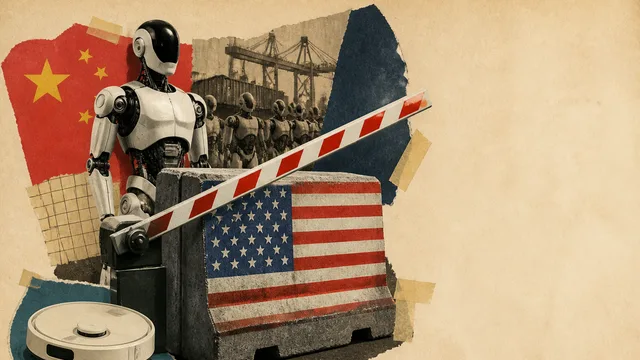
US Foreign Robot Ban: Who Gains and Who Pays
The US has banned foreign-made humanoid and quadruped robots, targeting China on security grounds. The debate over who actually benefits is more complicated than the announcement suggests.
Ben Bernanke Joins Anthropic's AI Oversight Trust
Former Fed Chair Ben Bernanke joins Anthropic's Long-Term Benefit Trust. Here's what his economic expertise actually means for AI governance—and what it doesn't.
UN AI Summit: Big Room, Bigger Questions on Governance
193 countries met in Geneva to tackle AI governance. The warnings were credible. The robots were cool. The binding rules? Still not there.