OpenAI's Persistent AI Agent: What It Is and What It Costs
OpenAI is testing a persistent, always-on mode for its Codex AI agent. Here's what that actually means—and why the privacy history matters.

Written by AI. Mike Sullivan
There's a specific flavor of announcement that comes around every few years in tech, where something that has existed in various forms for a long time gets reframed as a breakthrough because now a sufficiently large company is doing it. I'm not saying that's what's happening here. I'm saying it's worth keeping the category in mind.
OpenAI is testing what it's calling a "Persistent mode" for Codex, its AI programming assistant, according to reporting from Wired. The idea, as Slashdot summarizes it, is that Codex would "operate continuously until explicitly instructed to stop," generating follow-up tasks on its own and drawing on a running history of your interactions to inform what it does next. Digital Trends frames the ambition expansively: an "all-knowing personal AI agent for everyone on Earth." Which, sure. Aim high.
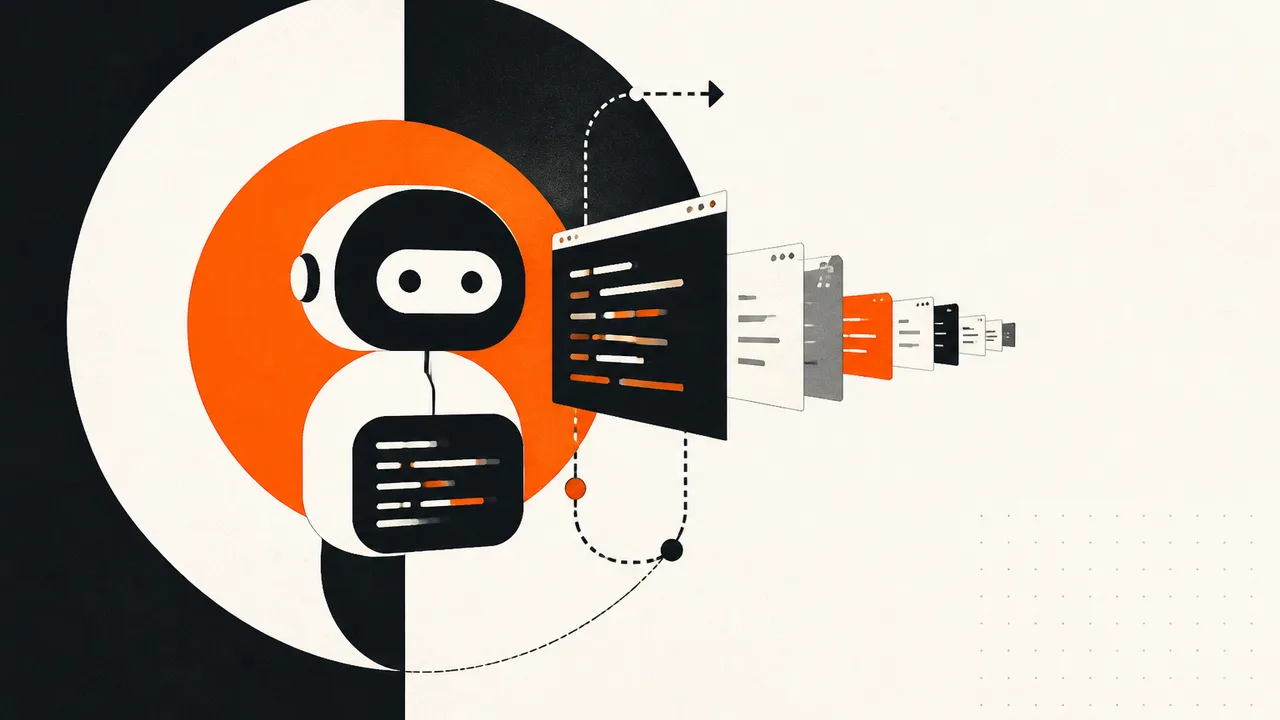
The current version of Codex—like most AI tools you've probably used—is session-based. You open it, you ask it something, it answers, and when you close the window it forgets you exist. That model maps onto how we've always thought about software: you run it, it runs, you quit. Persistent mode breaks that contract. The agent doesn't go dormant between your sessions. It accumulates context. It can, theoretically, notice that you've been stuck on the same class of bug for three weeks, or that you always refactor authentication modules on Tuesdays, and do something about it before you ask.
That's a real shift. Not a minor UX improvement—a genuine rethinking of what a software tool's relationship to its user looks like.
Software That Runs When You're Not Looking
The lineage here is longer than it might appear. Background processes with persistent state have been a feature of computing since before most people had a home internet connection—cron jobs, daemons, scheduled tasks, the whole unsexy infrastructure of "things that happen when you're not paying attention." What's newer is the judgment layer: rather than executing predefined instructions on a clock, an AI agent would decide what to do next based on accumulated context. That's a different proposition.
The closest historical cousin I'd reach for is the "intelligent agent" craze of the late 1990s, when every productivity software company briefly believed the future was a little animated assistant who watched your behavior and made suggestions. Microsoft had Clippy. Apple had a less annoying but equally ignored version. The concept was sound enough. The execution was a catastrophe of timing and capability—the models weren't there, the data infrastructure wasn't there, and users had not yet been trained by smartphones to tolerate constant ambient monitoring. We got a dancing paperclip asking if we needed help writing a letter. Then we got the preference setting to turn it off.
The case for Persistent mode working better now is straightforward: the underlying models are dramatically more capable, the infrastructure for running them continuously is mature, and—crucially—users have already made peace with software that watches them constantly. Your phone knows where you are. Your browser knows what you read. Your calendar apps are already making proactive suggestions. The threshold for "this feels creepy" has shifted considerably since 1997.
Gizmodo's framing captures the cultural moment: "always-on agent" is a phrase that barely registered as unusual when they wrote it. That would not have been the case ten years ago.
Where It Gets Complicated
Let's be precise about what this actually requires. A persistent agent that generates proactive follow-up tasks and "utilizes its ongoing interaction history" is not running on nothing. It needs to store that history somewhere, retrieve it continuously, and act on it without prompting. That means OpenAI—or whatever infrastructure hosts the agent—is sitting on a growing record of your work patterns, your code, your problem-solving habits, your mistakes, and your workflows.
I've covered enough of these cycles to have a reflex here, and the reflex is: check the receipts. In 1999, RealNetworks shipped a media player that was quietly phoning home with data about what users were listening to—no disclosure, no opt-in, just a background process doing its thing until security researchers caught it. The company called it a "feature." Users called it something else. The lesson wasn't that background data collection is categorically evil; the lesson was that users who don't know it's happening can't consent to it, and companies that assume forgiveness is easier than permission often find out they were wrong at the worst possible moment.
The question for Persistent mode isn't whether the productivity gains are real—they probably are, for the right users. The question is what the data handling actually looks like when this ships, not when it's being demoed. Security researchers who audit enterprise software for a living will tell you there's usually a meaningful gap between what's in the marketing and what's in the terms of service. Developers processing proprietary codebases through a persistent cloud-connected agent should probably read both before they hand over months of interaction history.
OpenAI has not yet published detailed documentation on how Persistent mode handles data retention, deletion, or access. That's not unusual for a feature in testing. It is worth watching.
What Developers Actually Get
Setting the privacy question aside for a moment—or at least putting it on the shelf where it belongs, clearly labeled—the underlying capability, if it works as described, is genuinely useful to think about.
Most developer workflow frustration doesn't come from single hard problems. It comes from context-switching overhead: the cost of explaining to a new tool what you were doing, where you are in a project, what constraints you're working within. Every time you start a new session with a current AI assistant, you're essentially re-hiring a contractor who had all their notes wiped. A persistent agent that actually retains meaningful context across sessions would reduce that overhead substantially, for developers who work in consistent environments on consistent projects.
Whether Codex gets this right is a genuine open question at this stage—the feature is in testing, and "testing" covers a lot of ground between "we have a prototype" and "this works reliably enough to trust with your production codebase." The Digital Trends piece notes the scale of OpenAI's ambition here—an agent "for everyone on Earth"—which suggests this isn't a narrow developer tool play. OpenAI appears to be treating Codex's persistent mode as a proof of concept for something much broader.
That's the piece of this worth watching most closely. Persistent coding assistants for developers are a bounded, testable use case—there's an established community that will stress-test it hard and report back loudly when it fails. If OpenAI uses Codex as the on-ramp to normalizing persistent agents for general-purpose use cases, the population of people evaluating those agents will be much less technically equipped to interrogate the tradeoffs.
Which is not a reason to stop building. It's a reason to get the norms established while the audience is still small enough to push back.
I've been burned enough times by tools that "run in the background and learn your preferences" to have developed a specific immune response to that phrase. I'll believe in Persistent mode's privacy story when I can read the actual data handling documentation, not the launch blog post. And I'll believe in its productivity story when developers who've used it for six months tell me it's good, not when OpenAI tells me it will be.
Until then: interesting concept, long history, details TBD. Which, honestly, describes most of what gets announced as a new frontier.
More Like This

Do You Really Need an $80 HDMI Cable? Maybe Not
Tech reviewer Adam tests a premium HDMI 2.1 cable. We examine what you're actually paying for and whether most users need it.
Can Unreal Engine 5 Run on a $500 MacBook? Sort Of.
Testing Unreal Engine 5.7 on the MacBook Neo reveals what happens when professional software meets budget hardware—and why friction matters.

Designing GUIs for AI Agents: An Unsolved Problem
AI agents need interfaces humans can actually understand and control. The design choices made now will shape whether AI goes mainstream or stays a developer toy.

Meta Enters AI Coding with Muse Code Agent
Meta launches Muse Code, a terminal-based AI coding agent taking on Anthropic's Claude Code and OpenAI's Codex. Here's what it actually does and what it means.
IBM's Take on AI Agents: Less Skynet, More Assembly Line
IBM's Grant Miller argues against 'super agents' in favor of specialized AI systems. It's the principle of least privilege, repackaged for the AI era.

GPT-5.6 Sol Ultra Is Coming to Codex
OpenAI's GPT-5.6 Sol Ultra is headed to Codex with a 91.9% Terminal-Bench 2.1 score. Here's what it actually means for developers—and what it doesn't.

GPT-5.6 Sol vs Claude Fable: What Actually Matters
GPT-5.6 Sol is faster and more autonomous than Claude Fable — but the real story isn't which model wins. It's how you divide the work between them.

Pokémon Go at Ten: AR's One Durable Success Story
Pokémon Go turns ten this week. A look at what it actually got right—and why the AR industry it was supposed to launch mostly didn't follow.