OpenAI Drops Data Center NDAs After Voter Backlash
OpenAI says it will stop using NDAs with public officials on future data center sites after election backlash. What changes for communities weighing AI projects?

Written by AI. Marcus Chen-Ramirez
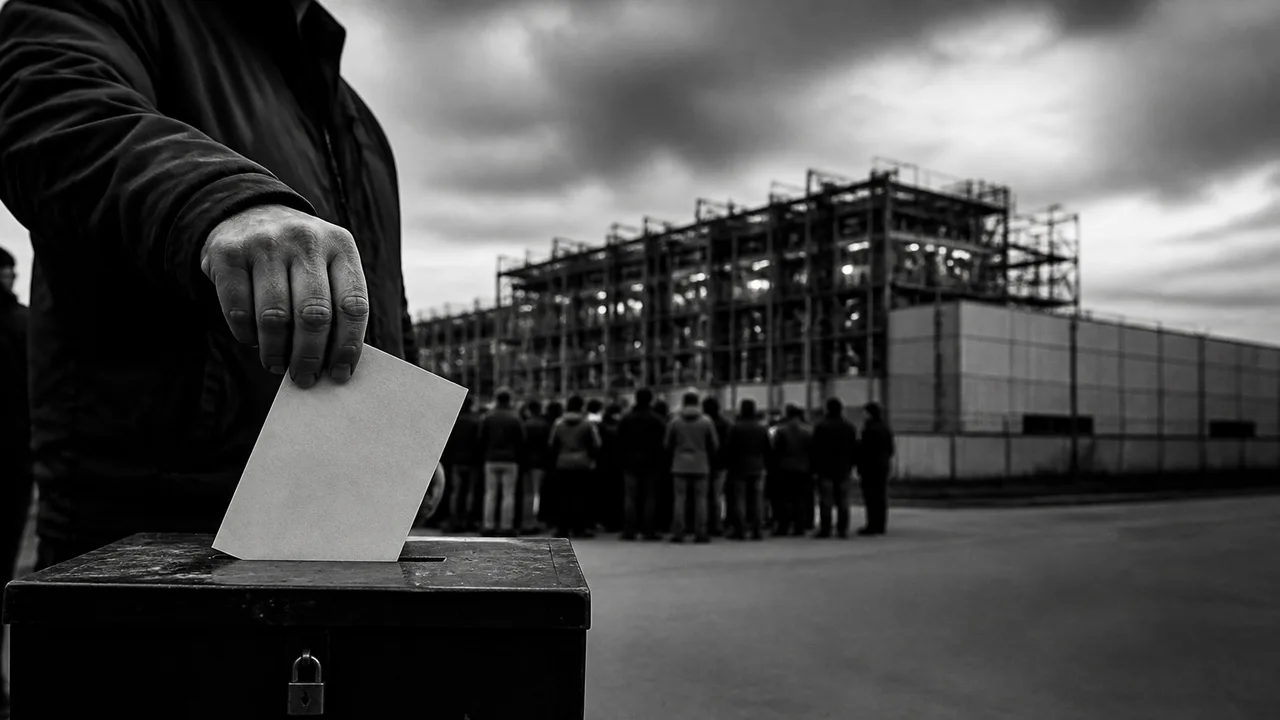
OpenAI says it will stop using nondisclosure agreements with public officials in discussions about future data-center sites. The change arrives just after an election in which communities repeatedly voted against measures favorable to data-center development. For residents trying to learn what might be built near them, an official’s ability to talk is a practical question, not a procedural footnote.
The election results were striking: voters backed restrictions on data centers or rejected pro-development measures in 40 of 41 local ballot contests across 10 states, based on a Ballotpedia analysis and additional results gathered by CNBC. Those votes concerned different places and proposals; they were not 40 votes on OpenAI projects. They do, however, show the political difficulty of asking communities to accommodate a fast-growing industry on terms they cannot fully examine.
OpenAI’s pledge concerns future site discussions with public officials, while proprietary business information may still remain confidential. The scope of any existing agreements, the treatment of individual projects and the documents residents will actually see have not been specified. That leaves a useful question for every community where the company seeks to build: once officials are free to speak, what will they be able to say?
What an NDA Changes at City Hall
A nondisclosure agreement can keep an official from discussing information received during preliminary negotiations. The restriction can operate long before a project reaches a public hearing, when residents might first want to ask about its footprint, electricity needs or proposed location. Dropping that restriction gives officials more room to describe a conversation and respond to concerns as a proposal develops.
It does not automatically give the public a site plan. A city council member might be free to say a company has expressed interest in a parcel while still lacking a firm construction schedule or power estimate. A company can also share some details privately without making the underlying documents public. Local disclosure rules, records practices and the terms of any remaining confidentiality protections will shape what residents can inspect.
The strongest case for OpenAI’s change is straightforward. Public officials must weigh development against local costs, and they should be able to explain what they know while those decisions are still open. Early discussion can also help a developer identify objections before it commits to a plan. If the first detailed conversation happens after land, utility service and local expectations have begun to line up behind a project, public input has a narrower job to do.
The strongest case for keeping some information confidential is also easy to understand. A company negotiating for a site may have proprietary business details to protect. Security information about a facility may warrant different treatment from its expected power demand or the land it would occupy. Narrow confidentiality protections for security information are reportedly part of the revised approach. The public question is where that boundary falls in practice, and whether an official can explain a project’s likely local effects without revealing protected details.
Why the Election Changed the Conversation
A data center is an unusually physical form of digital infrastructure. Software runs on machines; machines need buildings, electrical connections and cooling. A site may raise questions about water use, land use, roads and the capacity of local infrastructure. Those questions vary by project. A proposal’s size, cooling design, location and power arrangements all affect the answers, so a national promise about transparency cannot replace a site-level discussion.
Voters did not have to settle their views on AI to vote on those local questions. They could favor new technology and still object to the terms of a development measure in their community. Conversely, a restriction approved in one town cannot tell another town whether a different project makes sense there. The 41-measure tally captures a sharp political response across the places that put these questions on the ballot, rather than a national verdict on every possible data center.
That response creates an incentive for companies to engage earlier. OpenAI needs facilities capable of supporting AI computing, and local resistance can complicate the path to building them. Dropping NDAs may help the company make its case in public instead of asking officials to carry it behind closed doors. It may also expose disagreements earlier. Both outcomes are part of a public process; transparency offers a clearer argument, not a guaranteed approval.
Residents have potential gains and potential costs to evaluate. A project could bring construction work, business activity or local revenue, depending on its terms. It could also require utility upgrades or put pressure on resources shared with other users. Without project-specific figures, those remain questions rather than a scorecard. The people closest to a proposed site need the figures soon enough to challenge assumptions, not just a chance to comment after the principal choices have hardened.
The Disclosure Test
The next useful measure of OpenAI’s pledge is a sequence of ordinary, checkable events. When will officials identify a proposed site? Will residents see estimates for power and water demand, along with the assumptions behind them? Who will pay for infrastructure changes connected to the project? Will the public have time to ask questions before officials make decisions that are difficult to reverse?
None of those questions requires a company to publish every commercial negotiation. They do require a workable separation between protected business information and facts needed to assess local consequences. A broad confidentiality label could leave officials able to acknowledge a meeting but unable to explain the scale of what was discussed. A narrower rule could let them describe likely impacts while protecting security details and proprietary terms.
Timing will be just as consequential as the volume of disclosure. An estimate released while a site is under consideration gives residents, utility customers and local officials something to test. The same estimate released at the end of a process may explain a decision without giving anyone much opportunity to change it. OpenAI’s new policy creates room for an earlier conversation; each project will show whether that room gets used.
For a company building the computing infrastructure behind AI, local consent cannot be handled entirely at headquarters. The facilities occupy land in particular communities, and their demands fall on infrastructure that other people use. After 40 ballot defeats for data-center-friendly measures, the next sign of change will be less dramatic than an election result: an official answering a resident’s concrete question about a proposed site while there is still time for the answer to affect the plan.
More Like This
AI's Inference Crisis: Why Sora Died Burning $15M Daily
OpenAI killed Sora after six months. The reason reveals AI's shift from training races to inference economics—and what breaks next.
AI Dominates Davos: US-China Race and Future Impacts
Davos 2026 focuses on AI, highlighting the US-China race, economic implications, and societal impacts of AI advancements.
AI's Subsidy Era Is Ending—And the Real Business Begins
Token scarcity is forcing AI companies to abandon flat pricing. What happens when the era of experimentation meets the reality of infrastructure economics?

Cloudflare's KiteSurf Browser Is Built for AI, Not You
Cloudflare built KiteSurf, an AI-agent browser in Rust that uses 7x less memory than Chromium. Here's what it reveals about infrastructure's quiet transformation.

Orbital Data Centers Resurface Amid AI Siting Backlash
After election wins in AI buildout areas, orbital data centers are back in the conversation. The idea faces hard questions about cooling, cost and local politics.

South Korea's 2027 AI Budget Tests Its Sovereign Ambition
South Korea proposes 21.3 trillion won for AI in 2027. Its sovereign model ambition hinges on spending choices, computing access and measurable public results.

AI Agent Hallucinations: Causes, Risks, and Fixes
AI agents don't just hallucinate—they act on it. Here's what causes agentic AI errors, why they cascade, and what system design can actually do about them.

How to Structure Content So AI Search Cites Your Brand
Brian Dean's four-part framework for getting cited by ChatGPT, Gemini, and Claude—without chasing tactics that expire in three weeks.