Nintendo's Switch 2 Physical Pledge Has a Download Catch
Nintendo says Switch 2 physical games are staying, but Game-Key Cards still need downloads. What does that mean for lending, resale and access to older games?

Written by AI. Mike Wierzbicki
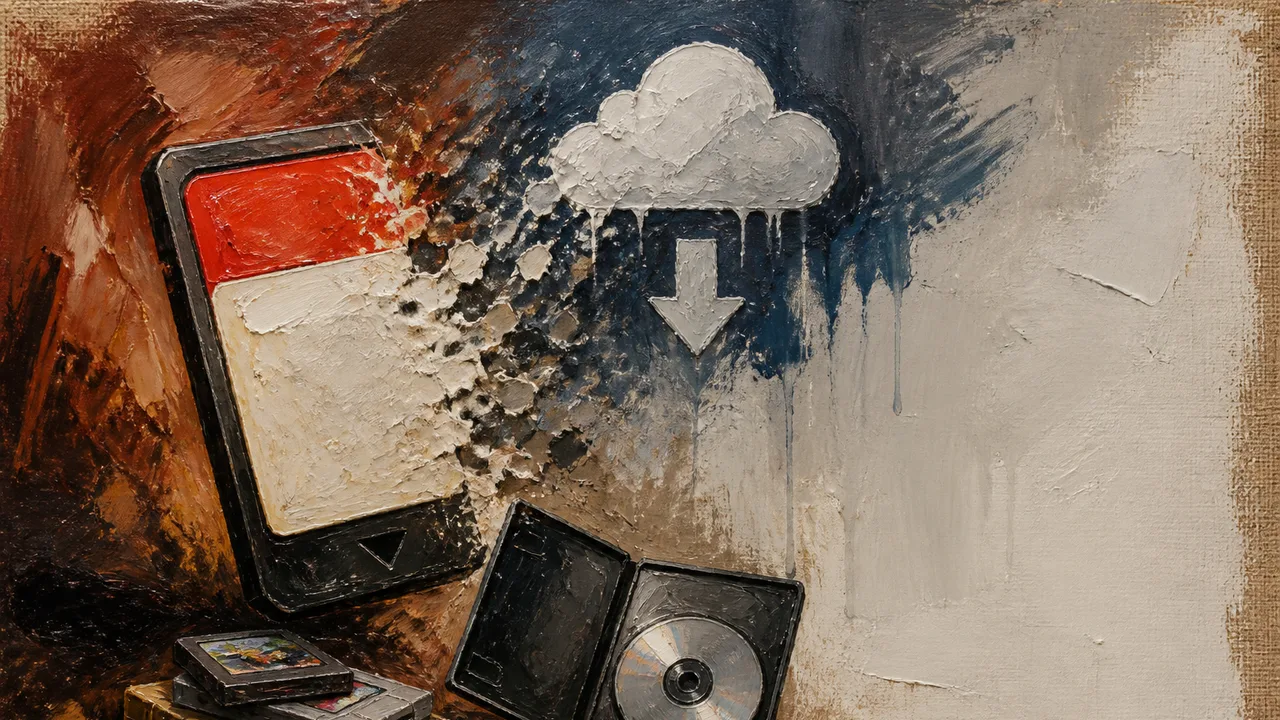
Nintendo has no plans to stop offering physical games for Switch 2, Bill van Zyll, its Latin America general manager, said in an interview with Brazilian creator Coelho no Japão. “There’s no plans to ditch physical.” We know how much the fans like it as well,” he said. He described a console with both digital and physical capability and said Nintendo takes consumer preference into account.
For anyone who wants to lend a game to a friend or put a box on a shelf, that is a useful commitment. It also leaves a practical question unanswered: what will be on the cartridge inside that box? Switch 2 games can come on full-data cartridges or Game-Key Cards. The latter carry no game data and require a download before play. Keeping physical releases in the lineup therefore preserves a way to buy a transferable object; it does not promise that every boxed game can be installed from that object alone.
Three Boxes, Different Jobs
A full-data cartridge holds the game software. A Game-Key Card serves as the physical key to software the player must first download. Once the download is complete, the game can be played without an internet connection, but the card must remain inserted, as Nintendo Everything explains. The download requirement returns for a fresh installation unless the data can be obtained another way.
Then there is the older retail solution of putting a download code in a box. The original Switch had releases like that too. After redemption, the code does not become a cartridge someone else can borrow. The three packages can occupy similar space on a store shelf while answering different questions about installation and transfer.
A Game-Key Card retains an important advantage over a code. The cards are not single-use and allow lending and resale without requiring a Nintendo eShop account. Downloaded game data can be transferred locally between Switch 2 systems. A borrower can take the card; someone buying it secondhand can use it. For players whose priority is sharing or recovering some money from a purchase, that is a substantial piece of what a physical copy does.
The cost comes at installation. If a player has the card and a fresh system but cannot obtain the game data, the card alone cannot supply the game. Local transfer offers one route when another Switch 2 already has the data; it does not turn the card into an archive. A full-data cartridge addresses that narrower problem by carrying software itself. That description concerns the data on the cartridge, rather than a guarantee about every game's later updates or online features.
This is why “physical” needs a more useful vocabulary than a yes-or-no answer. A buyer can ask whether the box contains game data, whether an initial download is required, whether play works offline after installation, and whether the copy can be passed on. Van Zyll's statement answers Nintendo's current plans for the physical option. The format of an individual release answers the rest.
Why a Publisher Might Choose the Key
Cartridges have a production cost, and publishers have reasons to avoid committing finished game data to one. McWhirter says Switch 2 Game-Key Cards cost less per unit than full Game Cards, giving publishers room to set lower launch prices or discount later. Those are potential publisher advantages, not a promise that a particular Game-Key Card will cost a player less. Manufacturing a copy with software on it also requires a point at which that software is ready to go to production. McWhirter notes that download-dependent releases on PlayStation and Xbox can give developers more time before a game must be locked for manufacture, especially around fixed holiday dates.
Nintendo has dealt with the cost and supply problem before. McWhirter cites the Famicom Disk System and Nintendo 64DD as earlier attempts to find alternatives to standard cartridges. Those devices are different products with different delivery methods. Their relevance here is the recurring constraint: making a physical copy involves manufacturing decisions as well as decisions about how players get software. On Switch 2, a key card lets a publisher retain a boxed, transferable release while putting the game data in a download. Players inherit part of that tradeoff, whether or not the lower production cost reaches them as a lower price.
The market offers a limited check on the idea that nobody will buy such a card. U.S. U.S. Game-Key Card sales rose 631 percent in 2026 so far. More Game-Key Card titles were on sale in 2026 than in 2025. A jump in purchases when the selection grows cannot tell us whether buyers prefer the key-card format to a full-data cartridge. It does show that the format is participating in retail sales rather than existing only as a proposal on a production spreadsheet.
The PlayStation Comparison Has Limits
Sony has made a different, dated commitment. In its July 2026 announcement, it said it would discontinue disc production for new games releasing on PlayStation consoles starting in January 2028. Those games will be sold in digital formats through PlayStation Store and retailers. Sony says games already released on disc, or releasing before the cutoff, are unaffected.
Sony attributes the decision to consumers shifting toward digital media. Van Zyll likewise invokes consumer preference, but Nintendo's current answer keeps a physical channel open. The policies differ at the point of sale: after Sony's stated cutoff, a new PlayStation game's retail availability will not mean a newly produced game disc. A boxed Switch 2 release can still include an insertable card. It may, however, be a card that requires a download. Comparing the companies solely by whether a retailer stocks something for each console would obscure what the buyer can do with it.
For developers and publishers, the options divide work and cost differently. For players, they divide access differently. The person planning to lend a finished game may find a Game-Key Card useful; the person planning to install it on a fresh system years later without a download faces a separate problem. Nintendo's pledge keeps the first option in view. The label on each release will determine whether the second one comes with it.
More Like This
AC Black Flag Resynced: Big Sales, Bigger Backlash
Assassin's Creed Black Flag Resynced sold 2 million copies in one day. It's also getting review-bombed on Steam. Both things are true, and that's the story.
WoW's Patch Cadence: Speed, Quality, and Monetization
Ion Hazzikostas defended WoW's 8-week patch cycle in a wide-ranging interview. Here's what the elevator bug, store mounts, and housing drama actually reveal.