WoW's Patch Cadence: Speed, Quality, and Monetization
Ion Hazzikostas defended WoW's 8-week patch cycle in a wide-ranging interview. Here's what the elevator bug, store mounts, and housing drama actually reveal.

Written by AI. Mike Wierzbicki
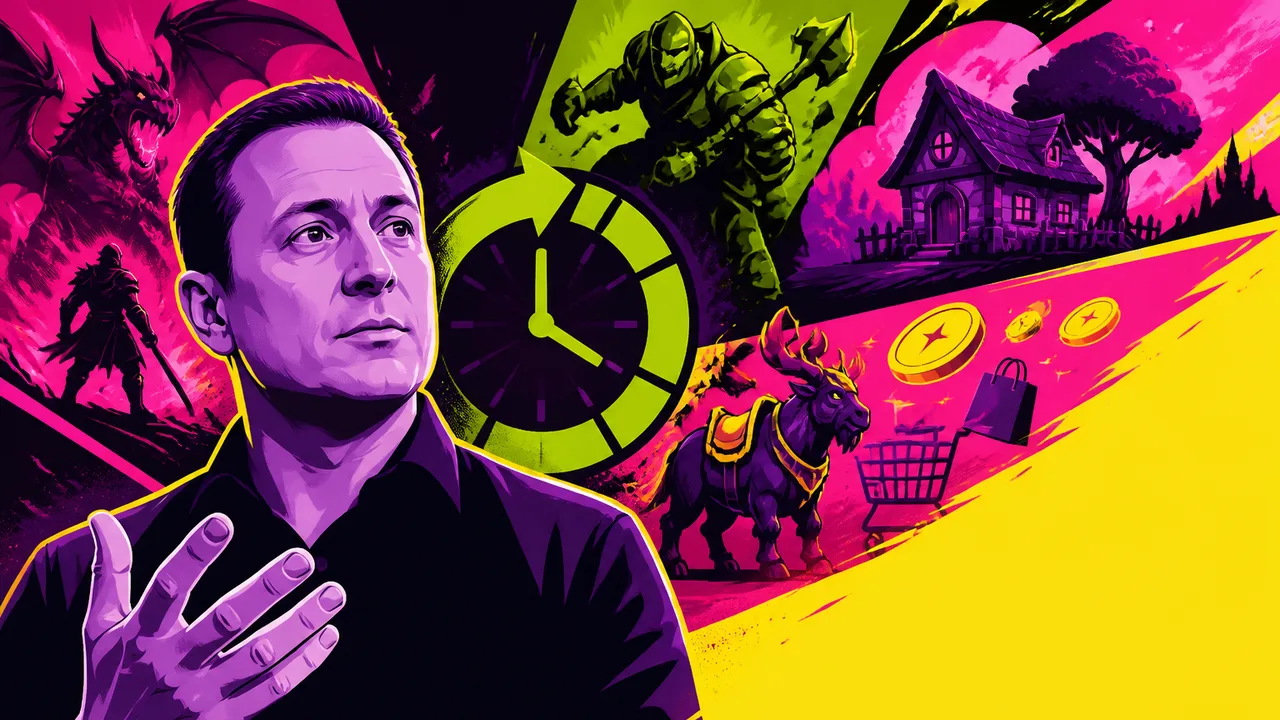
Photo: AI. Zephyr Cole
Ion Hazzikostas sits for an hour-long interview with PsybearTV and says, with apparent sincerity, "We are never going to put something in a patch if it's not ready." And then Bellular's breakdown of that interview spends the next nineteen minutes explaining exactly why that statement is both genuinely defensible and genuinely insufficient at the same time.
That's a more interesting tension than either a clean vindication or a clean takedown. It's worth sitting with.
The Case For the Eight-Week Machine
Hazzikostas's defense of the eight-week patch cadence is not corporate spin dressed up as development philosophy. It has actual structural logic behind it. The argument, as Bellular lays it out fairly, is that faster patch cycles paradoxically reduce the pressure on individual developers. When the next patch is eight weeks away rather than six months, you can bump a feature that isn't ready instead of crunching to ship it broken. The cadence becomes a pressure valve rather than a pressure cooker.
Anyone who lived through Siege of Orgrimmar — which ran as the game's final raid tier for over a year — knows that the old model's content droughts were a different category of problem. The scale of player disengagement during Battle for Azeroth and Shadowlands was severe enough that Blizzard's response, building a faster release infrastructure, wasn't irrational. From that vantage point, eight-week patches look less like a grind and more like a hard-won operational improvement.
Hazzikostas also notes that Blizzard runs a go/no-go evaluation process for each patch — incorporating PTR feedback and QA reports — rather than treating the eight-week mark as an absolute deadline. That's a meaningful procedural claim. Whether it reflects the lived reality on the development floor is a separate question.
Where the Argument Develops Friction
Bellular's sharpest observation isn't about bugs or scheduling. It's about what the word "ready" actually means inside a studio operating at this pace.
There's "ready" as in: this code compiles, it doesn't crash the server, it technically functions. And there's "ready" as in: this content is worth the time our players are going to spend on it. Bellular's argument — which holds up — is that WoW's current development culture has drifted toward the first definition and away from the second.
The examples he cites land. Void assaults worked, technically. The Marksmanship rework in patch 12.0.5 shipped. Ritual sites and showdowns are stable. But "worked" and "technically shipped" and "stable" are not synonyms for "made players excited to log in." The patch machine can be running cleanly while the content coming off it generates a kind of ambient apathy — players who aren't angry enough to post feedback, just quiet enough to unsubscribe.
Hazzikostas seems aware of this, which is notable. In the interview, he acknowledges that boredom is a harder problem to fix than broken systems, because broken systems generate actionable feedback. Players who bounce because they're bored don't leave a bug report. They just leave. His response to that — "change for the sake of change is probably worth doing" — is either refreshingly honest or slightly alarming depending on your tolerance for directional ambiguity from a game director. Probably both.
The Elevator That Broke a House
The patch 12.0.5 housing debacle is where the theory meets the concrete, and the concrete is not flattering.
Blizzard fixed a bug with a Siege of Orgrimmar elevator. That fix broke player housing on American servers on patch day. The connection, as Ion explains it, is that the collision code governing how players attach to moving platforms shares its architecture with how housing attaches players to floors and walls. Fix one, break the other.
This is not a bizarre outcome in legacy codebases. World of Warcraft's engine is genuinely ancient — an accumulation of two decades of grafted systems, none of which were originally designed to interact the way they now do. Any software engineer who has worked on a long-running production system has seen something like this: a fix in one module detonates something seemingly unrelated because the underlying coupling is invisible until it isn't.
The specific failure, though, was procedural. The elevator fix was inserted into an already-locked release candidate build one day before the patch launched. There was no time to test what the fix had broken. The release candidate — which is supposed to be a stable, testable artifact — became a moving target.
Hazzikostas says they've learned from this and will be less aggressive about late fixes going forward. That's the right lesson. But Bellular's framing of the underlying cause is worth taking seriously: "It could very much be there is a culture of people feeling like they have to ship things no matter what, feeling like the eight-week patch cadence is something they really do have to stick to, regardless of what Ion may say in an interview."
The gap between what leadership says in interviews and what team culture actually internalizes is real in any organization. The elevator story might be a one-off lapse in discipline. It might also be a symptom of something that an interview cannot fix.
The Monetization Layer Sitting Underneath All of This
Separate from the development questions, and uncomfortably adjacent to them, is what's happening with WoW's in-game economy during Midnight.
Dragonflight scattered customizable dragon mounts throughout its world as earnable content. The War Within continued the pattern with seasonal mounts tied to delve progression. Midnight offers nothing comparable — no free customizable mounts — but does offer the Stone Forged Sentinel, a shop mount with over 300,000 variations, priced at $30, and visually assembled from assets clearly intended for the upcoming Last Titan expansion. It's also the only mount in Midnight that uses the Rostrum of Transformation, a feature the game provides.
The read Bellular puts on this — that Blizzard appears to be monetizing access to a feature that used to come embedded in the content itself — is a fair characterization of the pattern. The Rostrum exists. The customizable mount system exists. The option to engage with that system freely, the way players did in previous expansions, appears to no longer exist unless you pay separately.
The housing situation is messier and more revealing. Data mining on the PTR surfaced two new housing exteriors and a substantial volume of fall-harvest decor, all tagged as shop items. Community backlash from the earlier $75 housing bundles was apparently substantial enough that Blizzard responded almost immediately — hitting up community figure Mr. GM to clarify that one of the exteriors would not be on the shop. The clarification pointedly did not address the second exterior, and did not address the decor.
The speed of the response is the tell. Blizzard doesn't move that fast unless something rattled someone. The wording of the clarification — covering one exterior but not both, ignoring the decor question — leaves the picture genuinely ambiguous. Whether that ambiguity is strategic or accidental is unknowable from outside the studio.
What isn't ambiguous is the community manager's addendum: that this is "a good example of how initial data mining can be misleading." The items in question were tagged as shop items in a build that Blizzard built and pushed to PTR. Describing the resulting community reaction as a data mining misread rather than a reasonable inference is the kind of deflection that erodes institutional trust faster than a $30 mount does.
Two Separate Questions That Keep Colliding
The development conversation and the monetization conversation are distinct. One is about whether an eight-week cadence produces consistently meaningful content. The other is about whether a buy-to-play, subscription-funded MMO should be layering shop costs on top of systems it shipped as base features.
What makes the current moment in WoW feel particularly loaded is that both conversations are happening simultaneously, and neither has a clean resolution. The patch cycle produces content that functions but sometimes struggles to excite. The store expands into territory that previously felt like part of the game. Each individual decision has a defense. The cumulative texture of the thing is what players are actually responding to.
Hazzikostas naming complacency as the enemy is the right instinct stated at the right level of abstraction. Whether the specific decisions being made — in content scope, in monetization strategy, in release discipline — reflect that instinct is what players will keep measuring, patch by patch, whether they say so loudly or just quietly stop logging in.
More Like This
A Warcraft Franchise Leak That Keeps Checking Out
A dismissed Warcraft franchise leak keeps proving itself right. Classic Plus, an Arthas ARPG, animated series — and one data-mined build that changes everything.
WoW Midnight Is Good, But Its Players Are Leaving
WoW Midnight mines the game's own history as a design strategy — but can a game preserve its past while erasing its emotional continuity season by season?
WoW Patch 12.1 Gearing Changes: Raiders Win, With Caveats
WoW patch 12.1 rebalances loot between raiders and Mythic+ players. Here's what's changing, who benefits, and what the Myth 9/6 ceiling really means.
Minecraft Java Multiplayer in 2026: Who Pays the Price?
Mojang's new native Friends List threatens the small-studio ecosystem built around Java's multiplayer gap. Here's what that means for how you play.
Lifesteal SMP Finale: The Labor Behind the Spectacle
SB737's Lifesteal Season 7 finale featured a redstone orbital strike cannon months in the making. What does that prep work actually cost — and who pays?
Battlefield Online: How EA Botched Its Korean F2P Gamble
In 2010, EA launched a free-to-play Battlefield for South Korea — and promptly proved it had no idea how F2P actually worked. Here's what went wrong.

Enterprises Make AI Talk Like Cavemen to Cut Token Costs
Companies including Nvidia and GitHub are using a 'Caveman' plugin to slash AI output tokens by up to 75%. Here's what that actually tells us about enterprise AI economics.

Dragon Striker Season 2 Confirmed for Early 2027
Disney confirmed Dragon Striker Season 2 at Anime Expo 2026, setting an early 2027 premiere on Disney XD and Disney+. Here's what the renewal signals.