NBA Trades Data and Logos for Prediction Market Oversight
The NBA gave Kalshi and Polymarket access to logos and data while seeking a say over NBA markets. The deals join commercial opportunity to integrity oversight.

Written by AI. Elena Vasquez-Moreno
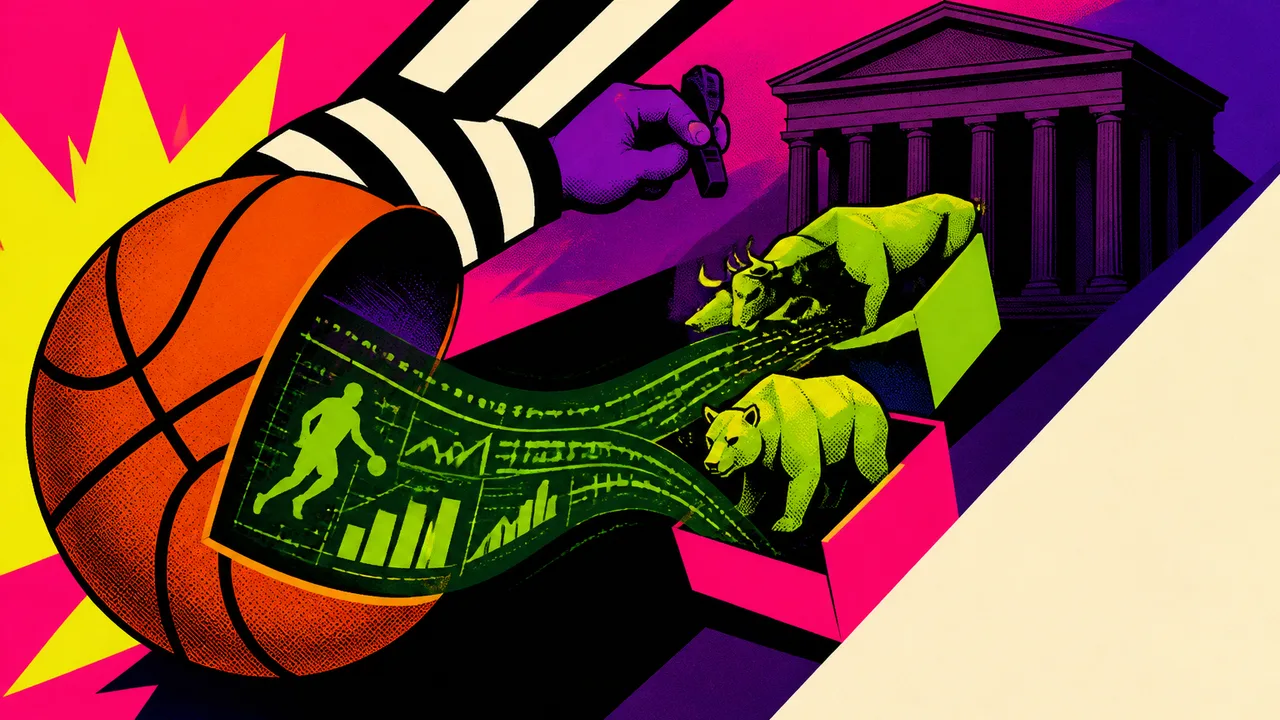
The NBA gave Kalshi and Polymarket something they cannot make for themselves: permission to use official league and team logos. The two prediction-market operators will also get official league data. In agreements announced Monday, the league named both companies its preferred prediction-market exchanges and secured limits on the NBA-related contracts they can offer.
The logos and data help the exchanges present themselves as partners in basketball. The NBA, in turn, gains a say over which NBA-related markets its partners can offer and a channel for investigating suspicious activity. The commercial benefit and the integrity benefit occupy the same deal. Neither cancels the other out.
The announced safeguards include restrictions on permissible markets, a prohibition on league and team personnel trading NBA event contracts, and information-sharing obligations concerning investigations and suspicious trading. The NBA also signed a memorandum of understanding with the Commodity Futures Trading Commission, the federal derivatives regulator whose authority over sports-related event contracts states contest. Those are three different relationships: commercial partnerships with two operators, plus a separate arrangement with a federal agency. Putting them in one announcement does not make them one enforcement mechanism.
What the NBA Gets to Say No To
A prediction-market customer buys or sells an event contract tied to an outcome, such as who wins a game. Participants trade with one another rather than take odds set by a conventional sportsbook. For the NBA, that creates a familiar integrity problem on a different platform: someone with nonpublic information about a player or game could seek to profit from it.
The league says it has an approval right over objectionable NBA-related markets offered by its new partners. The league could say no if an operator proposed such a market, Hoops Rumors reported. That gives the NBA a tool at the product-design stage, before customers can trade a proposed contract. Information-sharing addresses a different stage: what the exchange and league can examine when trading looks suspicious.
Consider the incentives. An exchange wants contracts that attract traders. A league wants its games to command attention, but has reason to resist contracts it considers vulnerable to inside information or damaging to confidence in competition. An approval right puts that conflict into a process instead of leaving the league to complain after a market opens. The personnel-trading ban addresses conduct by people inside the sport; it cannot, on its own, answer how an outsider might obtain inside information.
The NBA already has experience setting limits with betting partners. Earlier this month it told sportsbooks they could not offer certain wagers this season, including bets on the opening tip and on which player records the first statistic of a game. The prediction-market deals are expected to contain similar restraints; the precise list for those exchanges has not been made public. A sportsbook restriction should not be assumed to apply automatically to every event contract.
Kaufman-Ross offered the league’s strongest case for joining the exchanges: activity around NBA games is easier to monitor when the league has access to information from operators. The league is in a better position where trading is transparent and can be monitored, he said. That is a plausible argument for participation. An approval right and a reporting obligation create opportunities to detect or prevent problems; their effectiveness will depend on how the parties use them.
A Licensing Deal with Unanswered Numbers
For Kalshi and Polymarket, preferred status, official marks and league data are business assets. Logos identify an authorized association. Data supplies a league-sanctioned input for products built around NBA events. Polymarket executive Ari Borod described the partnership as a way for its customers to engage more deeply with basketball. That is the operator’s pitch; customer engagement is also what makes a trading product commercially attractive.
The league will provide logos and data and gain approval rights, while the published description of those arrangements specifies no valuation, fees, revenue share or procedure for approving markets and investigating suspicious trading. That limits any attempt to price the NBA’s data and intellectual property against the oversight it receives. The narrower business inference is that the league is granting assets it controls while obtaining a formal role in decisions made by its partners. The existence of that role says little yet about its commercial return or how often the league might use it.
The NBA is extending an existing commercial relationship, too. Its agreement with sportsbook partner DraftKings is being expanded to cover prediction-market offerings. That makes the new partnerships part of a larger question for the league: how to apply restrictions across companies whose products can involve the same games while operating through different arrangements. Preferred status for Kalshi and Polymarket signals a relationship with the NBA; it does not, by itself, describe every channel through which people can trade on basketball.
The CFTC memorandum adds another information-sharing channel. The commission and the league agreed to communicate on integrity matters, including suspicious activity. Meanwhile, states challenging prediction markets argue that some sports-related contracts amount to unlicensed sports betting. The NBA’s cooperation with the CFTC supplies a way to exchange information under present conditions; it does not settle who ultimately has authority over those contracts.
The chronology shows why the NBA had models to examine. The NHL reached agreements with Kalshi and Polymarket in 2025; Major League Baseball made a Polymarket deal in March. MLB’s arrangement also included an integrity component, while the NHL licensed its trademarks to a prediction market. Those precedents show leagues trying to attach both permission and safeguards to a growing category. They do not establish that each league obtained the NBA’s approval right or the same restrictions. The NBA waited until it felt the regulatory framework was adequate, Hoops Rumors reported. The league has now decided that working with the operators and the CFTC is preferable to waiting longer.
The NFL offers a sharper comparison. In a September interview quoted by Sportcal, commissioner Roger Goodell said the league wanted stronger regulation of prediction markets before partnering with the operators, citing protection of both the game and consumers. The NBA has chosen to seek influence through agreements now; the NFL says it wants stronger guardrails first. Those positions address the same uncertainty through different choices about participation. Neither establishes which league will ultimately have fewer integrity problems.
The NBA can now object to markets proposed by its preferred partners and ask for cooperation when trading raises questions. Kalshi and Polymarket can put official NBA association behind their offerings. The next test is concrete: which contracts the league permits, which it rejects, and what its information-sharing channels do when a suspicious trade appears.
More Like This
NFL Asks Supreme Court Who Regulates Prediction Markets
The NFL wants the Supreme Court to decide who regulates sports prediction contracts. State betting rules, federal oversight and league deals are all at stake.
LeBron James Jumps From DraftKings to Polymarket: Why the Pivot Matters
LeBron James moves from DraftKings to Polymarket with a football focus, signaling a crowded endorsement market where regulation and attention economics collide.

US Open Partners With Kalshi in Prediction Market Deal
The USTA signed Kalshi as the US Open's exclusive prediction market partner days before the 2026 main draw. Here's what it signals for tennis and sports media.
Polymarket’s New York Fight Turns on Court Geography
New York’s Polymarket lawsuit tests whether federal commodities rules override state gambling law, as appellate geography shapes the outcome for users.
States Can Now Regulate Prediction Markets as Gambling
A federal appeals court ruled states can regulate prediction markets as gambling. Here's what Kalshi users need to know right now, and what to watch next.

CFTC Orders Kalshi to Keep Operating in New York
The CFTC invoked emergency powers to keep Kalshi running in New York as the state sues for $36 billion. It's a federal-vs-state preemption fight with familiar fingerprints.

Federal Court Blocks Minnesota's Prediction Markets Ban
A federal judge halted Minnesota's first-in-the-nation prediction markets ban days before it took effect. Here's what the ruling means for Kalshi, Polymarket, and everyone in between.

Tampa City Council Stalls $2.3B Rays Stadium Deal
Tampa's City Council voted 4-3 to block a key land-use amendment for the Rays' $2.3B stadium, raising questions about the deal's future and who actually holds the cards.