Myspace Plans a Comeback in a Crowded Social Media Era
Myspace is eyeing a revival as an antidote to algorithm-driven social media. Analysts say nostalgia alone won't be enough to crack a market dominated by Meta and TikTok.

Written by AI. Raj Mehta

There is a particular kind of internet memory that lives in muscle memory — the drag-and-drop of a profile song, the deliberate curation of a Top 8, the quiet satisfaction of a page that looked exactly like you wanted it to, even if the CSS was a disaster. Myspace was, for a brief and genuinely strange window in the mid-2000s, the dominant social network on earth. Then Facebook happened, and Myspace became shorthand for obsolescence.
Now, according to Fox Business, Myspace's owners are planning a comeback effort — though no target date has been announced. The pitch, as it's being framed, is that Myspace could serve as an antidote to what ails modern social media: the algorithmic feeds, the ad saturation, the sense that platforms are optimized for engagement metrics rather than anything a human being would actually want.
It is, on its face, a reasonable read of the room. The question is whether reading the room correctly is anywhere near sufficient.
The diagnosis isn't wrong
The frustration Myspace is trying to monetize is real. The dominant players — Meta's Instagram, TikTok, Snapchat, YouTube, Reddit — are, as Business Story puts it, "grappling with a wave of legal backlash as well as growing digital fatigue." Regulatory pressure on algorithmic amplification, youth mental health litigation, and advertiser scrutiny have put all of these platforms in a complicated position simultaneously. Users who have spent years being told what to look at by recommendation engines they don't control are, at least in surveys and op-eds, increasingly vocal about wanting something different.
That sentiment is authentic. Whether it translates into sustained behavioral change — actually leaving the platforms people complain about — is a different and much harder question.
CNBC captures the tension plainly: millennials may feel a pang of nostalgia, but analysts caution that the once-dominant platform faces long odds in an overcrowded market dominated by algorithm-driven feeds and short attention spans. Nostalgia is powerful as an emotion. As a product strategy, it has a ceiling.
What "antidote" actually requires
The word "antidote" is doing a lot of work in Myspace's positioning. An antidote implies you have identified the poison precisely, and that your remedy addresses it at the root. The poison, in this case, is generally described as algorithmic curation that surfaces content optimized for outrage and compulsive scrolling rather than meaningful connection.
If Myspace genuinely intends to build a platform where users control what they see — chronological feeds, no behavioral targeting, genuine customization — that is a coherent product vision. It is also expensive to operate at scale without the advertising revenue model that funds the infrastructure. The platforms Myspace is positioning against are the way they are partly because of the economic logic of attention capitalism. Opting out of that logic means finding a different economic logic, and the sources available here don't specify what that is. No revenue model has been disclosed, no launch date confirmed.
Firstpost identifies the core variables accurately: sustained user engagement, differentiation, and advertiser interest will all be necessary for a successful revival. Those three things are not naturally in tension with one another, but in social media they often are. Advertiser interest follows attention. Attention, at scale, tends to reward the same algorithmic optimization Myspace is claiming to reject.
This is not a hypothetical contradiction. It is the story of every platform that started with community-first principles and discovered that community, at scale, requires monetization, and monetization reshapes incentives. It happened to Tumblr. It happened to Reddit, which is now publicly listed and grappling with the same advertiser-versus-user tensions it once positioned itself against. The structural forces don't care about your launch positioning statement.
The competitive landscape is not the one Myspace left
When Myspace peaked — roughly 2005 to 2008, before Facebook's explosive growth pushed it into irrelevance — the social media ecosystem was sparse. The competition was limited. The concept of an algorithmically curated feed didn't yet exist in mainstream consumer products. Myspace lost because Facebook executed a cleaner, faster, more scalable product. The failure was operational and design-related, not philosophical.
Returning now means entering, as Business Story notes, "a complicated new era of social media" where Instagram, TikTok, Snapchat, YouTube, and Reddit have billions of collective users, sophisticated recommendation infrastructure, and deep integrations with the broader content economy — influencer contracts, brand deals, creator funds. These aren't just platforms; they are employment ecosystems. People's livelihoods are built on top of them.
A user who wants a less algorithmic experience can already use tools to approximate one — chronological feed settings on Instagram exist, RSS readers are experiencing a quiet revival, Mastodon and Bluesky have offered decentralized alternatives to varying degrees of uptake. None of these have meaningfully dented the incumbents' user numbers. The market has consistently revealed that the majority of users, given the choice between a calm, user-controlled experience and a relentlessly optimized feed, choose the optimized feed. What people say they want and what they actually do are different data sets.
Where the bet could actually make sense
None of this means the revival is necessarily futile — it means the framing needs to be precise. The cases where legacy brand revivals work in technology tend to share a common feature: the brand names something real that the market hasn't yet built, rather than simply invoking sentiment.
Myspace's brand recognition among millennials is genuine. If the product can offer genuine differentiation — not just "less algorithm" as a vibe, but specific, structural features that give users meaningful control in ways the incumbents have demonstrably refused to build — there is a plausible path to a niche. Niche, in social media terms, is not a failure mode. It is a sustainable business if the economics are designed for it rather than for hypergrowth.
The music angle is worth watching. Myspace maintained a meaningful presence in music discovery long after it lost the broader social networking war. Independent artists used it past the point when anyone would admit to still using Myspace. If the revival leans into that specific history — a platform genuinely built for musicians and listeners rather than influencer-brand deals — that would be differentiation with actual roots rather than manufactured positioning.
But that's analysis on thin sourcing. The owners have announced intent. They have not announced a product, a revenue model, or a timeline. Fox Business confirms no target date has been set. We are at the stage of the story where the announcement is the content.
The real question the revival surfaces
There is a reading of this moment where Myspace's revival attempt matters less as a business story and more as a symptom. The fact that a platform that lost to Facebook two decades ago can generate serious coverage by positioning itself as an alternative to Facebook tells you something about the current state of trust in the incumbents. The nostalgia isn't really for Myspace — it's for a version of the internet that felt less extractive, less surveilled, less engineered to hold you past the point you intended to stay.
Whether Myspace can actually deliver that — whether any company operating at the scale required to be viable can deliver that — is the genuinely open question that this announcement, stripped of its launch-day optimism, is really asking.
More Like This

Brand Authority Is Pricing Power—and Finance Knows It
Ryan Deiss's five brand "authority triggers" map onto real financial metrics. A global markets reporter translates what that actually means for valuations and beyond.
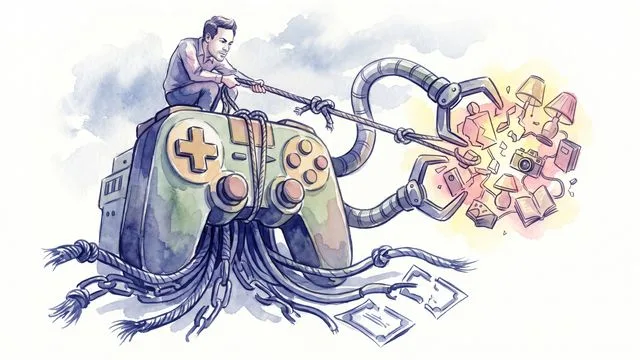
GameStop's $56B eBay Bid: What the Math Actually Says
GameStop bid $56B for eBay despite a $12B market cap. We broke down the financing—shares that don't exist, a non-binding bank letter, and a CEO incentive worth examining.

Gen Z's $50M Livestream Auction Startup Explained
How two Gen Z founders built a $50M livestream auction platform where sellers earn up to $260K monthly — and what it says about the future of commerce.

What 10 Million Cold Emails Reveal About Selling
Austin Schneider sent 10M cold emails and found 6 patterns that actually drive replies. Here's what globally-minded sellers need to know—and where the framework breaks.
Page Studio: Streamlining Digital Presence
Explore how Page Studio's features impact businesses globally, enhancing web design efficiency.
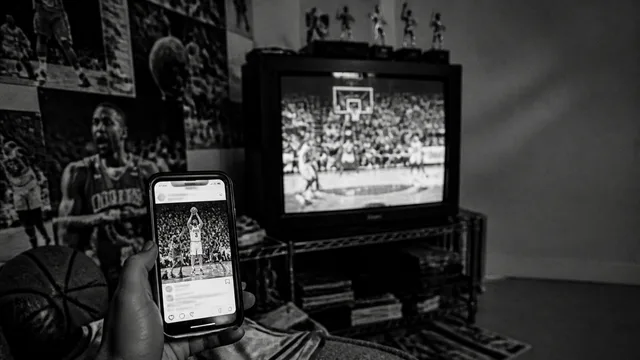
Sports Nostalgia Is Taking Over Social Media
An X account posting 2006 sports moments went viral in weeks. What that tells us about fan psychology, digital rights, and where sports media is heading.

How Caterpillar Built a Century of Industrial Dominance
From crawler tractors to AI data centers, Caterpillar's $67.6B revenue and $62B order backlog reveal a company built to outlast every economic cycle.
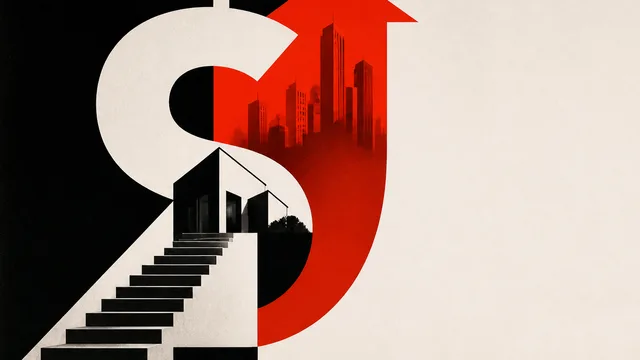
Earning vs. Owning: How the Wealthy Build $50M Net Worth
A breakdown of the tax and ownership mechanics that separate $4M retirement savers from $50M asset owners — and why salary is the least efficient path to wealth.