Modern Warfare 4's DMZ Makes a Bigger Bet on Staying Power
Modern Warfare 4's expanded DMZ adds a base, higher stakes and its own progression. Paid access and the first DMZ's fate make long-term support the real test.

Written by AI. Mike Wierzbicki
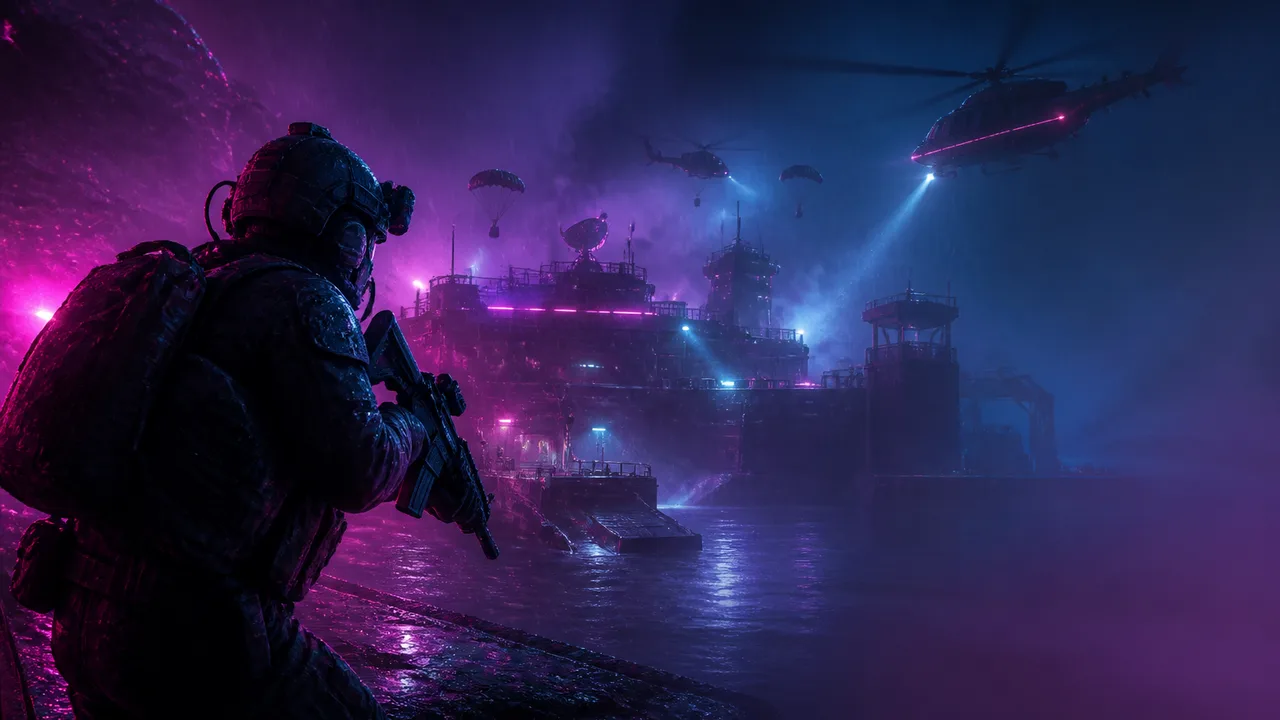
Infinity Ward is bringing DMZ back with Call of Duty: Modern Warfare 4 on October 23, this time with a dedicated progression track, a base that grows between deployments and more to lose when a run goes wrong. The new mode will not be free-to-play, unlike the version introduced with Modern Warfare II. For someone who wants DMZ but has little interest in the campaign or multiplayer, that changes the decision at the door: they have to buy into the game before finding out whether its extraction loop holds up.
The pitch is more substantial than a new map. DMZ has 70 levels earned through playing the mode, plus its own cash and crafting-material economy that persists between rounds. Weapon progression, meanwhile, connects to Modern Warfare 4 multiplayer and Warzone. A multiplayer regular may get something from a DMZ session beyond its own rewards; a DMZ-only player will spend much of their time building a progression track confined to this mode.
What the Base Gives a Successful Run
Infinity Ward has put the Forward Operating Base, or FOB, at the center of what happens between deployments. Its official feature outline on the PlayStation Blog lists an operator station, a stash and loadout area, a firing range and a place to review missions. Further stations unlock as players progress, including a 3D printer that turns extracted ingredients into gear and helps upgrade the base, a gunsmith and a vendor. The outline promises more than a dozen stations as the FOB develops. That is a description of the planned system, not a measure of how long those stations will stay interesting.
Consider what those pieces ask a player to do. Pick an objective, take an operator and gear into Hajin, bring resources back, then decide whether to spend them on equipment or improvements for a later trip. A recovered ingredient has value beyond the round in which someone found it. The FOB gives the loop a place to display that accumulated work and a reason to prepare for another deployment. If trips into Hajin repeatedly feed useful decisions at the base, the separate DMZ economy could justify time spent in it. A list of stations alone cannot tell a player how often those decisions will change.
The deployment choices also leave room for different appetites. The official outline lists replayable Story Missions, Dynamic Operations that award DMZ cash and XP, and Free Roam without a selected mission. That is a practical answer to a familiar scheduling problem for a mode with persistent objectives: someone can enter with a task, while someone else can go looking for resources without committing to the next story beat. How those choices work when AI enemies and other players interfere is a question for launch, especially for players whose preferred session is a short supply run rather than a boss fight.
The FOB has a narrow precedent in Escape from Tarkov’s Hideout. Both give extracted resources and between-run preparation a home, with stations that connect one deployment to the next. For Modern Warfare 4, that comparison explains the structure better than the phrase “game within a game.” It says little about equivalent crafting depth, encounter pacing or future support. Infinity Ward is also calling DMZ an “action extraction shooter,” emphasizing combat over time spent navigating menus. A familiar hub structure and a faster field experience can coexist; the balance between them will determine whether returning to the FOB feels like planning or administration.
How Much Does Failure Cost?
Infinity Ward co-studio head Jack O’Hara said players had found the original DMZ’s stakes too low, as IGN recounted from a developer video. In the new mode, a player builds up an operator, pays a cost to bring that operator back after death and can permanently lose loot. Those rules make the crafting economy more consequential. Losing materials collected for a planned upgrade gives the next deployment a purpose, but it can also turn an evening’s progress into replacement work. The design challenge is whether that loss produces compelling choices often enough to justify rebuilding.
Enemy behavior is part of that equation. Infinity Ward says noisy play can raise an area’s threat level and attract more enemies, while stealth can reduce the chance of severe conflict. The studio has also described tougher enemy tiers and Commanders. Those systems could give players control over the risks they take: press toward a better reward, or leave with what they have. The degree of control will depend on how clearly the game communicates danger during a run. A costly operator death feels different when the player could read the situation than when the difficulty arrives as a surprise.
The 2022 Modern Warfare II DMZ launched as a beta and later stopped receiving updates. That history sharpens two separate questions about this return. Infinity Ward can address the first, whether the mode has enough systems to sustain repeated play, through its expanded FOB, progression and loss mechanics. The second concerns how long the studio will keep developing those systems after launch. The earlier mode’s fate raises that question without predicting the new one’s.
Infinity Ward has promised post-launch support, including map changes and seasonal weather. The PlayStation feature outline also tells players to expect additional content. Those are plans for a mode whose progression depends on continued reasons to deploy. They give prospective buyers something concrete to watch, but no timetable here establishes how many seasons of substantial additions DMZ will receive. More stations on day one and a long-running update schedule are different commitments, with different consequences for somebody building up a persistent character and base.
There is a strong case for the paid approach from a player’s perspective. Someone already buying Modern Warfare 4 gets campaign and multiplayer alongside a DMZ with its own objectives, while shared weapon progression gives their time in the mode a connection to the wider game. The harder case is the player who wants only extraction. For them, the FOB and 70 levels are reasons to consider buying; they are also systems that ask for repeated play before their value becomes clear. The free-to-play first iteration let that player test the premise with a lower barrier.
The useful purchase question is therefore quite specific: would you want to make several deployments for the decisions between them, even before any promised seasonal additions arrive? Infinity Ward has described the machinery of that loop in detail. October 23 is when players can start finding out whether a lost operator, a recovered resource and the next trip to the FOB make them want to run it again.
More Like This

Call of Duty Goes to Korea: Symbol or Stereotype?
Modern Warfare 4 sets its campaign on the Korean Peninsula. Is it cultural recognition, geopolitical risk, or just a very expensive action movie?

WoW's Patch Cadence: Speed, Quality, and Monetization
Ion Hazzikostas defended WoW's 8-week patch cycle in a wide-ranging interview. Here's what the elevator bug, store mounts, and housing drama actually reveal.

Enterprises Make AI Talk Like Cavemen to Cut Token Costs
Companies including Nvidia and GitHub are using a 'Caveman' plugin to slash AI output tokens by up to 75%. Here's what that actually tells us about enterprise AI economics.