Language Models on Robot Arms: What the Factory Floor Demands
A project described as putting a next-generation language model on robot arms raises a hard question: can demos survive latency, contact forces and safety audits?

Written by AI. Zara Chen
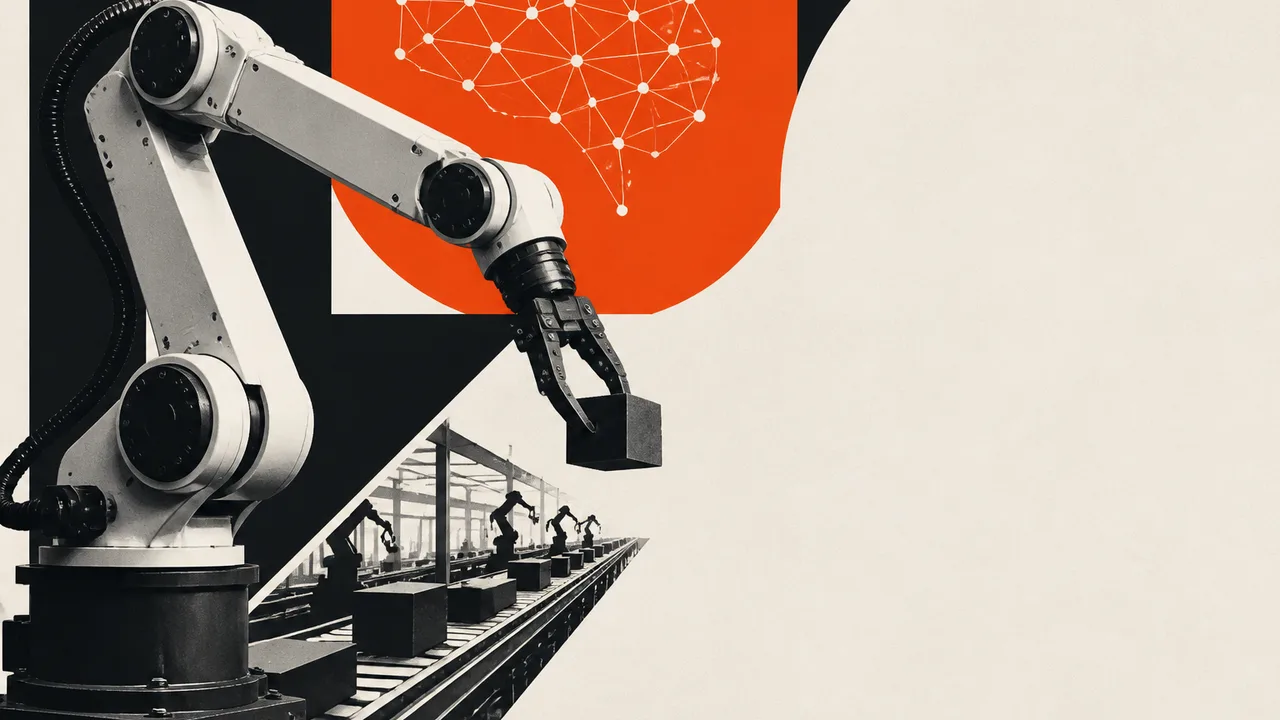
A project described as putting a next-generation language model, referred to as GPT-6 Astra, onto robot arms is the latest entry in the industry's push to connect general-purpose AI with physical action, according to robocurve.org. The pitch is familiar to anyone who has followed robotics for the past two years: a model that can read instructions, interpret camera feeds and coordinate unfamiliar tasks could free robots from the long, expensive tradition of task-specific programming.
The reporting is thin. Robocurve.org describes the project's ambition but offers no benchmark numbers, no failure statistics, no independent test of whether the arm actually performs a manipulation task at industrial reliability. I want to be plain about that up front, because this article is going to be partly about the claim and partly about how you should evaluate claims like it.
Why the Factory Floor is a Different Beast
Language models earned their reputation on text. The job is to predict useful sequences of symbols, and when they're wrong, the cost is usually a weird sentence or a confidently false answer that a human catches in review. A robot arm operating near people doesn't get that luxury. It has to handle latency, calibration drift, contact forces, safety boundaries, and recovery from unexpected states, all in real time. A six-second language model latency budget might feel snappy in a chat window. On a machine holding a metal part above a coworker's hand, six seconds is an eternity and a liability.
This is the gap the robocurve.org writeup acknowledges in its own framing: the distance between a convincing demonstration and dependable manipulation remains substantial. A demo shows that an agent can move an arm once, maybe elegantly, maybe while narrating what it's doing in prose. Industrial deployment asks whether it can do so repeatedly, transparently, and safely around people. Those are different engineering problems, and the second set has historically taken years to solve even for much simpler systems.
What Actually Works in Industrial Robotics (and Why)
The robots that already work on factory floors, and there are millions of them, succeeded by narrowing the environment, not by making machines broadly conversational. A welding cell is fenced off. A pick-and-place robot knows the exact geometry of the parts it handles. Everything is choreographed, sensorized and validated. The environment is engineered to be predictable because predictability is what lets a machine repeat an action ten thousand times with a failure rate low enough to insure.
General-purpose manipulation asks for the opposite trade. Instead of engineering the world to be simple, you want the machine to be flexible enough to handle a complicated world. That's the appeal of a language model driving an arm: the same system could theoretically sort an unfamiliar part, follow a verbal correction, and adapt when a pallet arrives in a new orientation. If it works, integration costs drop dramatically, and small manufacturers who can't afford custom integrators get access to automation that's been reserved for giants.
The strongest version of the skeptical argument is also about incentives. Model developers benefit from demos that showcase breadth. Manufacturers benefit from systems that show narrow, boring, verifiable reliability. When the entity showing off the demo is also the entity selling the model, the demo is a marketing artifact until someone else measures it. Independent benchmarks and published failure data will matter more than any polished video or press release, and right now, per robocurve.org, we don't have either for GPT-6 Astra.
The Questions I'd Ask Before Believing a Demo
If you're evaluating any claim in this space, including this one, here's the checklist I'd use, drawn from what separate successful deployments from viral clips in earlier automation waves:
- Success rate over time. One flawless run means little. Ask for hundreds of repetitions across varied conditions and a reported failure rate. Industrial customers typically need reliability in the high 90s before a human can safely step away.
- Failure behavior. What does the system do when it drops an object, misses a grasp, or encounters a person inside its workspace? A system that pauses and flags uncertainty is far more deployable than one that improvises.
- Latency under load. Language models can slow down significantly when servers are busy. Manipulation control loops have hard timing requirements. Where does the reasoning happen: in the cloud, or on an edge device next to the arm?
- Safety certification. Factory robotics is governed by standards for human-robot interaction. No matter how capable a model is, an arm without certification doesn't ship. That process is slow, and it's a reason this kind of system will land in fenced cells before it lands beside workers.
- Transparency. Can a technician see why the arm chose an action and correct it? Black-box behavior is tolerable in a chatbot and a maintenance nightmare on the floor.
None of these questions is hypothetical nitpicking. Earlier robotics projects that promised general competence and delivered fragile demos burned trust that the field spent years rebuilding. The memory is short online, but plant managers remember.
What Would Change My Mind
To be clear about what would count as evidence here: a published evaluation, run by a party other than the project's promoters, showing GPT-6 Astra-driven arms completing manipulation tasks at a stated success rate over a stated number of trials, with disclosed failure modes. Second-best: a named manufacturing partner describing an actual deployment, including what happened when it went wrong. Third-best, and I do mean third: a livestreamed, unedited long-duration demo with the operator free to give unexpected instructions. I'd take any of these over a highlight reel.
The pattern to watch, across the whole industry and not just this project, is whether embodied AI companies start publishing failure data the way pharmaceutical companies publish trial results. The best ones will, because reliability is the product. The rest will keep cutting demo reels, and the two groups will sort themselves out in procurement decisions, where buyers ask for uptime numbers and warranties instead of vibes.
The Terrain, Honestly Mapped
Models keep getting better at vision and planning, hardware keeps getting cheaper, and the economic prize of flexible automation is enormous. The pessimist case is grounded in genuine engineering physics: control systems have timing and safety constraints that symbol prediction doesn't naturally satisfy, and the graveyard of embodied-AI startups is full of teams that underestimated the last 10 percent.
Both things can be true at once. The industry can be on a real trajectory and still be years from the specific promise on this project's landing page. The job of a good reader, and the reason I wrote this piece, is to hold those timelines separately in your head and demand the measurements that distinguish them.
So when the polished demo arrives, and it will, watch what happens after. Watch whether anyone outside the project publishes numbers. Watch whether a factory anywhere lets an unscripted model-driven arm operate near people, with an insurer's sign-off behind it. That's the moment the claim stops being a pitch and starts being a product, and until then, a video of an arm picking up a cup tells you about the future roughly as much as a concept car tells you about next year's commute. The benchmarks aren't. Yet.
More Like This

Ring AI 2.6-1T: Smarter Workflows or Smarter Hype?
Ring AI 2.6-1T promises to execute full business workflows autonomously. Here's what the benchmark scores mean—and what they leave out.

This Creator Got Shadowbanned on YouTube in 25 Days—On Purpose
A vidIQ creator deliberately shadowbanned their channel with AI-generated content to expose how YouTube's algorithm actually works. The results are wild.

Gen 1.5 Brings In-Context Learning to Robotics
Generalist AI's Gen 1.5 robot can learn new tasks from a 3-second demo, no retraining required. Here's what the numbers actually show.
Starlink Satellites Are Now Scanning Earth's Atmosphere
Kyoto University researchers repurposed 1,200 Starlink satellites as an accidental atmospheric scanner. Here's what that means for science—and who controls it.

Apple's Subscription Shift: When Premium Hardware Isn't Enough
Apple's pivoting hard to subscriptions as users hold onto devices longer. Creator Studio signals where this is heading—and raises questions about value.

Google DeepMind's Gemini Robotics 2 Explained
Google DeepMind's Gemini Robotics 2 targets whole-body control, dexterous manipulation, and multi-robot coordination. Here's what the demos show—and what they don't.

France Bans Social Media for Children Under 15
France just became the first EU country to ban social media for under-15s. Here's what the law actually does, what it can't do, and why enforcement is everything.
Reverse Engineering Is Getting Cheap Fast
Cheaper 3D scanners, AI-assisted code analysis, and desktop 3D printers are making reverse engineering accessible to small shops and solo tinkerers.