Lake Iseo in Autumn: Cycling and Walking Monte Isola
Explore Lake Iseo and car-free Monte Isola in autumn, with walking and cycling ideas, ferry planning tips and a closer look at life beyond the lakeshore.

Written by AI. Priya Chandrasekaran
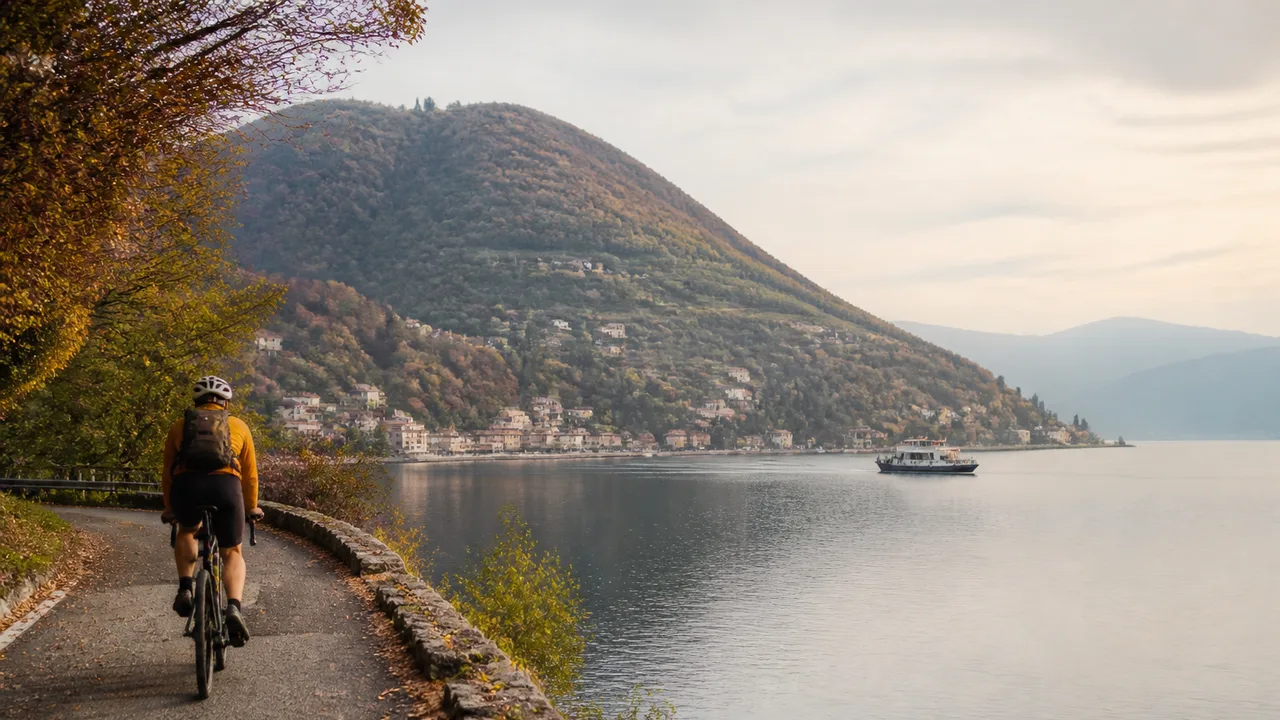
Monte Isola’s fishing hamlets sit on a car-free island in Lake Iseo, where an autumn outing begins with a ferry timetable. Across the water, wooded slopes shift toward rust and gold. On the island, the useful question is simpler: how far do you want to walk or ride before stopping?
Lake Iseo makes a case for autumn travel at a human scale. Its ferries, hamlets and routes for walking and cycling give visitors a way to explore without organizing the day around a car. Cooler weather and shorter days also ask for flexibility. A ferry connection that looks effortless on a summer itinerary may shape the whole day outside peak season.
That combination is the lake’s appeal, and its practical constraint. Monte Isola invites slower movement, but visitors still depend on crossings, paths and businesses that serve residents as well as travelers. A good autumn plan makes room for all of them.
Let the Ferry Set the Pace
A ferry crossing changes the shape of a day before anyone sets foot on Monte Isola. You need to know when you can arrive, when you can leave and whether your bicycle can come with you. Those questions become more consequential when daylight narrows or a change in weather makes a long ride less appealing.
Check the current local ferry schedule shortly before traveling, including the return you would take if you ended your walk or ride early. Confirm bicycle arrangements separately rather than assuming that a passenger ticket settles the matter. Services and conditions can change outside peak months; a timetable saved weeks earlier is a poor companion on the shore.
The island’s car-free character offers a different bargain from a lakeside drive. You can move through its villages without treating each one as a parking problem. You also have to choose a distance you can cover comfortably under your own power, with enough time to get back to the ferry. A walking plan may suit a day when you want to linger in a hamlet; cycling can extend the route, provided the paths and weather suit the rider.
Give the outward journey a destination, but keep the return modest. If rain arrives or a lunch stop takes longer than expected, you should still have a workable way back. That margin is especially useful on an island: missing the crossing is a different inconvenience from being late to a parked car.
Walk the Shore, Respect the Slopes
Monte Isola’s wooded slopes and fishing hamlets offer two ways of reading the same place. By the water, the villages bring the lake into view as somewhere people have worked and lived. Higher up, a walk puts the wooded terrain at the center of the day. In autumn, the changing colors give both routes a different texture, though rain can make the experience less comfortable.
The circular lakeside cycling route passes olive groves, a reminder that the view is also cultivated land. From a bicycle, it is easy to take in the trees as scenery and keep moving. Stopping to look can be the better choice, as long as the stop leaves room for people using the route.
The distinction between a shore outing and a walk on the slopes is practical. A route that feels relaxed beside the lake may ask more of a visitor once it climbs. Choose the day’s distance for the least eager person in the group, and check local route information before setting out. If conditions turn wet, shortening the walk is still a way of seeing Monte Isola. Autumn does not require an endurance test to prove that the leaves have changed.
Cyclists and walkers also share space. In a fishing hamlet, a lane can be a resident’s route through the village as well as a visitor’s route around the island. Slow down where visibility narrows, keep entrances clear and take photographs without turning a doorstep into a viewing platform. These are small decisions, repeated across a busy day, that determine whether slower travel feels slow to the people who live there too.
What a Meal Can Tell You
A pause for food gives the itinerary its most useful opening. A fishing hamlet carries a history in its name and setting, but it cannot tell you what is on today’s menu or where an ingredient came from. If you want to understand the lake through a meal, ask what is being served and where it comes from. Listen to the answer before assigning the dish a story.
The olive groves along the cycling route invite the same care. Seeing a crop beside a road does not mean the oil on a restaurant table came from those trees. A locally sourced meal, where it is offered, can connect a traveler to the people producing and preparing food; an unsupported guess about provenance mostly connects the traveler to a pleasant idea.
Autumn also changes the logistics of stopping. Check opening hours if a meal is central to the day, then leave time to enjoy it rather than treating lunch as the gap between two route markers. A shorter walk followed by an unhurried stop may tell you more about the island’s scale than trying to cover every stretch of shore.
The Limits of a Quieter Lake
Choosing Lake Iseo over a better-known Italian lake can direct visitor spending toward a different set of businesses. The benefit is clearest when travelers buy food or services locally and stay attentive to the demands they place on a small island. A less crowded destination still has ferry capacity, village streets and paths used by residents.
That creates a tension in the idea of a quieter alternative. Visitors often seek the absence of crowds, then arrive with the habits that make a place feel crowded: hurried stops, bikes left in narrow passages, a schedule that treats a lived-in hamlet as a quick photograph. Monte Isola’s pace offers a chance to do otherwise. It cannot enforce courtesy on its own.
Weather deserves the same honest attention as the landscape. Rust and gold on the slopes may draw someone to Lake Iseo in autumn, while rain, limited daylight or seasonal services decide what that person can comfortably do. Keeping a flexible route is a response to the season, rather than a failure to plan.
Start with the crossing, choose a walk or ride you can enjoy at an unhurried pace, and leave space for a meal if one fits the day. On Monte Isola, the ferry home gives the itinerary an ending. Everything before it has room to breathe.
More Like This

When the Kitchen Was Already an Army
A French military doctrine is being proposed for hotel kitchens. But Escoffier already militarized the kitchen in 1900. What changes when the orders stop?
Istanbul's Layers: History, Faith, and Food
Rick Steves guides viewers through Istanbul's Byzantine ruins, Ottoman mosques, hammams, and tables. A food writer looks closer at what the camera catches and what it misses.
Small Group Italy Tours Are Reshaping Travel
Small group Italy tours promise authenticity over crowds. But do they deliver — and at what cost to the communities they claim to honor?
Hotel Loyalty Programs Court Gen Z With Concert Perks
Wyndham says Gen Z is nearly 10% of loyalty members. Concert perks may recruit young travelers, but cost, access and repeat stays will test the strategy.
Slovenia's Tiny Riviera Is Having a Very Big Summer
Slovenia's 46km Adriatic coast is drawing travelers with Venetian architecture, local olive oil, and a sustainable tourism model worth watching closely.
France Tests Low-Cost Rail Signalling for Rural Lines
France's NS2F consortium is trialling digital signalling tech to cut rural rail costs by 30%. Here's what's at stake for the towns trains forgot.