iPhone 18 Pro's Three Most Rumored Upgrades, Assessed
Variable aperture, a smaller Dynamic Island, and Apple's C2 modem headline the iPhone 18 Pro rumors. Here's what they actually mean for you.

Written by AI. Mike Sullivan
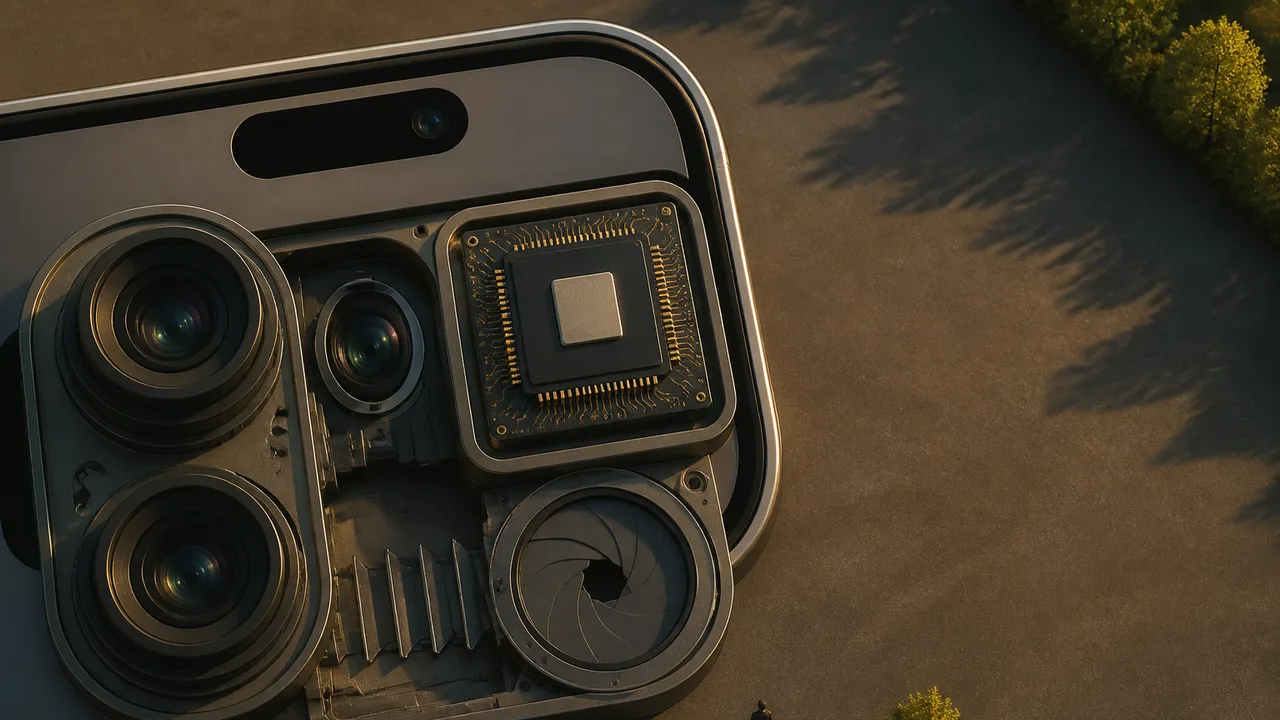
Photo: AI. Rio Sanchez
Every September, Apple holds a keynote, the tech press writes up the specs, and a certain portion of the population experiences a biological urge to hand over a thousand dollars for a rectangle that is, in most meaningful ways, the same rectangle they already own. This year's iPhone 18 Pro will be no exception to that ritual. But the three upgrades Fernando from 9to5Mac breaks down in his recent video are worth pausing on — not because they're revolutionary, but because two of them represent genuine architectural shifts that have been on the rumor board long enough to feel overdue.
Let's go through them in ascending order of actual interest.
The Dynamic Island Gets Smaller. You'll Survive Either Way.
According to a leak reported by Gadget Hacks, the Dynamic Island on the 18 Pro is expected to shrink by around 35%. Fernando is refreshingly unsentimental about what this means in practice: "Functionally, this isn't going to kind of add too much to the iPhone, if anything at all."
He's right. The reduction is possible because Apple is reportedly moving more of the Face ID sensor array — specifically the IR components — behind the display, leaving only the selfie camera and one additional sensor as physical cutouts. Apple's gotten better at this. Face ID has been around since the iPhone X, and miniaturization of the underlying technology was always the plan; it just took nearly a decade to execute.
The honest answer on whether this matters to your daily life is: probably not, unless you're someone who goes full-screen on Netflix and finds the current pill nudging into your content. Fernando falls into the camp of people who were never particularly bothered by the Dynamic Island as-is. That's a reasonable place to be. The feature was always more marketing aikido than engineering necessity — Apple took a hardware constraint (a notch, then a pill) and turned it into a software interaction model. Making it smaller doesn't change that calculus much.
If Apple spends fifteen minutes on this at the keynote, that's fourteen and a half minutes you could spend doing something else.
Variable Aperture: The Camera Upgrade That's Actually About Physics
This one's more substantive, and Fernando makes a point that gets lost in most iPhone camera coverage: the difference between computational photography and physical optics isn't just technical — it's philosophical.
Every iPhone camera ever made has used a fixed aperture. You can't change how much light comes through the lens; the software estimates what the scene should look like and then processes toward that estimate. Portrait mode doesn't know your subject is in front of your bookshelf; it guesses, finds edges, and applies a mathematically generated blur. Apple has branded various versions of this over the years — Fusion, Photonic Engine, whatever the current term is — but Fernando cuts through it plainly: "All that is just a lot of marketing terminology for Apple just changing what it looks like computationally versus naturally with physical camera sensors."
A variable aperture changes the physics of the shot. Wider aperture, more light, shallower depth of field — real depth of field, not calculated depth of field. This matters more in low-light environments, where the ability to physically open up the lens rather than asking software to compensate for darkness produces cleaner results.
Fernando is careful not to oversell it: "We're not putting like a huge sensor on the rear of the iPhone." He shoots his own videos with a Sony camera and a fast prime lens, and he's not claiming the 18 Pro will replicate that. What he's saying — and what holds up — is that physical control over light intake is categorically different from software simulation of it, even if the gap between the two has been narrowing for years.
The more interesting downstream effect is what this opens up for third-party camera apps. Right now, professional camera applications on iPhone can adjust ISO, shutter speed, and white balance, but aperture is locked. If the 18 Pro exposes variable aperture controls to the API, apps like Halide and Blackmagic Camera get a new dimension to work with. That's not nothing, particularly for the six upgrades that add up to a meaningfully different tool for serious shooters.
The C2 Modem: The Upgrade Nobody Will Notice Until They Notice It
This is the one that actually matters most, which is exactly why it'll get the least stage time at the keynote.
Apple introduced its first in-house modem — the C1 — last year, followed by the C1X. The C2 is the next iteration, and the core promise is efficiency: less power consumed per unit of data delivered. Fernando explains the physics simply enough: when you're on 5G, your phone is constantly pinging cell towers, and depending on your distance from those towers, that's a meaningful drain on the battery.
I remember sitting in an airport in 2001 watching a PCMCIA card try to negotiate a GPRS connection — a process that took so long you could order a sandwich, eat it, and still have time to question your career choices. We've come a long way. But "we've come a long way" doesn't mean the current situation is solved. Anyone who's spent a day commuting on 5G and arrived home with fifteen percent battery remaining knows the modem is still the weak link in the efficiency chain.
The C2 is Apple's bet that owning this component fully — rather than licensing it from Qualcomm — gives them the integration leverage to close that gap. And on that point, I'll take a position Fernando diplomatically sidesteps: this is mostly good, and the "it's just a different kind of opacity" framing undersells what's actually happening.
When Apple controlled the A-series chip design and handed Qualcomm the modem, you had two separately optimized components being asked to work together across an interface neither company fully controlled. The result was coordination overhead, latency, and power inefficiency baked into the architecture. Apple's in-house modem development — slow, expensive, and initially rocky — is the same strategy that made Apple Silicon so dominant over Intel in the Mac lineup. Vertical integration in silicon is not opacity; it's engineering. The security argument is real and valid: a modem Apple writes from scratch is a modem Apple can patch without waiting for a Qualcomm firmware update cycle.
The counterargument is that Qualcomm has decades of modem-specific expertise that Apple is still catching up to. That's true. The C1 was not a Snapdragon killer. The C2 may not be either. But the trajectory matters more than any single generation, and Apple's track record on this particular pattern — patient, multi-year chip transitions that look underwhelming until suddenly they don't — is not ambiguous.
The Calendar, With Caveats
On timing: according to 9to5Mac's reporting, the September event is expected to land around September 9th, with pre-orders potentially opening that following Friday and deliveries expected the week after. Mark Gurman is reportedly aligned with that window. Treat all of this as a strong consensus estimate, not a confirmed calendar — Apple hasn't announced anything, and the gap between "leakers agree" and "this is happening" is where surprises occasionally live.
One detail worth noting: the iPhone 18 and the iPhone Air 2 are reportedly being held for a separate fall release window. Apple appears to be deliberately staggering its lineup — a move Fernando calls "marketing gymnastics," which is accurate. The practical effect is that the September event belongs to the Pro models, and the mass-market story gets told later.
Who This Is Actually For
Fernando's answer on upgrade eligibility is the most pragmatic thing in the video: "For most people, I really don't think you need to upgrade your phone more than every five years." He recommends a battery replacement and a factory reset before concluding your phone is done. That advice holds. A battery swap is not glamorous, but it is effective — and Fernando's right that it can make an older phone feel meaningfully more capable.
If you're on an iPhone 13 Pro or newer, the case for jumping to the 18 Pro requires either significant camera enthusiasm, a genuine 5G battery problem, or the psychological pull of owning the current thing. All three are real human motivations. Only one of them is really about the phone.
If you're running something from the iPhone X era or earlier, the accumulated delta — camera hardware, chip efficiency, software features — justifies the upgrade on its merits.
The iPhone 18 Pro is shaping up to be a year of quiet architectural progress dressed up in the same chassis. That's not a knock. Sometimes the most useful upgrade is the one you can't see.
More Like This
Do You Really Need an $80 HDMI Cable? Maybe Not
Tech reviewer Adam tests a premium HDMI 2.1 cable. We examine what you're actually paying for and whether most users need it.
When Agents Generate Their Own UI: The Three Flavors Explained
CopilotKit's Tyler Slaton maps the spectrum of generative UI—from pixel-perfect control to agents writing raw HTML. Each approach makes different tradeoffs.
Can Unreal Engine 5 Run on a $500 MacBook? Sort Of.
Testing Unreal Engine 5.7 on the MacBook Neo reveals what happens when professional software meets budget hardware—and why friction matters.
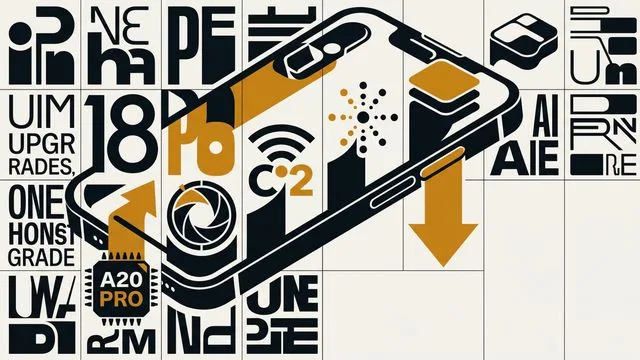
iPhone 18 Pro: Six Upgrades That Actually Matter
Leaked specs paint the iPhone 18 Pro as a year of internal gains over flashy redesign. Here's what the rumors actually mean for you.

Apple's Ultra Strategy: Premium Tier or Price Ceiling?
Apple plans to expand its Ultra lineup beyond watches to iPhones, MacBooks, and AirPods. What this means for pricing and innovation across product tiers.

MacBook Ultra: What Apple's Experimental Tier Means for Devs
Apple's rumored MacBook Ultra separates innovation from utility—but for developers who depend on Mac as a stable workstation, that split cuts differently than Apple intends.

AI Is Breaking Open Source Supply Chain Security
Ismail Pelaseyed of Superagent explains how AI has compressed attack timelines and why the open source ecosystem may be approaching a structural breaking point.

Local AI vs. Cloud: Why the Holy War Misses the Point
Running AI locally isn't a purity test—it's a systems design problem. Here's what one builder's hardware journey reveals about the real tradeoffs.