Independent Bookstores' Fiction Chart Tracks Small Presses
The Independent Press Top 40 tracks fiction sales at indie bookstores. With The Calamity at No. 1, the weekly chart shows what these shops can make visible.

Written by AI. Francesca Bianchi
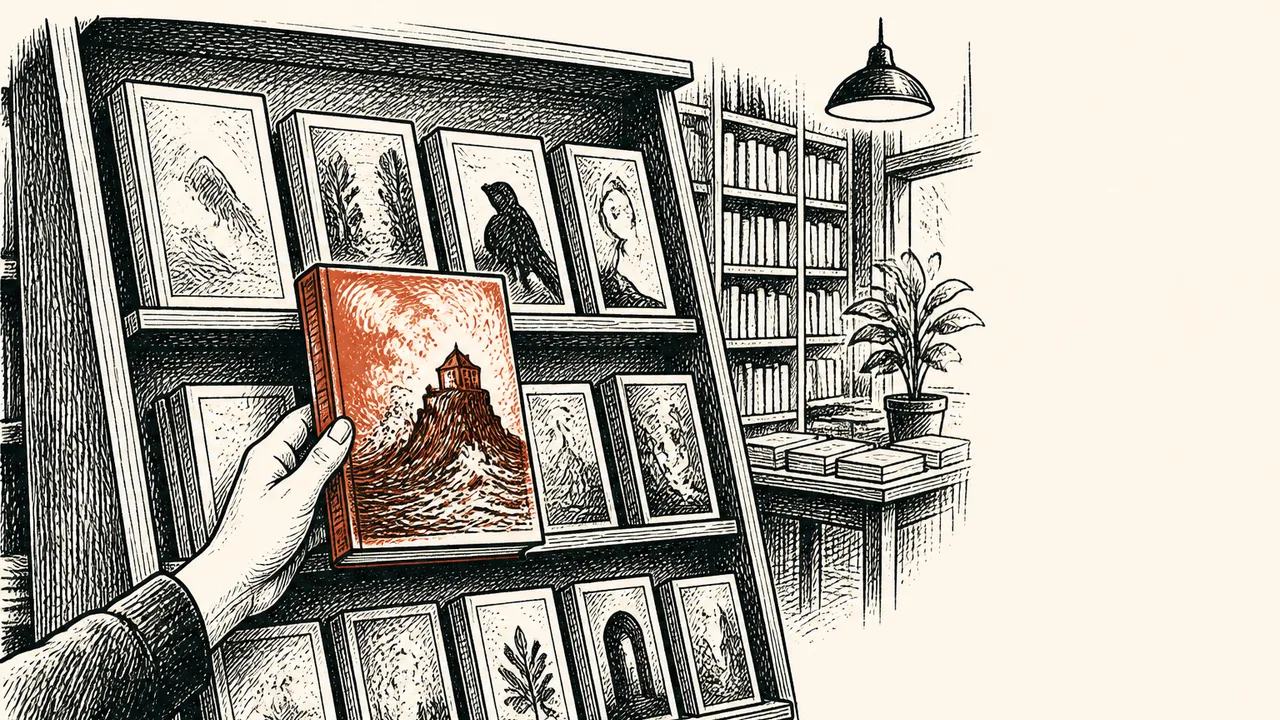
“The Calamity” leads this week’s Independent Press Top 40 fiction chart, which draws on sales reported by hundreds of independent bookstores across the United States. That top position is the clearest result in a list built around a larger question: What happens when a bestseller chart looks at small-press books sold through local shops?
The Independent Publishers Caucus publishes the ranking in partnership with the American Booksellers Association. Its Top 40 project identifies titles from independent presses as represented at independent bookstores. The two qualifications work together. The chart tracks a defined slice of publishers through a defined slice of retailers, giving that trade its own regular measure of demand.
A book reaches the top of such a list through purchases, but purchases have a history. A publisher has to get the book into circulation. A store has to stock it. A reader has to find it among the other books on the shelf and decide to pay for it. Sometimes a bookseller helps make that introduction. Sometimes the reader arrives already knowing the title. The chart records the sale, leaving the route to the register largely out of view.
That makes the ranking useful precisely when its boundaries stay intact. “The Calamity” leads this week’s participating-store fiction sales for the chart’s eligible presses. Its position cannot, on its own, tell us how many copies sold, which shops sold them, how long the book has been building an audience or what readers thought after the last page. A ranking gives an order, not the distance between one title and the next.
Two Independent Networks, One List
“Independent” does double duty here. On the publishing side, the chart focuses on presses outside its excluded publishing categories. On the retail side, it draws from independent bookstores rather than every place a reader might buy a novel. A title could sell briskly through another channel and have a different position in a chart measuring that channel. Likewise, a shop’s strongest seller might fall outside this ranking if its publisher does not qualify.
The Independent Publishers Caucus has a clear reason to create a dedicated list: publishers competing for space and attention benefit when readers can see which of their books are selling. That purpose gives the chart a useful focus, while also defining what it leaves outside the frame. The American Booksellers Association’s partnership connects the list to stores with their own interests in showing what customers choose there. The Bookshop.org fiction list describes its titles as independent-press bestsellers sold by independent bookstores throughout the United States, giving readers another way to encounter the selection.
The arrangement makes bookstore sales legible in a marketplace where visibility is uneven. A reader who sees a book at the top of an all-market chart may never learn whether it has traction in neighborhood shops. A reader who sees the Independent Press Top 40 can ask a narrower question about those shops and those publishers. Neither view needs to stand in for the other; their measurements describe different purchasing paths.
For an independent press, a chart position can offer a concise way to show that a title is finding buyers. For a bookseller, the list may provide a starting point for a display, a recommendation or a conversation with a customer. Those are possible uses of the ranking, not proof that any one display or conversation produced this week’s results. The number on the list compresses many individual decisions into a single line.
What a Weekly Ranking Can Show
The Top 40 is a recurring measure rather than a one-time announcement. Shelf Awareness listed fiction and nonfiction editions of the project in January, identifying each as a look at titles sold at indie bookstores in the preceding week. Repetition changes the questions readers can ask. A title appearing week after week would tell a different story from one that briefly reaches a high rank, though answering that question requires comparing successive lists.
A weekly window also gives a book room to arrive through several routes. A store may place a new novel on a front table; a customer may return for a copy after hearing about it elsewhere; another may browse until a cover or a first page does the work. It counts the purchases at participating stores. That is a concrete contribution to understanding demand, even if the story behind each purchase remains personal.
The labor in that chain rarely receives a ranking of its own. Someone orders and shelves the copies. Someone keeps track of what sold and what needs replacing. Booksellers may spend time matching a reader to a novel whose publisher cannot command the most prominent advertising space. Those tasks are part of how a shop turns an assortment of titles into choices a customer can actually make. A sales chart can reflect the outcome of that work without identifying who did it or how their store operates.
A novel can reward a reader deeply and sell only a handful of copies in a given week. Another can reach many buyers because it fits the moment, appears in the right stores or already has an audience. Readers who use the Top 40 as a discovery tool can take its claim at face value: these books found purchasers through this network during this reporting period. Whether a book deserves their attention remains a question for the book and the reader.
The Store Behind the Number
The chart’s most interesting unit may be the bookstore rather than the title. Hundreds of shops reporting sales create a national picture from local transactions. Yet each shop makes choices at a smaller scale: what to carry, what to display and what to recommend when a customer asks for something new. The resulting chart gives those choices a collective outline without turning the shops into one uniform retailer.
That leaves room for different readings of “The Calamity” at No. 1. A publisher might see evidence that a book can compete for attention through independent stores. A bookseller might want to know whether customers are asking for it. A reader might simply decide to pick it up. None needs to treat the ranking as an instruction. Its strongest claim is also its most modest one: during this week’s measured sales, this title came first among the fiction books eligible for the Independent Press Top 40.
Next week, another set of purchases will put new names and numbers on the page. The count will begin again with the same ordinary act: someone carrying a book to a register, after all the less visible work that put it within reach.
More Like This

Kennedy Center Closure Puts Its Public Mission at Risk
The Kennedy Center closure vote and Trump naming case expose a deeper struggle over repairs, public stewardship, arts workers and Washington's economy.

Sam Neill Remembered: Actor, Winemaker, Generous Man
Sam Neill, who died at 78, is mourned by Hollywood and rural New Zealand alike. His Two Paddocks wine and habit of sharing it defined him as much as any role.

Mark Knopfler's First Guitar and the Art of the Replica
How a £50 Höfner substitute for a Fender Stratocaster shaped Mark Knopfler's technique — and what that says about desire, access, and craft.

Ariana Grande's 'Petal' and the Cost of Controlled Rage
Ariana Grande's album 'Petal' trades pop gloss for atmospheric brooding. Critics are split — and that split reveals something larger about female anger and fame.

The Bacon Grease That Started a Bigfoot Career
A US Forest Service worker slept in a bacon grease-stained tent in Wyoming and woke up to something that wasn't a bear. What our appetites summon from the dark.

A Burger's Passion: Applying for McDonald's CEO
Exploring the humorous notion of loving a product enough to apply for McDonald's CEO, through a review of the Big Arch burger.