How Dumb and Dumber Carefully Engineered Lowbrow Comedy
Jon Buckland's defense of Dumb and Dumber opens a bigger question about comic craft, lowbrow taste, online fandom and the freedom of looking foolish together.

Written by AI. Jasmine Brooks
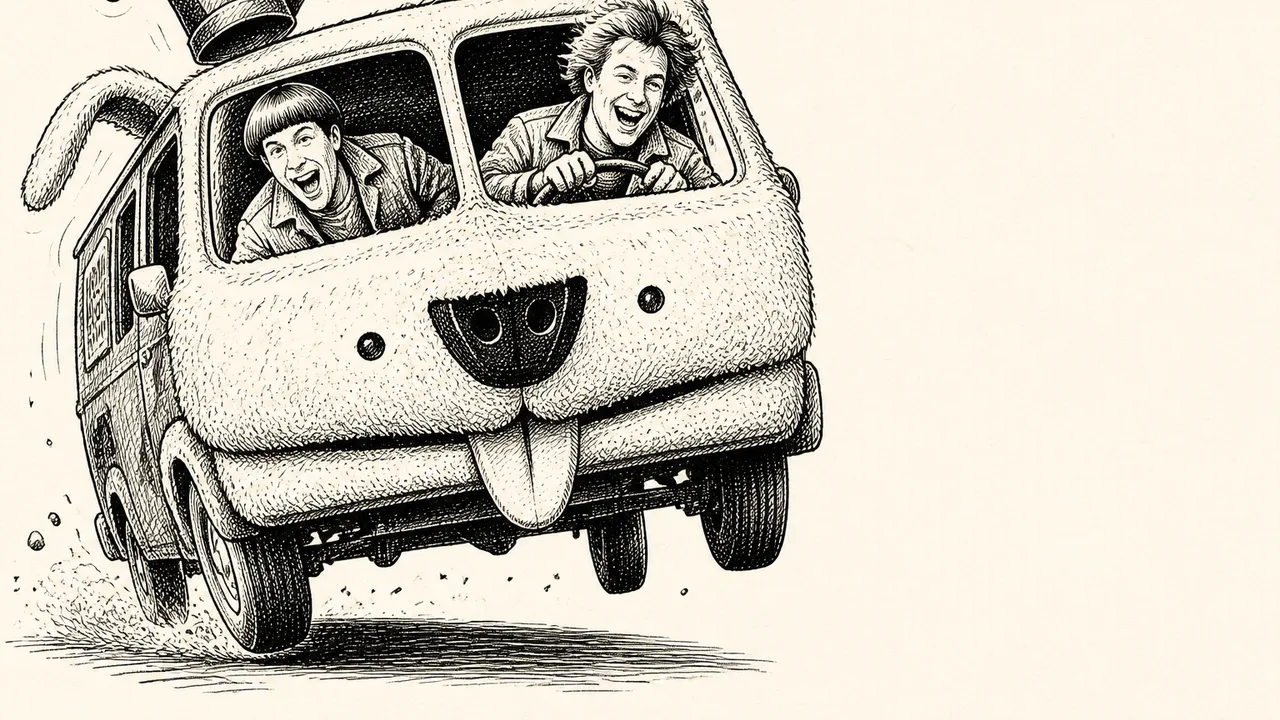
Dumb and Dumber arrived in 1994 with Jim Carrey and Jeff Daniels playing Lloyd Christmas and Harry Dunne, two men whose shared brain cell appears to be permanently buffering. More than three decades later, the comedy still presents critics with a gloriously undignified problem: How seriously should anyone take a movie containing laxatives, a dead parakeet and the most annoying sound in the world?
Jon Buckland answers with unapologetic attention. In a Low Culture essay for The Quietus, he examines a film often waved away as crude or juvenile through its timing, physicality and commitment to bad taste. The dismissal supplies his opening. Once a movie has been filed under “stupid,” criticism can either close the drawer or ask who built that drawer, what went into it and why millions of people keep rummaging around inside.
That second option does not require framing every toilet gag as a coded statement about late capitalism. Sometimes gastrointestinal chaos simply clocks in, does its shift and leaves. The richer question concerns how apparent stupidity gets made, sustained and passed among audiences. Dumb and Dumber turns idiocy into an entire comic ecosystem. Every foolish decision creates another, while Lloyd and Harry’s friendship keeps the chain reaction moving long after sensible people would have gone home.
Stupidity Requires Precision
Anyone can write “two idiots enter a room.” Making their entrance funny, then finding a second laugh before either man reaches the sofa, takes control.
Buckland’s focus on mechanics pushes against the idea that low comedy simply happens when performers abandon restraint. Jim Carrey’s face, posture and voice stretch every social encounter beyond acceptable human settings. Daniels gives Harry enough ordinary-guy solidity to make each collapse hit harder. One performer arrives looking ready to detonate; the other looks as if he might survive the scene with his dignity. Briefly is doing heroic work in that sentence.
The film builds escalation through bodies. Lloyd produces an unbearable noise during a car journey. Harry battles a bathroom disaster with the panicked concentration of someone defusing a bomb designed by Taco Bell. Their orange and powder-blue tuxedos convert social aspiration into a visual emergency before either man opens his mouth.
These sequences use anticipation as aggressively as impact. Viewers can often see disaster coming, but Lloyd and Harry cannot. Comedy sits inside that delay. The audience gets knowledge without power, an ideal arrangement for laughter and a terrible arrangement for anyone trapped in the bathroom.
Calling the result “dumb” describes its subject and conceals its construction. A poorly timed stupid joke dies on contact. Dumb and Dumber keeps arranging pauses, glances and reversals so that foolishness arrives with the accuracy of choreography. Chaos has call sheets.
Earnestness Powers the Whole Machine
A contemporary San Francisco Chronicle review described the film as a smart comedy with lowbrow laughs. Its sharpest observation concerned Lloyd and Harry’s earnestness. They mirror foolish choices made by ordinary people facing a world stacked against them, the review argued, and their sincerity complicates the easy label of “dumb guys.”
Lloyd and Harry approach each humiliation with the confidence of men who have never met evidence they could not misunderstand. Yet their dreams remain painfully legible. They want money, romance, respect and some proof that adulthood will eventually let them past the velvet rope. Lloyd drives a limousine; Harry runs a mobile pet-grooming operation from a dog-shaped van. Their professional lives look like LinkedIn profiles written in crayon, but they are still trying.
Their friendship acts as the movie’s operating system. Each terrible idea needs a co-signer, and each man has one standing nearby with a suitcase and absolutely no follow-up questions. They fight, sabotage each other and repeatedly misread the same situation, yet the film keeps returning them to a two-person unit. Alone, either man would merely fail. Together, they can turn failure into a road trip.
That bond also softens the humiliation without erasing it. The audience laughs at Lloyd and Harry, then gets pulled into their loyalty, optimism and wounded pride. Their affection gives the film somewhere to go after a punchline. Otherwise, it would become a two-hour compilation of strangers having the worst day of their lives, basically a social feed with better location scouting.
Low Culture and the Performance of Intelligence
Cultural hierarchies often reward difficulty that announces itself. Dense dialogue, solemn themes and visible seriousness arrive wearing little name tags that say Important Art. Broad comedy shows up in a chipped van shaped like a dog and asks whether anyone wants to hear the world’s most annoying sound.
That contrast makes low comedy an irritant. The laughter bypasses respectable taste and exposes how shaky the border between sophistication and pleasure can be. Calling a movie childish may describe its humor. It can also police the people enjoying it, especially when enjoyment involves bodily functions, slapstick or repetition rather than approved forms of wit.
The “brain-off movie” label carries the same tension in current fandom language. Fans usually mean affection: this work offers relief from analysis, optimization and the exhausting demand to have a defensible opinion before the credits finish. Yet the phrase can hide the craft creating that relief. Switching off requires somebody else to have switched on the rhythm, performance and structure.
Dumb and Dumber offers freedom from performing intelligence. Viewers know more than Lloyd and Harry, but the movie does not ask them to display that superiority in an essay exam. You laugh, quote the line and move on. Then, thirty years later, somebody writes an essay anyway. The nerds always find a route back in. Affectionately, I say: welcome home.
The Cruelty Cannot Be Airbrushed
A defense of low comedy can become too cuddly. Dumb and Dumber repeatedly converts pain, bodily distress and social vulnerability into spectacle. A blind child receives a dead bird. Harry’s digestive crisis becomes an extended set piece. Lloyd and Harry’s inability to read a room invites viewers to enjoy consequences they cannot anticipate.
Different audiences will set the cruelty threshold in different places. Physical comedy depends on a temporary agreement that pain can become shape and rhythm. That agreement weakens when a gag targets somebody with less power, or when affection for the central duo leaves everyone around them functioning as comic debris.
Mary Swanson, the object of Lloyd’s romantic quest, frequently serves as the horizon of his fantasy while Lloyd and Harry receive the unruly friendship, conflict and reconciliation. The men get to be disgusting, furious, tender and ridiculous. She gets pursued by a stranger who has converted basic politeness into destiny. The imbalance belongs in any full accounting of the film’s pleasures.
Affection does not disinfect every joke. It does, however, change the temperature around Lloyd and Harry. Their vulnerability keeps the film from reducing them to targets, while their destructive behavior prevents innocence from becoming a complete excuse. The comedy lives inside that unstable arrangement, smiling sweetly while somebody’s bathroom plumbing files for workers’ compensation.
The Group Chat Became a Second Cinema
Dumb and Dumber predates social platforms, yet its best-known moments behave like native internet objects. “So you’re telling me there’s a chance” works as a reaction to romantic delusion, sports odds, election math or a delivery estimate that says 8 a.m. to 9 p.m. The tuxedos function as an instant visual punchline. The annoying sound can escape the film entirely and become audio warfare.
Online fandom turns those fragments into social tools. A quote signals that somebody understands the odds and plans to remain delusional for recreational purposes. A GIF of Lloyd’s face can communicate hope, panic and zero media literacy before anyone types a sentence. Group chats perform distributed close reading through cropped images, repeated lines and one person replying, “I fear he ate.” Academia has footnotes; fandom has reaction folders containing 600 files named IMG_4827.
Fragmentation can strip away context, including the cruelty surrounding a gag. It can also expose precision. A physical reaction that survives as a three-second loop has usually achieved extraordinary clarity. Fans isolate the beat, replay it and assign it new meanings. That circulation keeps old comedy socially available even for people who have never watched the entire film.
This is where critical reassessment and fandom overlap. Buckland approaches the movie through an essay; fans approach it through quotation, remix and repetition. Both practices reject disposability. One gives the gag a paragraph. The other drops it into the group chat at 2:13 a.m. after somebody announces an obviously catastrophic dating decision.
Let the Fart Gag Remain a Fart Gag
Reconsidering Dumb and Dumber creates its own trap: the urge to prove that every crude joke contains hidden profundity. A fart gag can remain a fart gag. Scholarship survives. So does the fart gag, probably with better name recognition.
Turning low comedy into respectable art by discovering secret seriousness would preserve the same hierarchy that dismissed it. The useful critical move involves examining what the comedy does in its chosen register: how it times embarrassment, how bodies carry narrative, how friendship converts disaster into momentum and how audiences reuse its language.
Some gags will fail that examination. Others will reveal more craft than their reputation allows. Popularity cannot settle the question, and prestige cannot settle it either. Laughter remains unruly evidence, shaped by memory, company, repetition and whoever grabbed the remote.
A culture confident in its intelligence should survive two men in powder-blue and orange tuxedos making complete fools of themselves, and stay curious about why the group chat keeps inviting them back.
More Like This
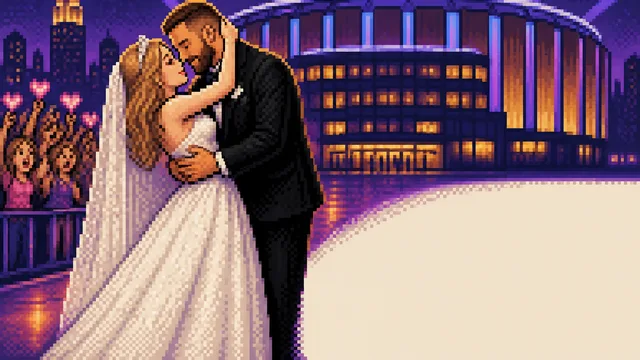
Taylor Swift and Travis Kelce Marry at Madison Square Garden
Taylor Swift and Travis Kelce married at Madison Square Garden on July 3, 2026. Here's what the moment meant—and why the internet lost its entire mind.

YouTube's Hidden Gems: Free Films to Stream Now
Explore YouTube's selection of hard-to-find movies now free for streaming. Discover cult classics and hidden gems.
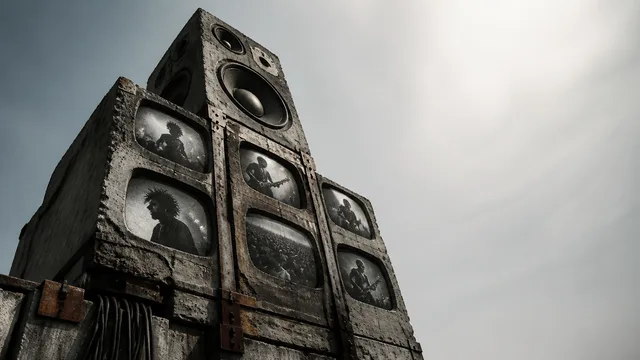
The Best Summer Doc Rescues 1995's Greatest Tour
Tamra Davis' 'The Best Summer' doc survived a wildfire to bring 1995's Summersault tour back to life. Here's why it matters now more than ever.
Why Galactic Empires Are Doomed to Collapse
Explore why galactic empires in sci-fi often fall apart. Discover the challenges of leadership, communication, and governance.

Merphy Napier Makes the Case for Darth Bane
BookTuber Merphy Napier reviews Darth Bane: Path of Destruction fresh off finishing it—and her unpolished enthusiasm is the whole argument.
Mastering the Art of Cinematic Wide Shots
Explore wide shots in film, where space tells the story and characters shine.