Hotel Front Desk Automation Puts Staffing Choices to the Test
Hotel kiosks can speed check-in, but booking errors still need human judgment. How should hotels weigh automation, staffing, training, costs and service recovery?

Written by AI. Priya Chandrasekaran
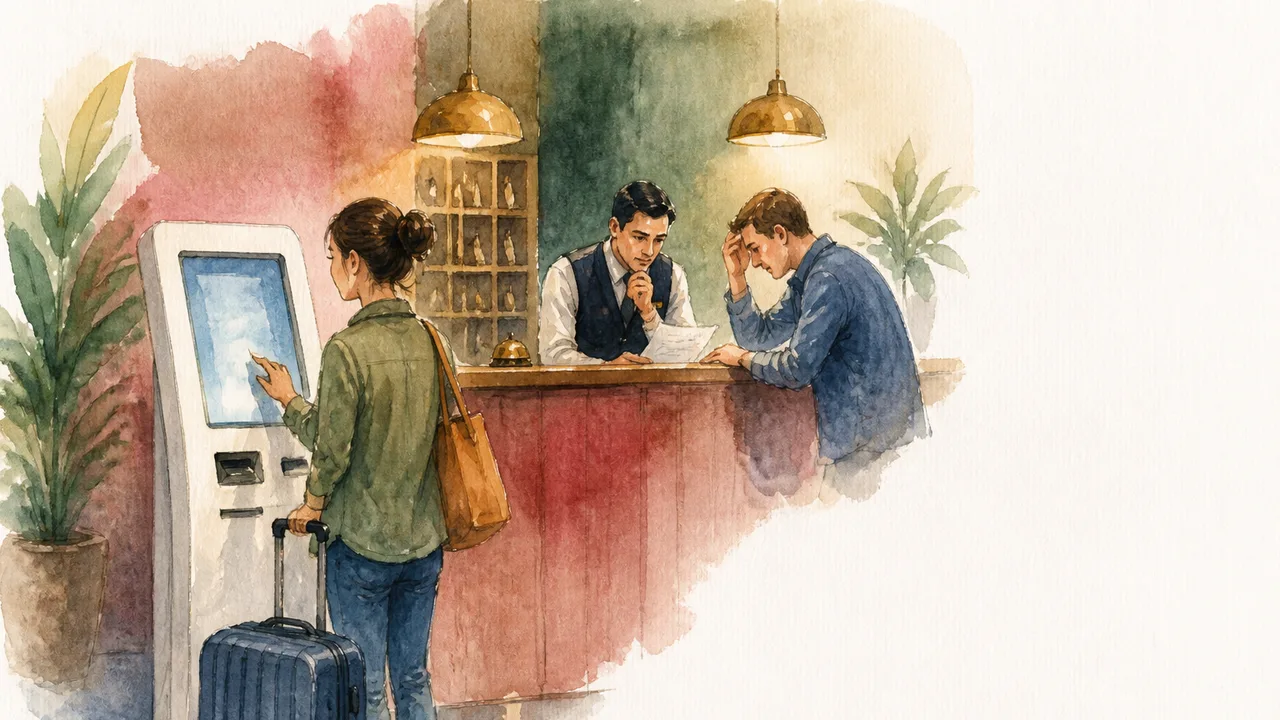
A disrupted reservation sits at the center of a front-desk staffing argument: as kiosks and AI tools handle routine transactions, hotel employees need time to solve the problems those tools cannot. The proposed shift is easy to picture from a guest’s side of the counter. A successful check-in may take minutes. A booking that appears under the wrong name could require someone to investigate, explain the options and decide what the hotel can offer.
That proposal changes the staffing question. Managers can count the transactions a kiosk completes, then calculate how much employee time those transactions once occupied. The harder calculation begins after the easy transactions leave the queue. How many people must be present to help when a reservation fails, a request falls outside the usual choices or the hotel needs to recover from a service mistake?
The staffing approach remains a proposal, with no hotel-level labor or guest-service results attached to it. It nevertheless gives hotels a useful way to examine an automation purchase: follow the work from the guest’s first attempt to check in through the resolution of anything that goes wrong.
The Work Left After Check-In
A routine arrival has a fairly predictable path. A guest confirms a reservation, establishes their identity, receives access to a room and learns whatever they need to know about the property. Digital tools can make parts of that path faster, particularly when the information matches and the guest can use the interface comfortably.
A failed arrival has no comparably tidy path. A reservation problem may involve a spelling difference, a change made through another booking channel or a disagreement about what was promised. These are examples of situations a hotel would need to plan for, not claims about the frequency of any one error. The employee’s task is to work out what happened, identify the choices the hotel can actually honor and communicate them to a guest who may have arrived tired and expecting a room.
Other requests also resist a simple menu of options. A traveler might ask about a late arrival, an accessibility need or whether food is available after the kitchen closes. That last question can sound small until the person asking has dietary restrictions and few nearby alternatives. The front desk may need to coordinate with colleagues or explain a limitation clearly. Hospitality, in that moment, is a chain of decisions across the property, not a button labeled “special request.”
Automation can help with these cases if it gives staff accurate information and time to act. It can hinder them if it sends a guest from one interface to another before a person becomes reachable. The number of completed digital check-ins would look the same either way; the guest’s experience and the employee’s workload would not.
A Labor-Saving Tool Still Needs a Staffing Plan
The strongest case for automation begins with repetitive work. If a system handles straightforward check-ins or common questions reliably, staff need not spend every shift repeating the same instructions. Employees can devote more attention to guests whose situations require judgment. For a hotel struggling to cover its desk, that is an operational benefit, not merely a technological one.
Hospitality technology company Akia argues for building automation into a hotel’s operating model, rather than using it only as a response to a staffing shortage. Its vision gives front-desk workers fewer repetitive tasks and more substantial ones. That is also a commercial argument from a company selling hospitality technology, so managers have reason to examine the workflow behind it rather than adopt a promised staffing outcome.
A hotel could, for instance, use time saved on standard arrivals to maintain coverage during busy periods or train employees to resolve booking disputes. It could instead reduce hours. Both choices may follow the same software purchase, but they place different demands on the people who remain at the desk. If the remaining employees handle a larger share of complicated cases without more authority or support, their job becomes harder even as transaction counts fall.
Timing complicates the calculation. A hotel may have long stretches when routine check-ins flow easily, followed by a cluster of arrivals that all need help. Average time saved across a day says little about whether one employee can manage several unresolved reservations at once. Staffing decisions must account for the moments when help is needed together, because a guest cannot use yesterday’s spare capacity to solve tonight’s problem.
What Employees Need to Resolve a Problem
Training is one part of the answer. An employee needs to understand the hotel’s booking channels, know where to look for a discrepancy and have a clear process for escalating a case. Equally important is authority. If a worker can identify a mistake but cannot make a permitted adjustment or reach someone who can, the guest still waits. Sending that worker through several approval steps may preserve a rule while prolonging the service failure the rule was supposed to manage.
Good automation design should make that handoff legible. When a guest moves from a kiosk or digital conversation to an employee, the employee should be able to see what the guest has already tried, subject to appropriate privacy controls. Otherwise the person at the desk must ask the guest to begin again. Repetition is especially frustrating when the first system has already appeared to accept the guest’s details.
Access also belongs in the staffing plan. A guest who cannot use a kiosk, prefers to speak with a person or needs help navigating an unfamiliar process should have a clear route to assistance. A hotel can encourage digital check-in without treating every request for human help as a failure to follow instructions. The practical question is whether the desk remains reachable when the automated path does not suit the guest.
Employees have their own stake in that design. A role centered on problem-solving may offer more room for judgment and a better use of experienced staff. It may also concentrate stressful encounters into every shift. Managers considering the change would need to examine training time, escalation support and the number of difficult cases each employee is expected to carry, alongside any reduction in routine tasks.
Count Resolutions, Not Just Transactions
A useful assessment would start by separating tasks a tool finishes from tasks it passes along. How often does a guest complete check-in without help? When a process fails, how long does it take to reach a person? Can that person resolve the issue, or do they pass it to someone else? These questions follow the whole service encounter rather than stopping at the kiosk screen.
Hotels would also need to compare the cost of the technology with staffing and training choices. Savings depend on what work disappears, what work remains and whether the property invests the time it recovers. Guest feedback could help identify frustrations, but managers should look for patterns in unresolved cases and delays as well as praise for speed. A quick arrival and a well-handled disrupted reservation are separate achievements.
The front desk is where a hotel’s systems meet a person carrying luggage and a set of expectations. On a smooth night, a kiosk may shorten that meeting. When the reservation fails, the decisive staffing question is how quickly someone with the information, time and authority to help can take over.
More Like This
When the Kitchen Was Already an Army
A French military doctrine is being proposed for hotel kitchens. But Escoffier already militarized the kitchen in 1900. What changes when the orders stop?

Istanbul's Layers: History, Faith, and Food
Rick Steves guides viewers through Istanbul's Byzantine ruins, Ottoman mosques, hammams, and tables. A food writer looks closer at what the camera catches and what it misses.

Small Group Italy Tours Are Reshaping Travel
Small group Italy tours promise authenticity over crowds. But do they deliver — and at what cost to the communities they claim to honor?
Hotel Loyalty Programs Court Gen Z With Concert Perks
Wyndham says Gen Z is nearly 10% of loyalty members. Concert perks may recruit young travelers, but cost, access and repeat stays will test the strategy.
QR Code Menus Are Redesigning the Dining Ritual
Design researcher Shruthi Manjula Balakrishna argues QR menus don't just change how we order—they quietly rewire attention, trust, and who absorbs the cost of dining.

U.S. Bartender Shortage: Training as the Real Fix
With 129,600 U.S. bartender openings projected annually through 2034, the industry is rethinking hiring. Training and retention may be the only durable answer.
American Airlines Ends 24-Hour Refunds on Last-Minute Tickets
American Airlines has quietly removed the 24-hour refund window for tickets booked within seven days of departure. Here's what that means for last-minute travelers.