GM’s CarPlay Return Offers a Split-Screen Compromise
GM’s split-screen CarPlay return solves a dashboard problem without settling its EV strategy, while safety rules revive the case for physical controls.

Written by AI. Mike Sullivan
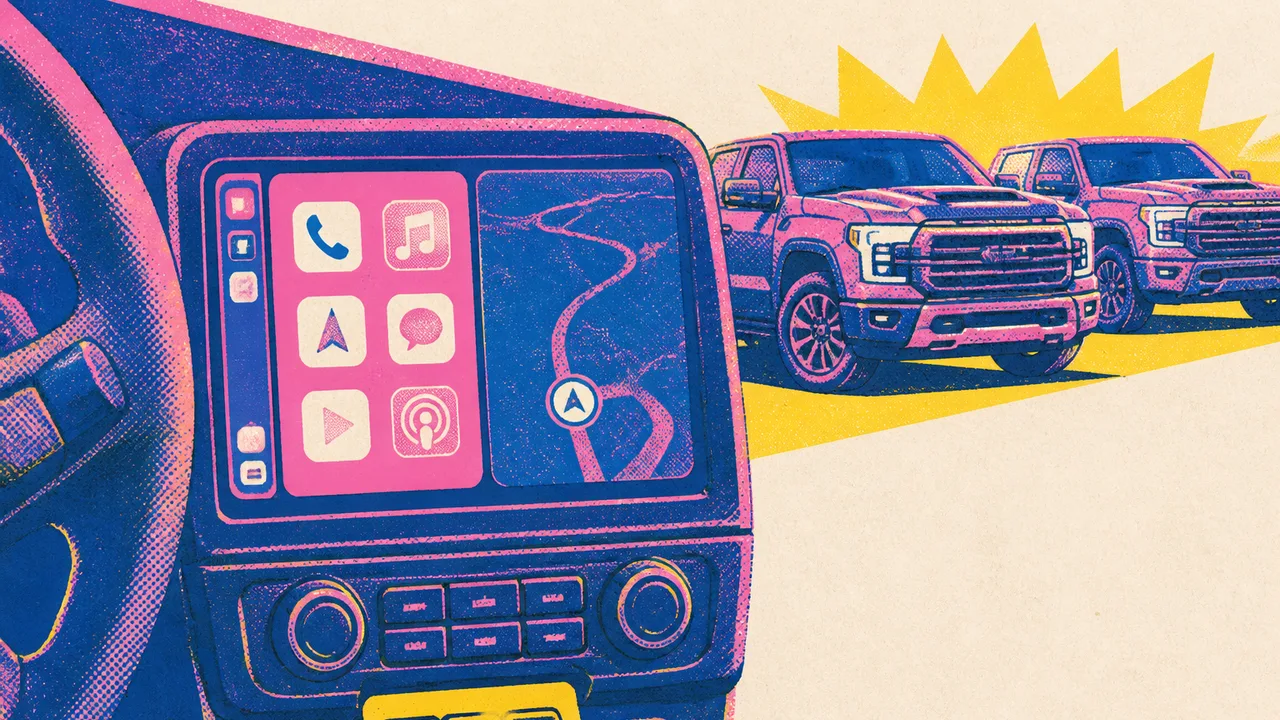
General Motors will put Apple CarPlay and Android Auto inside its redesigned interface for the 2027 Chevrolet Silverado 1500 and GMC Sierra 1500. The phone systems will occupy one panel while GM’s software keeps vehicle information visible in another, an arrangement that resembles a corporate peace treaty drawn up on 60 inches of display space.
The obvious headline is that CarPlay has returned. The more useful version requires an asterisk approximately the size of a Suburban.
GM never removed phone projection from its existing gasoline vehicles. It removed CarPlay and Android Auto from new electric vehicles beginning in 2023, while preparing to extend that policy as other models were refreshed. The new announcement covers combustion-powered pickups. GM has given no corresponding commitment for its EVs.
That distinction reveals what GM has solved and what it still wants to control. The split-screen design addresses the company’s complaint that phone projection can take over a display needed for gauges and vehicle functions. It also lets drivers retain the phone apps and familiar interface they asked for. GM keeps its own software on screen, Apple and Google get a window, and nobody has to surrender the whole dashboard.
CarPlay Gets a Room, Not the House
The redesigned system can show CarPlay or Android Auto beside fuel, tire-pressure, towing and Super Cruise information, Bloomberg reported. Drivers should be able to reach phone functions without repeatedly switching away from native vehicle controls.
GM software executive Mike Wahlstrom said customers wanted the simplicity of CarPlay and Android Auto while retaining quick access to truck functions. The company also worked with Apple and Google on the approach, according to Engadget’s account of the announcement.
This is a sensible design response to a problem GM had identified. Modern dashboards have become awkward hybrids: one computer belongs to the automaker, another arrives through the driver’s phone, and both would prefer to be master of ceremonies. Switching between them can hide controls or interrupt navigation. It is the automotive equivalent of using Windows 95 to launch a DOS program, except the machine is moving at highway speed.
Split view reduces that conflict by preserving GM’s layer beside phone projection. The design could cut the number of screen changes required for common tasks. A plausible safety benefit follows from fewer menu transitions, although that benefit still needs comparative testing. Screen area alone does not establish how long drivers look away from the road, whether icons are easy to hit or whether the most important controls appear where people expect them.
GM is also keeping customizable quick-access controls and some physical controls. Sebastian Bauer, the company’s executive director of human interface design, argued that tactile controls suit functions where muscle memory and access without looking matter. SlashGear’s coverage also cites AAA for an average navigation-programming time of more than 40 seconds, illustrating why menu depth deserves more scrutiny than the usual launch-event adjectives.
The 2023 Decision Still Matters
GM was among the earlier automakers to support CarPlay and Android Auto in gasoline vehicles. In 2023, it began excluding both from new EVs and directing drivers toward its onboard system. The rationale included tighter integration with vehicle functions and the possibility of earning subscription revenue through GM’s own interface.
That strategy followed a familiar technology-industry script. A platform owner sees another company occupying the most valuable screen in the product, then decides the experience would work better under local management. Sometimes that produces deeper integration. Sometimes it produces the printer utility that launches every time you start the family PC.
GM’s strongest argument concerns integration. Electric vehicles can place charging, battery management, route planning and other vehicle data inside the same software environment. A native platform can coordinate those functions without bouncing between an automaker interface and phone projection. GM CEO Mary Barra had also described switching between the systems as clunky, and CNET reported that she expected CarPlay and Android Auto to be phased out across the portfolio by 2028.
The business incentive sits beside the design argument. An automaker cannot readily sell services or build a lasting software relationship when drivers spend most of their dashboard time inside Apple’s or Google’s interface. Keeping the native layer visible preserves that opportunity. It also gives GM responsibility for making software people prefer to use, a sentence that has caused several generations of car buyers to stare thoughtfully at their phones.
The trucks revise the planned phaseout without settling the EV strategy. CNET obtained a direct statement from GM saying it had no additional update about future phone projection in electric vehicles. CNET also reported that the new interface uses one software platform across gas, diesel and electric powertrains, while feature sets can differ among vehicles.
The combination supports a narrower inference: GM has found a way to accommodate projection where it chooses, while retaining the option to exclude it from EVs. The company has not confirmed that preserving software revenue or data control explains the current boundary. Product integration, customer demand and development schedules could also influence the division. Buyers should therefore treat “CarPlay is back at GM” as shorthand for a truck feature, not a portfolio-wide guarantee.
Regulators Are Asking a Different Question
GM’s answer to dashboard complexity uses more screen and better division of that screen. European and Chinese safety initiatives are pushing in another direction: move selected functions off the glass.
The Next Web reports that Euro NCAP’s 2026 rating protocol requires separate physical controls for indicators, hazard lights, the horn, wipers and emergency calling if a vehicle is to qualify for five stars. Euro NCAP is a safety-rating program rather than a legislature, but its scores can influence vehicle design and purchasing decisions.
China’s standard goes further, according to the same report. From July 2027, it names 19 functions requiring physical controls that are at least 10 millimetres square and continue working without vehicle power. Those requirements treat distraction as a hardware problem. A beautifully reorganized touchscreen still cannot provide the tactile certainty of a switch a driver can find without looking.
The comparison has limits. Silverado and Sierra are not sold in Europe, so Euro NCAP’s protocol does not directly dictate these trucks’ controls. GM does sell Cadillac EVs there, and the company says its new interface will spread beyond the first pickups over time. It has not specified which European vehicles will receive it or whether phone projection would accompany it.
Rivian offers another boundary case. It continues to omit CarPlay and Android Auto, betting that its native system can satisfy drivers without projection. GM’s split-screen approach makes a different wager: customer attachment to phone software can coexist with the automaker’s need to display vehicle systems. Sales, owner satisfaction and measured distraction will provide better comparisons than launch screenshots.
The dashboard fight now has three participants. Drivers want familiar apps. Automakers want integration and recurring software revenue. Safety bodies want essential controls available with minimal visual attention. GM’s large split screen gives each interest some territory, but its EV silence preserves the unresolved border.
Anyone evaluating the next infotainment announcement should ask three questions before admiring the pixels: Which vehicles receive the feature, which controls remain physical, and what happens when the phone interface wants the whole screen? GM has answered those questions for two 2027 pickups. Its electric lineup is still waiting at the menu prompt.
More Like This
Ford vs. Chevy: A Century of Automotive Rivalry
From the Model T to the Mustang, Ford and Chevy have spent 100+ years pushing each other. Here's how that competition actually played out.
Samsung Brings Gemini AI to Older Smart Fridges via Tizen 10.0
Samsung's Tizen 10.0 update adds Gemini AI to older smart refrigerators. What the rollout covers, what it omits, and the open policy questions.

Samsung Brings AI Teaching Assistant to Classrooms
Samsung's AI Assistant is now live in classrooms, offering live transcription, quiz generation, and AI search built into interactive displays. Here's what it means.
Arm's Next Mali GPU Will Carry Neural Accelerators
Arm's Neural Dawn demo signals dedicated neural accelerators in the next Mali GPU generation, bringing desktop-style upscaling and dynamic lighting to Android.

TypeScript 7 Rewrites Its Compiler in Go for 10x Speed
TypeScript 7's RC rewrites the compiler in Go, delivering roughly 10x faster type checking. Here's what actually changed and what it means for your build.
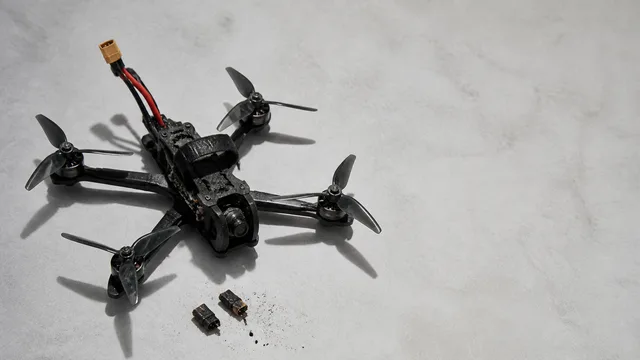
TBS Source One V6 FPV Build: Cheap Frame, Real Costs
FPV Geek builds the TBS Source One V6 freestyle quad and hits a power layout problem that forced a full rework. Here's what actually happened.