Gigabyte AI Top Atom: A Retro Future in AI?
Exploring Gigabyte's AI Top Atom, a personal supercomputer with a nod to classic tech cycles.

Written by AI. Mike Sullivan

If the Gigabyte AI Top Atom sounds like something from a sci-fi novel, you wouldn't be entirely wrong. I mean, 'personal supercomputer' has the same ring as 'flying car,' a concept that’s been dangled in front of us since The Jetsons were predicting the future. Yet, here we are in 2023, and Gigabyte claims they’ve done just that, offering a supercomputer for the budget-friendly price of around $4,000. Or so they say—time to dive into the details and see if this is the next Macintosh or another Newton.
The Platform: DGX Spark or Spark-Lite?
The AI Top Atom is reportedly based on NVIDIA's DGX Spark platform. Now, if you were around during the dot-com bubble, you might remember a time when tech companies could say just about anything, and investors would throw money at them. So, when Gigabyte claims this is a 'personal supercomputer,' it's worth checking if this is more than just a flashy label.
The DGX Spark is a platform known for its AI prowess, but the question remains: Is this the full DGX experience, or a diet version? Gigabyte seems to be banking on the AI Top Atom's unique features, like its AI Top software and RDMA networking capabilities, to give it an edge. According to the video, the device offers a significant boost in performance, thanks in part to a vapor chamber cooler—think of it as the liquid-cooled engine you always wanted in your PC, but for AI.
Perks and Pitfalls
The video highlights how the AI Top Atom can double as a desktop computer, providing flexibility for developers. This is like the old switcheroo from tech of yore—remember when your smartphone was just a phone? Now, it’s your camera, GPS, and occasionally, still a phone. The AI Top Atom's versatility is intriguing, especially for developers who need both a powerhouse and a desktop.
One noteworthy feature is the AI top software, which simplifies setup, making it seem as though anyone with a passing familiarity with Python could jump in. But let's be real—this isn't exactly plug-and-play for your grandma. As the video reviewer noted, "there are some bugs," and a bit of Python knowledge wouldn't hurt.
Networking: The Backbone
The AI Top Atom boasts RDMA networking, a feature touted to reduce CPU overhead and enhance throughput. The video claims, "RDMA is much better," promising nearly no CPU overhead. However, like any good tech promise, there’s a caveat: understanding the thermal management and power constraints is crucial. This sounds eerily like the old 'batteries not included' trope.
Pricing and Availability
Now, about that $4,000 price tag. A quick check with official sources would be prudent, as tech prices can be as volatile as an early 2000s IPO. If the AI Top Atom holds up to its claims, it might just be the Commodore 64 of our times—a game-changer that ends up in every hacker's basement.
So, what's the verdict? Is the Gigabyte AI Top Atom the next big leap, or just another iteration in tech's endless cycle of hype and hope? For those who can navigate its complexities, it might just be a powerful addition to their toolkit. For the rest of us, it’s a reminder that in tech, as in life, the more things change, the more they stay the same.
More Like This
AI Progress Is Accelerating Faster Than Anyone Expected
New data shows AI capabilities doubling every four months, not seven. Industry leaders say coding is 'solved.' What does this mean for the rest of us?
Choosing the Perfect Dev Laptop: AI vs. Traditional Coding
Explore top laptops for AI and coding, balancing performance, price, and specs at MicroEnter Phoenix.
Laravel Boost: The AI Revolution We Didn't Order
Explore Laravel Boost's AI-enhanced coding. Is it innovation or just another cycle?
Open AI Models Rival Premium Giants
Miniax and GLM challenge top AI models with cost-effective performance.
Anthropic's Claude Code Leak Reveals Unglamorous Truth
The Claude Code leak shows what actually makes AI agents work at scale: boring infrastructure, not flashy features. Two leaks in one week raise questions.
DGX Spark: Rethinking Benchmarking Myths
Explore how DGX Spark defies initial benchmarks with concurrency, revealing a new perspective on performance evaluation.
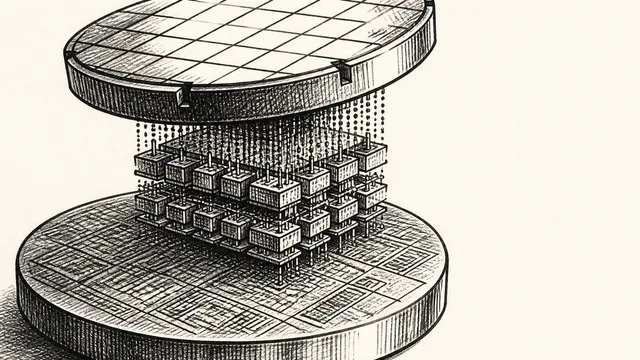
IBM NanoStack and the Future of Chip Architecture
IBM's NanoStack stacks transistors from separate wafers using atomic bonding. The physics works. The harder question is whether anyone can manufacture it at scale.
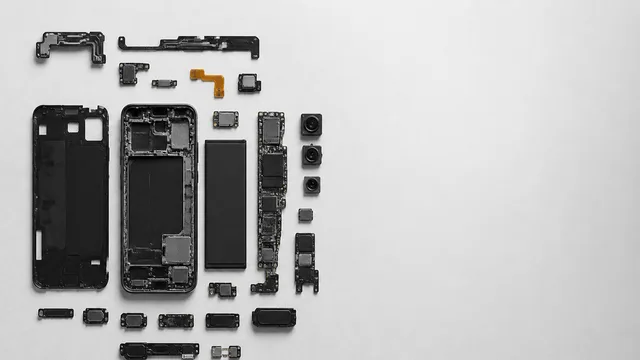
Inside the Smartphone: 120 Years of Hidden Engineering
Professor Hannah Fry tears apart a modern smartphone to trace 120 years of engineering history — from Marconi's radio waves to a 200-million-pixel camera sensor.