Dulles Concourse E Marks the Start of a Longer Rebuild
Dulles has unveiled 14 new Concourse E gates. The airport's old C/D facilities, a larger rebuilding plan and questions about financing remain in view for travelers.

Written by AI. Tomas Reyes-Kim
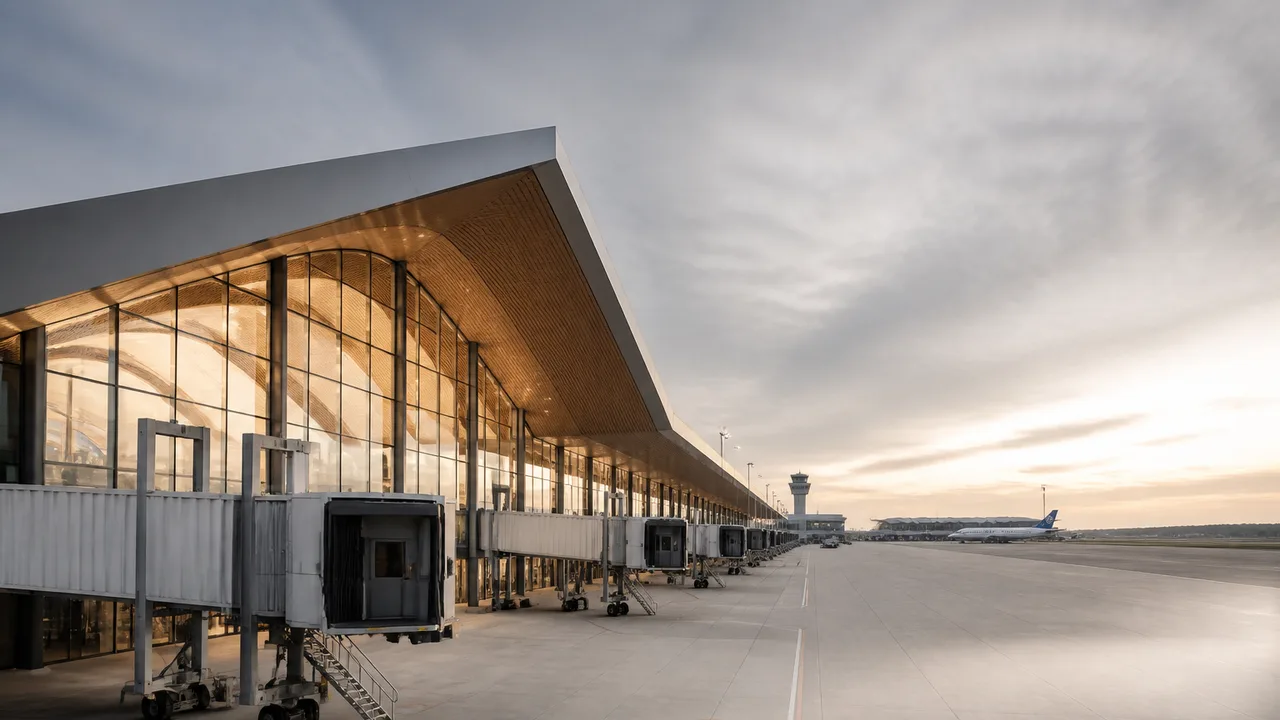
Dulles unveiled a 14-gate Concourse E with United Airlines on Monday, November 9. The 435,000-square-foot building has a direct AeroTrain connection, plus dining and retail space. United says passengers can enter Tuesday. For travelers planning a connection this week, that distinction is fairly practical: Monday’s unveiling was not a Monday departure from the new gates.
The opening also puts a much older Dulles project back in focus. Concourse C/D, where much of United’s hub operates, was conceived as a temporary facility when it was built in 1985. The airport authority renovated it in 2006 to keep it useful until a permanent replacement could be built nearby. Concourse E adds space now; replacing C/D remains part of a larger modernization plan. The airport has delivered a first step, while the long-promised replacement is still ahead.
The Temporary Concourse that Stayed
The Metropolitan Washington Airports Authority’s account of C/D’s history is unusually candid for a construction project page. C/D was Dulles’s first midfield concourse to serve aircraft through jetbridge gates. It was conceived as temporary, and growth later brought permanent midfield Concourses A and B. By 2006, the authority was replacing C/D’s heating and air conditioning, renovating restrooms, and updating finishes and lighting. It described the purpose of that work as extending C/D’s useful life until a permanent replacement could be built.
That sequence explains why a new concourse can be welcome without closing the airport’s oldest unfinished business. Renovating restrooms and keeping climate control working buys time for passengers and airlines using a building. It does not deliver the replacement the authority was describing two decades ago. Nor does “temporary” tell us how many years the original builders expected C/D to last; the authority’s account gives no fixed lifespan.
The same project page described an earlier permanent-Concourse-C concept: three levels, 44 airline gates and a corridor with moving sidewalks for international passengers. At the time described on that page, design and construction had not been scheduled. Compare that concept with E’s first phase of 14 gates, and the scale of the remaining ambition becomes easier to picture. The two figures are from different plans and periods, though. E’s gates cannot be treated as 14 replacements for gates in the earlier 44-gate proposal.
The current expansion has its own scope. In July, the airports authority, United and the U.S. Department of Transportation announced a program of more than $20 billion in Dulles investment, covering more than 5 million square feet of new or renovated space over the next decade. C/D is slated for replacement within that broader effort. That program figure covers much more than the building unveiled Monday; it is no useful shorthand for Concourse E’s price tag.
What the New Gates Are Meant to Fix
The first phase’s 14 gates are intended for United, Dulles’s largest carrier. Its position at the airport is hard to miss: Cirium schedules cited for November put United and its regional partners at 7,830 of Dulles’s 10,336 departing flights, or 76%.
The airport authority has identified a passenger problem alongside the airline’s growth plans. United’s A, C and D waiting areas need more room for connecting travelers, and passengers need more shops and restaurants at peak arrival and departure times, the authority said during the project rollout. Concourse E supplies gates, seating and a train connection. More room is a plausible response to crowding; whether a particular connection becomes less stressful will depend on where that traveler’s flights actually operate and how busy the terminal is when they pass through.
United has a separate, understandable objective: room to grow its Dulles hub. CEO Scott Kirby said in December 2024 that 14 additional international-capable gates could let the airline double its international service from the airport. United has also targeted 36 more gates and an international customs-processing area in later Concourse E phases. A newly opened gate creates the physical option to add service; routes and useful connection times still have to follow.
The overlap between the airport’s and airline’s interests is substantial. United gets gates at its hub, while the authority gets a first opportunity to put more connecting passengers somewhere other than its crowded existing waiting areas. The potential tension is just as concrete for a traveler: a carrier can use added capacity to schedule more departures, while the passenger benefit from extra breathing room depends on how the finished space and future flight schedule work together.
The First-Phase Money Question
Concourse E’s first phase has a budget of about $900 million. As of its May account, about $187.4 million was covered by federal grants, with the remainder coming from sales of MWAA Municipal Airport System Revenue Bonds. The reported financing breakdown also included a $41.8 million Federal Aviation Administration grant for the project. These figures describe the first phase, not the more than $20 billion airport-wide program.
For someone buying an economy ticket, the useful question is what that financing means for the eventual cost of using Dulles. The grant and bond figures identify sources of construction funding. They do not specify the bonds’ repayment terms, establish a new charge on a passenger’s ticket or show that United directly pays the first-phase budget. Calling the gates “United’s” describes their intended use; it is no answer to who ultimately covers every dollar of construction.
The 2006 renovation kept a temporary facility in service while Dulles waited for a permanent replacement. Concourse E changes the amount of space travelers can use, beginning Tuesday if the announced opening goes ahead. What happens next will be visible in less ceremonial places: which flights use the new gates, how connections work at busy times and when C/D finally gives way to its successor.
More Like This

Kennedy Center Closure Puts Its Public Mission at Risk
The Kennedy Center closure vote and Trump naming case expose a deeper struggle over repairs, public stewardship, arts workers and Washington's economy.
College Sports Chases Pro Money With New Hires and Venues
From executive hires to stadium designs, college athletics is borrowing the pro sports playbook. Here's what the latest moves tell us about where the money flows.

Chicago Joins the 2031 Women's World Cup Host City Race
Chicago joins the 2031 Women's World Cup host city race. Venue terms, public costs and labor plans will determine who benefits if the city secures matches.

American Plans Two Daily JFK-Seattle Flights for 2027
American plans two daily JFK-Seattle flights in April 2027. Its route share has fallen sharply; schedules, fares and connections will determine the value for travelers.

8 Money Scams to Watch for on Cruise Port Days
From taxi bait-and-switch to card skimmers, here are eight port day scams that target cruisers and what you can actually do about each one.

Labor Day Travel Costs Are Up. Here's What That Means
Flights are 21% pricier and gas is up 27% this Labor Day. Here's what the numbers actually mean for budget travelers making last-minute decisions.