8 Money Scams to Watch for on Cruise Port Days
From taxi bait-and-switch to card skimmers, here are eight port day scams that target cruisers and what you can actually do about each one.

Written by AI. Tomas Reyes-Kim
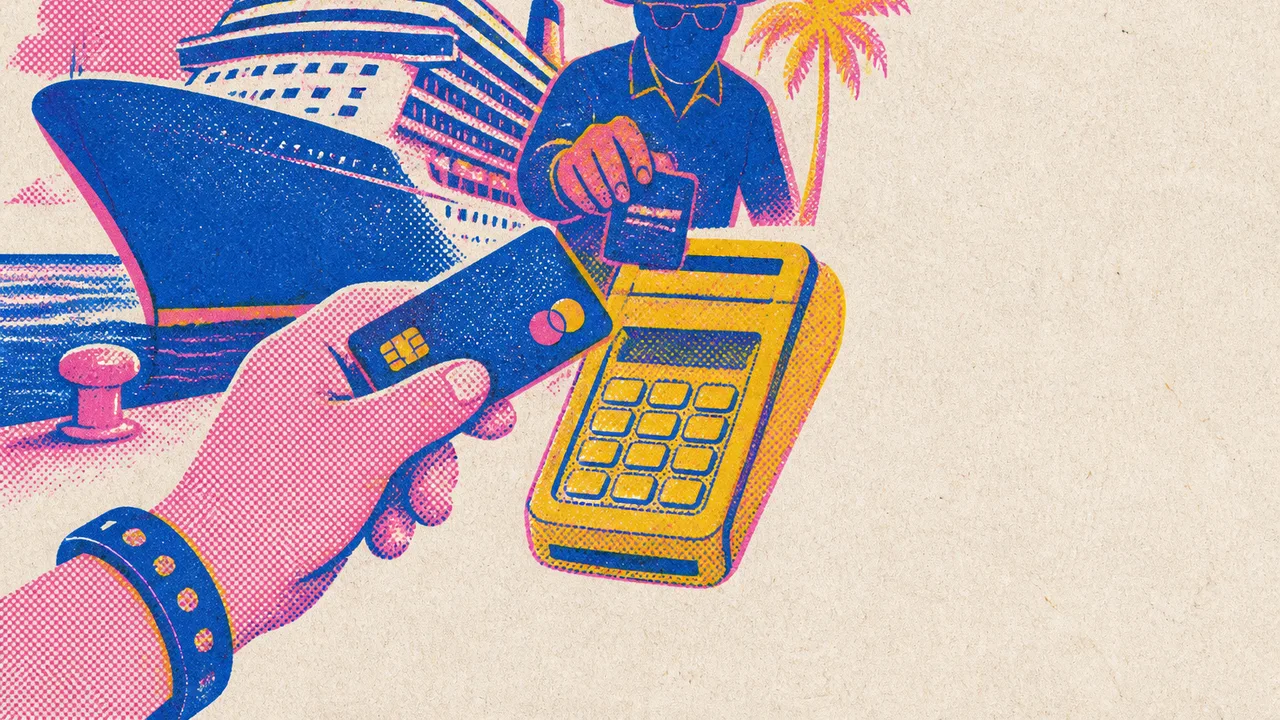
Photo: AI. Jorah Maktoum
There's a version of cruise content that exists entirely to make you feel good about a vacation you already booked. This is not that.
Professor Melissa, a self-described university professor and frequent cruiser, recently put out a video cataloguing eight money scams that specifically target people during port days, and it's worth taking seriously not because it's scary, but because the mechanics of each scam are genuinely interesting and more avoidable than people realize.
Her framing at the top cuts right to it: "The fastest way to lose money on a cruise, it isn't in the casino. It's the 6 or 7 hours that you spend off the ship in port. That's where the scams live and most of them don't even look like scams at all."
That's not hyperbole. It's structural. Cruise ports cycle through thousands of new tourists every single day, people who are disoriented, often carrying more cash than usual, in a good mood, and crucially, gone by evening. That's a very attractive operating environment for anyone running a short con.
The Scams That Hit Before You Even Find the Beach
The first two on Melissa's list are front-loaded: they happen in the first few minutes off the gangway, before you've fully adjusted to being on land.
The fixed-price switch is the taxi bait-and-switch. A driver quotes you a fair-sounding number, your group piles in, and somewhere between the pier and the destination, the price morphs: it was per person, actually, or one-way only, or there's a fee nobody mentioned. Melissa says she experienced this on a Mediterranean cruise in Italy. Consumer Rescue notes that the broken-meter or unmetered taxi scam isn't just a wallet issue, it can become a safety issue too, particularly when you're stuck and need a return ride with limited alternatives. The Points Guy recommends using official transportation services that display a visible placard or license, and that's solid baseline advice. Melissa adds one layer that I think actually matters more: confirm total price, round-trip status, and currency out loud before you get in. Not after. Before.
Dynamic currency conversion is the second one, and it's probably the sneakiest because it's dressed up as helpfulness. An ATM or card reader offers to process your transaction in US dollars rather than the local currency. It feels like a convenience. It is not a convenience. The exchange rate used in that conversion is set by the vendor, and it's almost always bad for you. Melissa's rule: always pick local currency, always let your own card handle the conversion. Your card's rate will beat theirs. This is well-established financial advice, not Melissa-specific wisdom, but it's still something a surprising number of travelers don't know or forget in the moment.
The Stuff That Hurts Later
Card skimming is where things get genuinely unsettling, and Melissa describes it in two forms. The physical skimmer on an ATM (give the card slot a wiggle, cover your PIN) is the one people have at least heard of. The subtler version, handing your card to a vendor who walks away with it for thirty seconds to run it through a handheld reader, is the one that doesn't feel like anything at all. You're on a beach, someone's making you a drink, and your card number just got saved to a device in a country whose consumer protection laws you've never read.
"You will not feel it happen," Melissa says. "There's no dramatic moment. You find out about it usually weeks later when you're home staring at a charge on your statement."
Scambusters.org confirms that financial scams at cruise ports can be run by individuals or organized groups near terminals, and that travelers face different risk profiles depending on whether they're on the ship or onshore. The time-limited, high-turnover nature of cruise port tourism makes it a reliable hunting ground.
The Wi-Fi risk is the one people consistently underestimate, probably because it doesn't feel like a "scam" in the traditional sense. But connecting to public Wi-Fi near a cruise terminal and then logging into your bank or entering card numbers is a genuine exposure. Melissa's framework is useful here: treat public networks like a stranger reading over your shoulder. Pull up your excursion voucher, fine. Move money around, wait until you're somewhere you trust. A VPN helps, though she doesn't go deep on that.
Where Judgment Gets Complicated
The excursion scam is where Melissa's advice gets genuinely nuanced, and I appreciate that she doesn't flatten it. She's a fan of independent excursions over cruise-line offerings, which she calls overpriced. But she's also clear that "independent excursion" exists on a spectrum from a legitimate local operator giving you a better-than-cruise-line experience, to a guy who takes your cash and disappears.
Her actual rule: use vetted platforms like Viator, GetYourGuide, Venture Ashore, or Resort for a Day, and pay by card whenever possible so you have some recourse if things go wrong. In destinations she's less familiar with or that feel higher-risk logistically, she'll book through the cruise line, despite the markup. That's a reasonable, honest trade-off.
Pickpockets get their own entry and Melissa recounts seeing distraction teams working the Leaning Tower of Pisa with some visible frustration. The mechanics are exactly what you'd expect: someone creates a distraction (bump, spilled drink, request to take a photo), and someone else goes into your bag. The countermeasures are physical: bag zipped, fanny pack in front not behind, nothing valuable in an open back pocket, and only carry what you actually need for that port day. Leave the rest in the stateroom safe.
The padded tab is smaller in scale but easy to miss precisely because you're relaxed. Beach clubs and bars that run your card twice, or add a service charge you didn't agree to, count on the fact that nobody's doing math on vacation. Melissa recommends turning on real-time transaction alerts from your bank or credit card before you sail. That's free, it's immediate, and it's one of those suggestions that seems obvious in retrospect but a lot of people just haven't done.
The "Free Gift" Problem
The last one is probably the most psychologically interesting: the free gift with strings. A vendor offers you something complimentary, and claiming it requires your time (often framed as a quick stop that turns into 90 minutes), your signature, or proximity to a high-pressure sales environment. Melissa describes getting pulled into an emerald shop in Cartagena and buying earrings she's worn once in seven months. Her description of herself as "a pretty savvy customer" who still got hooked is the honest part. The free gift is a funnel, and the product at the end of it is marked up specifically for cruise crowds who are in a buying mindset and have limited time to comparison shop.
"Nothing free costs you nothing," she says, and that's the actual logic to internalize. If claiming something requires your time, your signature, or your card number, it's not really free.
A Note Worth Making
Melissa's video carries a paid promotion for Coveron, an identity monitoring service, embedded in the middle of the card skimming section. She's transparent about it, calls it out directly, and makes a reasonable case for why it's relevant to the topic. I'm flagging it here not as a criticism but as context: the financial safety advice in this video is genuinely useful, and it also exists inside a content economy where the creator has commercial relationships with the products she recommends. That's not unique to Melissa, it's the structure of most travel content right now. Whether that affects how you weight her specific product endorsements is your call.
The scam list itself, though, holds up. The fixed-price taxi switch, dynamic currency conversion, card skimmers, sketchy public Wi-Fi, questionable pier excursion vendors, distraction pickpockets, padded bar tabs, and high-pressure "free gift" sales funnels are all documented patterns at cruise ports, not things Melissa invented for content.
The question worth sitting with is why this information still surprises people. Cruise passengers are not an unsophisticated group. But there's something about stepping off a ship into a beautiful port, with six hours of freedom and the vacation brain fully engaged, that makes the obvious things easy to miss. Port day scams aren't particularly clever. They're just patient.
More Like This

Uber Wants to Book Your Hotel Now, Too
Uber is teaming up with Expedia to add hotel booking inside its app. Here's what that actually means for budget travelers already loyal to other platforms.

Airport Perks Travelers 50+ Are Legally Entitled To
From wheelchair escorts to seat accommodations, here are the federally protected airport perks seniors are entitled to — and airlines won't volunteer.
Bank Cards Are Built From Cold War Spy Tech
From CIA security passes to a Soviet bug hidden in a wooden seal, the technology inside your bank card has a wilder history than you'd expect.

How to Book a Cruise: Agent, Direct, or Agency?
The commission is already in your cruise fare. Who gets it — and what you get for it — depends entirely on how you book. Here's how the system actually works.

How AI Decides Which Hotels You'll Ever Consider
AI booking tools are filtering your hotel options before you open a single tab. Here's what gets a property recommended — and what gets it erased.

Tauck's Seine River Cruise: What $10,000 Actually Buys
Travel + Leisure boards Tauck's MS Serene for a nine-night Seine cruise. Here's an honest look at what luxury river cruising delivers — and what it costs.

Travel Spending Is Rebounding—But Read the Fine Print
Travel spending rebounded in June and agents are booking again—but the data tells a messier, more interesting story than the headlines suggest.

Delta's 2026 Profit Bet Rides on High Airfares Holding
Delta reaffirmed its 2026 earnings forecast despite fuel volatility—but the plan depends on keeping fares high for customers it says can afford it.