Chicago Joins the 2031 Women's World Cup Host City Race
Chicago joins the 2031 Women's World Cup host city race. Venue terms, public costs and labor plans will determine who benefits if the city secures matches.

Written by AI. Denise Okafor-Williams

Chicago has joined the U.S. cities seeking a role in hosting the 2031 Women’s World Cup, Inside World Football reported. The report identifies no proposed Chicago venue, bid terms or public funding commitment. For now, the city has entered a competition in which the prize is visible and the bill has yet to be itemized.
A Trump administration official has said the United States will host the 2031 tournament, Front Office Sports reported. That statement concerns the national hosting prospect; it does not identify which U.S. cities would stage matches. Chicago’s immediate question is whether it makes the final host-city field. The longer question is what the city would agree to provide if it does.
A Women’s World Cup can deliver concentrated demand for hotel rooms, restaurants and transportation, along with international attention for the host city. It can also require security, traffic management, venue preparation and event operations. Those benefits and costs reach different people through different channels. A hotel may gain bookings while a public agency pays for crowd control. A restaurant may see a busy week while a worker’s hours depend on how that business staffs it. A citywide spending estimate cannot settle who comes out ahead.
The Bid Has More than One Balance Sheet
The strongest economic case for hosting begins with visitors who otherwise would not come to Chicago. They need places to stay, ways to get around and somewhere to eat. An event with a global audience can also put a city in front of potential visitors long after the matches end. If existing facilities can accommodate the tournament and private spending covers much of the event’s cost, a host city may capture benefits without taking on a large new capital project.
Each part of that case needs a separate test. A forecast of visitor spending measures activity; a public return depends on which spending is new, what governments collect from it and what they spend to host the event. A visitor who books a room during a match brings money into the city. A resident who shifts a dinner from one Chicago neighborhood to another has moved spending around. A full hotel may also have sold some of those rooms to other travelers without the tournament.
The timing of costs matters, too. A city may pay for planning and preparation before it knows how many matches it will receive or how many visitors will travel. Some upgrades could remain useful afterward. Others could serve a short tournament window. The useful distinction for a financing plan is the work Chicago would have undertaken anyway, on roughly the same schedule, versus work required by hosting.
That makes a bid document more informative than a headline visitor projection. If Chicago advances, residents should be able to see the services and facilities it must supply, who approves each expense and which entity pays if costs exceed estimates. Any revenue projection belongs beside those commitments, with its assumptions visible. A promise of exposure cannot reimburse a transit agency for an extra service day.
Follow the Risk to Its Owner
Host-city arrangements can distribute obligations among tournament organizers, venue operators, businesses and governments. The distribution is the deal. A venue owner may be responsible for one category of work while the city covers services beyond the venue. An organizer may collect event revenue while a local authority finances preparations. The precise allocation for Chicago will depend on the terms it pursues.
The most useful questions are ordinary ones. Who pays for venue work required for matches? Who contracts for security and transport services, and who covers an overrun? If a public body makes a guarantee, what triggers payment? If expected visitor numbers fall short, can any party recover costs, or does that risk stay with taxpayers? These are questions for the bargaining stage, before officials describe a host slot as an economic win.
There is a credible argument for accepting some public expense. Cities routinely fund services that support private commerce, and a major tournament can bring people who spend money across many businesses. The case grows stronger when officials set a defined budget, specify what the public receives and preserve oversight of changes. It weakens when the public commitment remains open-ended while the projected benefits remain broad enough to include spending that might have happened anyway.
Selection also affects leverage. Before a city signs on, it can evaluate requirements against its own budget and negotiate over responsibilities. After it has committed publicly and businesses have planned around matches, walking away may carry a political and practical cost. Chicago’s best opportunity to specify a ceiling on public exposure would come before that pressure builds.
The Workers Inside the Forecast
A host-city estimate often turns labor into a line of economic activity: more meals served, more rooms cleaned, more passengers moved. Each transaction requires someone to do the work. For hospitality and service workers, the value of a tournament depends in part on hours, pay, scheduling and whether employers add staff or ask existing employees to absorb a surge.
A crowded tournament week can create more shifts. It can also create split schedules, late finishes and uneven demand that disappears when teams and supporters leave. Employers will make those decisions within their contracts and staffing plans. Public officials cannot accurately describe the local benefit with a sales figure alone; wages paid and conditions of the work help show how much of that activity reaches the people providing the service.
The same scrutiny belongs on temporary event jobs and public-service staffing. If a host plan anticipates extra work for transit, sanitation or security personnel, its budget should account for the cost of that work, including any applicable overtime or negotiated terms. Those are expenses to plan for, and income for workers doing the shifts. Leaving them out makes the event appear cheaper while leaving the labor to be arranged later.
Players belong in this accounting as well. The Women’s World Cup exists because athletes supply the competition that creates demand for tickets, broadcasts and host-city spending. City officials do not set national-team compensation. They can, however, examine how local opportunities around an event are distributed: who gets paid to work it, who obtains commercial access and who bears the costs of staging it. Treating the tournament as a labor market alongside a visitor attraction produces a fuller picture of its local impact.
What Chicago Should Have to Show
The next public milestones are straightforward: the host-city selection criteria, Chicago’s proposed venue and operating plan, and any commitments requested of public bodies. A useful local assessment would put projected new visitor spending beside expected public revenue and a priced list of obligations. It would say which costs are fixed, which could rise with attendance or security needs, and who has authority to approve additional spending.
Officials should also distinguish a regional benefit from a municipal one. A traveler might spend across the Chicago area while a particular government pays the bill for services near a venue. Local businesses will experience the event differently, too. A hotel near tournament activity has a clearer route to added sales than a shop whose regular customers avoid congestion. A single aggregate estimate can conceal those differences even when its arithmetic is sound.
None of that requires assuming a bad deal. It requires recognizing that a tournament’s commercial reach does not automatically assign its costs and proceeds fairly. Chicago now has an opportunity to seek a place in the 2031 Women’s World Cup. Before that place becomes a public commitment, the city will need to show who is signing the checks, who is earning the revenue and who is left holding the risk.
More Like This

NFL and NFLPA Negotiate Flag Football at 2028 Olympics
The NFL and NFLPA are negotiating player participation in Olympic flag football. Here's what the labor dynamics and scheduling realities actually mean for athletes.

World Cup Knockout Ticket Prices Drop 39% on Resale Markets
World Cup knockout stage resale prices fell 39% from $2,040 to $1,245. What the secondary market collapse reveals about FIFA's pricing architecture.

USMNT Beats Bosnia, Advances Despite Balogun Red Card
The USMNT beat Bosnia 2-0 to reach the World Cup Round of 16, despite Folarin Balogun's controversial red card. Here's what it means on and off the field.

Chelsea Stake Sale Would Put Clearlake in Full Control
Chelsea's reported £950 million stake sale would give Clearlake full control, raising questions over spending, cash flow, stadium plans and exit timing.

World Cup 2026 Economics: Who Pays, Who Profits
FIFA will make billions from World Cup 2026. Host cities will foot the bill. Dynamic pricing and immigration fears are leaving ordinary fans—and Main Street—behind.

Who Really Profits From the 2026 FIFA World Cup
FIFA projects $11B in revenue and $80B in global economic activity for 2026. But host cities are quietly getting cold feet. Here's where the money actually flows.

ESPN Cuts Ryan Clark as Cable Decline Reshapes Sports Media
ESPN let go of NFL analyst Ryan Clark mid-broadcast, signaling a broader restructuring as cable audiences shrink and the network pivots to digital.
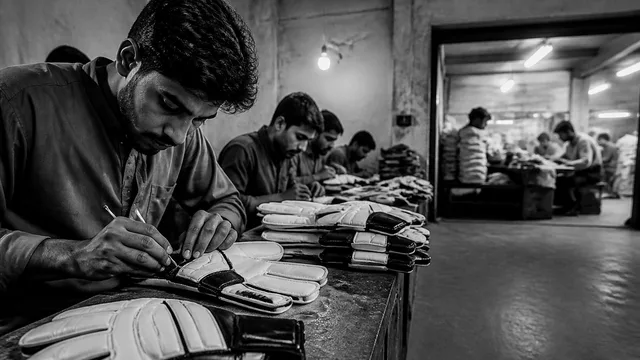
How Goalkeeper Gloves Are Made in Sialkot
Inside Matrix Sports' Sialkot factory, where nearly half a million goalkeeper gloves are made each year for professional clubs and national teams.