Dana White's White House Offer Raises UFC Succession Questions
Trump's reported offer to Dana White raises questions about UFC succession, media strategy and potential conflicts, while White's plans and the role's terms remain unclear.

Written by AI. Elena Vasquez-Moreno
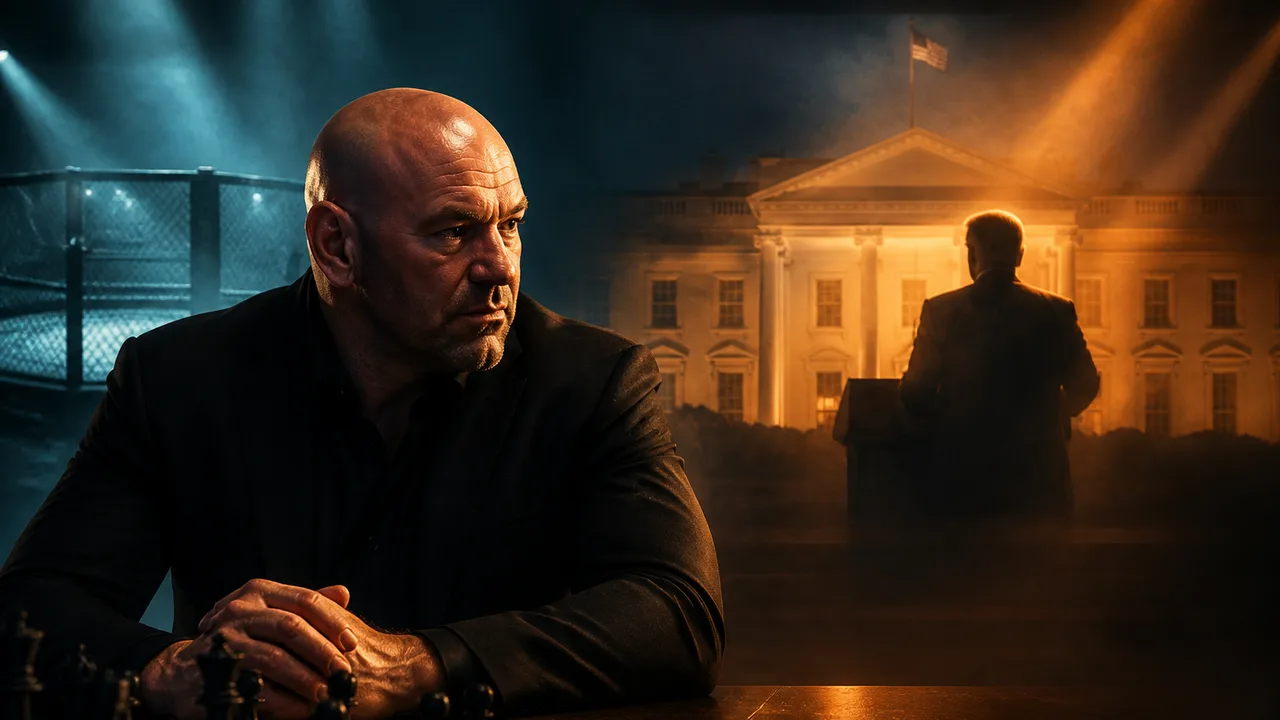
President Donald Trump has offered UFC chief executive Dana White the White House press secretary job, CNBC reported on November 7. For the UFC, that puts an unusual item on the management agenda: What happens to a business when the executive most closely identified with it is invited to become the president’s public voice?
As of Sunday, November 8, White had not publicly accepted, and no terms, timing or formal appointment had been announced, Front Office Sports reported. The immediate corporate question is therefore about readiness, not a vacancy. The UFC has to operate while its chief executive’s possible next job becomes a subject of public debate.
Even White’s interest has produced competing accounts. There were conflicting reports about whether he wants the position. An AV Club headline said he “appears to accept”. Interest, apparent acceptance and an appointment would each trigger different decisions for the UFC. Treating them as interchangeable would give the company a succession problem before it has a confirmed departure.
The Executive is Part of the Product
White’s visibility creates a management problem that many companies never have to consider. Audiences encounter the UFC through fights and fighters, but also through the executive who speaks publicly about its decisions. If he leaves, the organization would need someone to exercise his authority and someone to occupy that public-facing role. Those could be the same person; they need not be.
A chief executive’s responsibilities can reach across negotiations, personnel decisions, partner relationships and overall strategy. A recognizable spokesperson can explain those decisions, absorb criticism and keep attention on the business. White’s association with the UFC joins those functions in the public mind. Separating them would require more than naming a new person for press appearances.
Consider a difficult decision involving a fighter, an event or a media partner. Who has authority to make the call? Who explains it afterward? Can that person commit the organization, or must every consequential answer travel back through another executive? These questions arise in any succession. They grow sharper when audiences and counterparties have grown accustomed to hearing from one individual.
Continuity does not require White to remain indefinitely. It requires clear decision rights. A company can distribute responsibilities among executives, promote a successor or recruit one. Each option changes the route by which a fighter, broadcaster or commercial partner gets an answer. In a business built around scheduled events, uncertainty over who can approve a decision has a cost even when no one can attach a dollar figure to it.
A White House Role Has Different Incentives
The strongest case for White as a press secretary is straightforward. Trump has approached an executive accustomed to speaking in public, handling confrontation and defending an organization with committed supporters and vocal critics. Those are relevant skills for a role centered on communication under pressure.
But a White House press secretary speaks for the administration, not for a sports company. The job demands responses to government decisions and scrutiny on the government’s schedule. UFC leadership, by contrast, must answer to the organization’s operating needs and relationships. If White were to accept, the practical issue would be how completely those responsibilities separate.
A clean departure would give the UFC a defined succession task. An overlapping arrangement could leave colleagues and partners trying to determine which decisions White still controls, when he is acting for the company and when he is speaking for the administration. The questions concern authority and accountability before they concern optics. A fighter seeking an answer from the UFC should know whose decision it is. So should a media partner negotiating with the company.
Variety reported that Trump asked White to bring assistants to the proposed role. That detail points to another operational question if the offer progresses: Which relationships and routines would follow White into government, and which would remain with the UFC? A request involving staff says nothing by itself about whether anyone would move. For a company evaluating continuity, though, losing an executive and losing members of his working team are different succession exercises.
What Partners Would Need to Know
The UFC’s counterparties would have practical reasons to seek clarity. Fighters need to know who handles disputes and decisions affecting their work. Media and commercial partners need a contact who can speak with authority rather than refer every difficult question elsewhere. Other executives need to know where their responsibilities begin and end.
None of those groups necessarily needs White personally. They need a reliable process. A successor with defined powers could provide it; so could an interim leadership arrangement with an explicit division of duties. A prominent name on an organizational chart helps less if a decision still has to pass through someone who has left the building.
There is also a branding choice. White’s direct public presence has made the chief executive a recognizable representative of the UFC. His replacement could attempt the same approach, or the company could put more emphasis on fighters and events while spreading corporate communication across a team. Neither model guarantees better results. The trade-off is between the speed and familiarity of a single voice and the resilience of an organization that can speak without depending on one person.
That trade-off extends to Trump’s offer itself. White’s relationship with the president could make the appointment attractive to the White House. For the UFC, that proximity could bring attention while raising questions about whether its chief executive is available to run the business. The company’s interest lies in a clear account of who is making UFC decisions, whatever White chooses.
The Decision that Comes Before Succession
A confirmed acceptance would turn planning into execution: identify the leader, transfer authority and tell employees and partners whom to call. A decision to remain at the UFC would settle the immediate personnel question, though it would leave intact the broader issue exposed by the offer. When one executive’s outside opportunity prompts questions about who could take over, succession planning becomes visible whether or not a succession occurs.
Trump can make the offer. White can choose what to do with it. The UFC has a separate decision to make about how its authority should work when the person most associated with the company is no longer the person answering the phone.
More Like This
Stephen A. Smith Tests Sports Media's Political Reach
Stephen A. Smith's 2028 speculation shows how sports media can convert recurring attention into political capital, while creating new risks for ESPN and its audience.

Rays Stadium, US Open Records and Prediction Markets
The Rays finally got their votes. The US Open set a prize record. And prediction markets got a legal gut-punch. Here's what it all means financially.

How an MLB Lockout Could Expand the Bananas' Market
A possible MLB lockout could give the Savannah Bananas more attention, venue leverage and ticket demand, while testing whether fans stay after MLB returns.

Bears, IndyCar, and a Week Full of Open Questions
From the Bears' stadium deadline to IndyCar's quiet resurgence and the SEC's CFP stall, here's what the sports business landscape looks like this week.

Xbox COO Helen Chiang Leaves Role After Three Months
Helen Chiang is leaving Xbox's COO post after three months. The exit raises questions about who will handle operations and what studio teams can expect next.

Trump's Super Intelligence Force Faces an Authority Test
Trump has named an AI task force after a voluntary company safety accord. Its test is whether federal coordination produces an identifiable decision or requirement.

US Open's $108M Prize Fund and the Cost of Staying No. 1
The US Open's record $108M prize pool and $800M renovation bet reveal how tennis's richest major is spending to stay dominant—and who's picking up the tab.

Main Street Sports Sues Comcast and Charter Over Fees
Main Street Sports Group is suing Comcast and Charter over unpaid RSN licensing fees—a lawsuit that exposes the financial fault lines in sports broadcasting.